










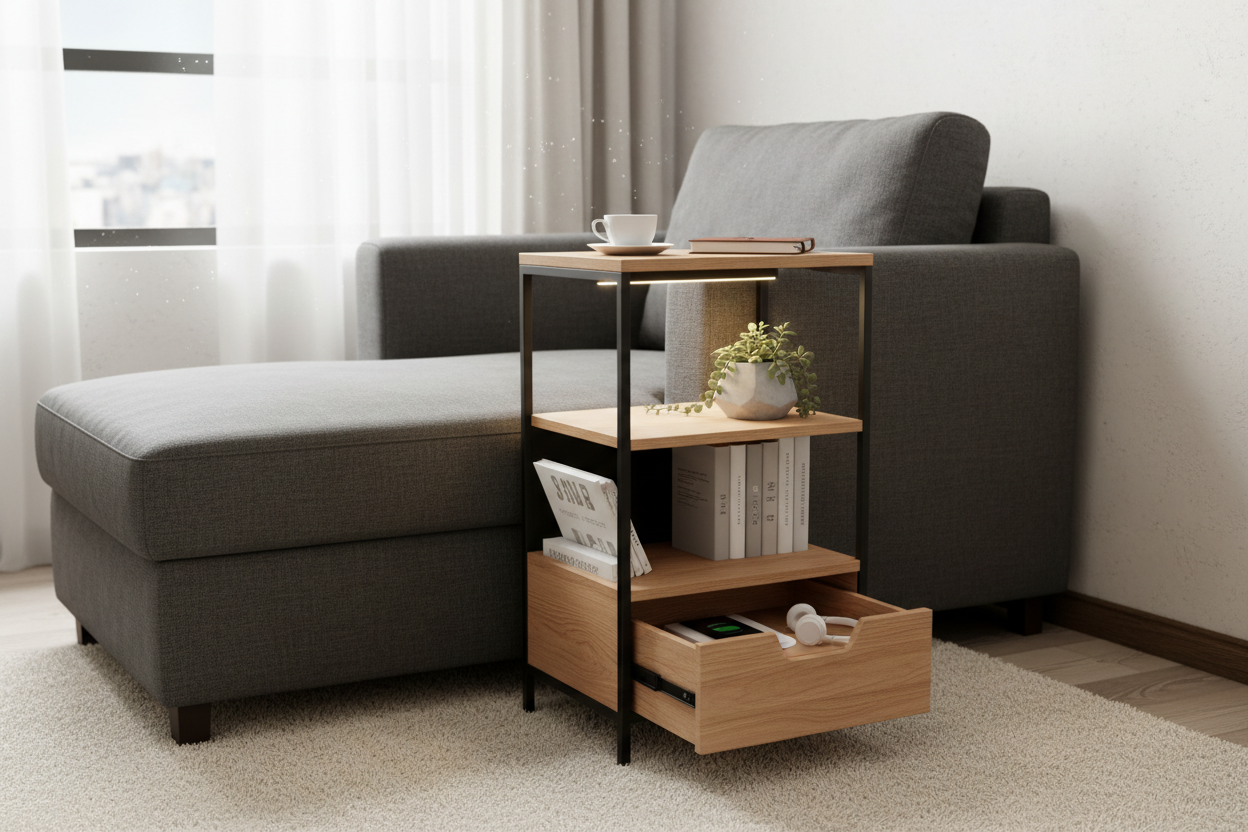
Most of us have that awkward gap in our homes. It sits between the sofa and the wall, or perhaps between the bed and the closet door. It looks like dead space—too small for a standard piece of furniture, yet large enough to collect dust bunnies. If you are trying to reclaim that square footage, the solution isn't just a smaller table; it is a specifically designed piece of furniture often categorized as a slim end table with drawers. These compact units do more than just fill a void; they provide critical storage for remotes, coasters, and charging cables that otherwise clutter your primary living surfaces.
I learned the value of these architectural life-savers during my time living in a cramped walk-up apartment. My sofa was an inch too wide for the wall it rested against, leaving a mere 10-inch gap before the doorway. For months, I balanced my coffee on the arm of the couch, resulting in more spills than I care to admit. The hunt for a skinny side table with drawers became an obsession. When I finally found one that fit—a sleek, walnut-finished piece that slid perfectly into place—it didn't just hold my coffee; it organized my mail, hid my spare keys, and visually anchored the room. That experience taught me that furniture footprint doesn't dictate functionality.
Defining the "Narrow" in Furniture
Standard end tables usually range from 18 to 24 inches in width. When we talk about a narrow end table with drawers, we are stepping into a different category entirely. We are looking at widths ranging from as little as 8 inches up to about 14 inches. While this sounds tiny, it is surprisingly sufficient for holding a beverage, a phone, and a slim table lamp.
The challenge with going this narrow is stability. A piece that is 24 inches tall but only 8 inches wide can be top-heavy. High-quality manufacturers counter this by weighting the bottom or ensuring the depth (front to back) is substantial, often around 22 to 24 inches. This depth provides the counter-balance needed to prevent tipping when you pull a drawer open.
Choosing the Right Storage Configuration
Not all storage is created equal, especially when you are working with limited horizontal space. You will generally encounter two types of narrow side table drawers: the deep single drawer or the stacked multi-drawer tower.
For a living room setup, a unit with a single top drawer and an open shelf below often works best. This allows you to hide the unsightly clutter—batteries, lighters, chapstick—while using the bottom shelf for books or a decorative basket. A slim end table with drawer (singular) offers a lighter visual profile, which helps small rooms feel less crowded.
Conversely, if you are using this as a nightstand substitute, a skinny end table with drawers stacked vertically is superior. In a bedroom, you need separation for varied items like reading glasses, medications, and journals. A "tower" style table maximizes the vertical utility of that tight corner.
The Slide Mechanism Matters
Here is a technical detail many buyers overlook until it is too late: the drawer slides. On standard furniture, you have ample width for ball-bearing metal slides. On a skinny side table with drawers, internal space is premium. Some manufacturers skip the metal rails to maximize drawer width, relying on wood-on-wood sliding or simple plastic stoppers.
While wood-on-wood maximizes interior space, it can stick during humid weather. If you plan to access the contents daily, look for tables that manage to incorporate metal glides, even if it sacrifices half an inch of interior storage width. Smooth operation prevents the table from wobbling every time you tug on the handle.
Material Selection and Aesthetics
Because these tables are small, they can serve as subtle accents or bold statements. A metal and glass slim end table with drawers works wonders in modern industrial spaces because the transparency of the glass makes the piece disappear, preserving the feeling of openness. Solid wood, while heavier visually, adds warmth and hides dust better than glass or black metal.
For high-traffic areas, such as a hallway or an entryway, you might look for a narrow accent table with drawer. These tend to be slightly taller than sofa-side tables, often reaching 30 inches in height. In an entryway, they serve as the perfect "drop zone" for keys and wallets without obstructing the walking path.
Creative Placement Ideas
Don't limit these pieces to the living room. A narrow end table with drawers is incredibly versatile throughout the home. I have seen them used effectively in bathrooms between the toilet and the vanity to hold extra toiletries and toilet paper rolls. The enclosed storage keeps bathroom essentials sanitary and out of sight.
Another excellent application is in a home office. If your desk is small, flanking it with a pair of skinny end table with drawers units can act as detached pedestals. This gives you file and stationery storage without consuming your legroom under the desk.
Styling Your Slim Table
Decorating a surface that is only 10 inches wide requires restraint. The rule of three (grouping three items together) still applies, but the scale must change. Instead of a large table lamp, opt for a slender buffet lamp or a wall-mounted sconce above the table to free up surface area. Use the depth of the table to your advantage by placing items in a row from front to back rather than clustering them.
If the table has an open bottom shelf, avoid placing small, loose items there as they will look messy. Use a rectangular basket that fits the dimensions of the shelf. This effectively turns the open space into another drawer, keeping the look clean and intentional.
Frequently Asked Questions
How wide should a side table be to still be functional?
For a table to be truly functional for holding a drink and a phone, 8 inches is generally the minimum width. Anything narrower than 8 inches becomes unstable and difficult to use for anything other than displaying a very small plant or holding a remote control.
Can I use a narrow side table as a nightstand?
Yes, absolutely. A skinny end table with drawers is often the perfect solution for small bedrooms where a queen or king bed takes up most of the wall. Just ensure the table height matches your mattress height (usually between 24 and 28 inches) for comfortable reach.
How do I prevent a tall, narrow table from tipping over?
If you have thick carpet or pets that might bump into the furniture, it is wise to anchor the table. Many slim tables come with wall-anchoring kits, or you can use a simple L-bracket attached to the back of the table and the wall studs to ensure it stays upright.

Leave a comment
This site is protected by hCaptcha and the hCaptcha Privacy Policy and Terms of Service apply.