










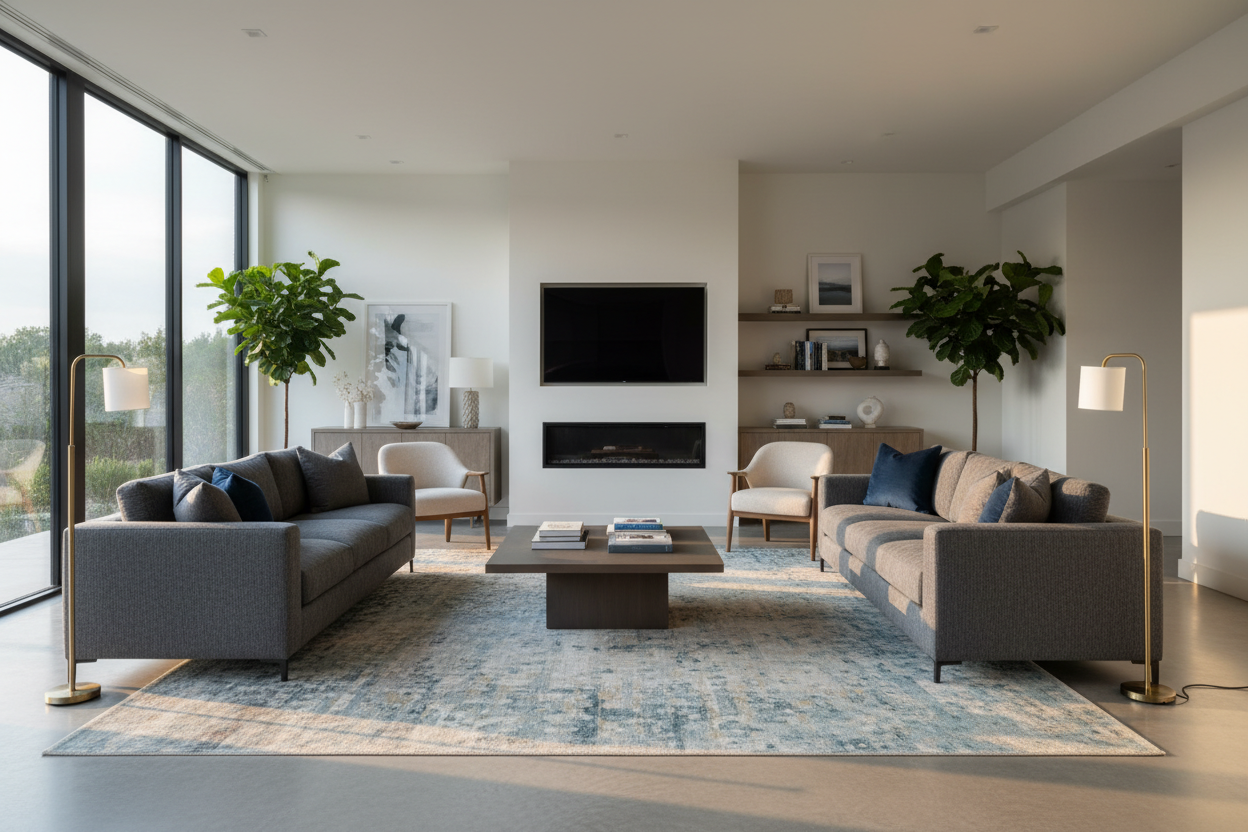
There is a pervasive myth in interior design that buying a matching furniture set is the safest route to a cohesive living room. In my fifteen years of styling homes, I have seen more spatial errors committed with a standard couch and loveseat combination than almost any other furniture grouping. The issue isn't the pieces themselves; it is the assumption that they must be shoved against walls or angled awkwardly to fill a void.
When selected and positioned correctly, this duo can anchor a room with sophistication. However, without careful consideration of scale, traffic flow, and texture, you risk creating a showroom vignette rather than a livable home. This guide will walk you through the nuances of selecting and placing these pieces to elevate your aesthetic.
Quick Decision Guide: Key Features to Look For
Before you commit to a purchase, review these critical factors to ensure your seating arrangement suits your lifestyle and architectural constraints.
- Scale & Proportion: Ensure the length of the couch does not exceed two-thirds of the wall it faces or abuts.
- Seat Depth: Standard depth is 21-24 inches. Deep seating (25"+) is luxurious for lounging but difficult for formal conversation.
- Suspension System: Look for 8-way hand-tied springs or sinuous springs for longevity; avoid webbing-only supports in high-traffic areas.
- Upholstery Grade: For households with pets, aim for high rub-count fabrics (over 30,000 double rubs) or performance velvet.
- Visual Weight: If the room is small, choose legs that lift the frame off the floor to create a sense of openness.
Mastering the Layout: Beyond the Wall Hug
The most frequent question I receive is how to arrange a couch with loveseat without blocking pathways. The default tendency is to push both pieces against walls, creating a vast, unusable dead zone in the center of the room. This disrupts intimacy.
The Floating L-Shape
Instead of wall-hugging, float the sofa perpendicular to the focal point (like a fireplace or TV) and place the loveseat at a right angle to form an 'L'. This creates a dedicated conversation zone. Crucially, ensure there is at least 30 to 36 inches of walking space behind the floating pieces. This layout defines the living area within an open-concept floor plan effectively.
The Parallel Conversation Pit
In wider rooms, placing a loveseat sofa couch setup facing each other (parallel) creates excellent symmetry. However, since a loveseat is shorter, you must balance the visual weight. Place the sofa on one side, and the loveseat opposite it, flanked by a side table or a floor lamp to visually extend its length to match the sofa.
Materiality and The "Matching Set" Trap
While retailers often sell sofas and loveseat bundles, buying identical pieces can make a room feel static and heavy. As a designer, I often advise clients to "coordinate, not match."
If you purchase a sofa couch and loveseat from the same collection, break up the monotony with textiles. If the frames are identical, use contrasting throw pillows or a textured throw blanket on the loveseat to differentiate it. Better yet, choose a leather sofa and a fabric loveseat in a complementary tone. This layering of textures—perhaps a cognac leather paired with a bouclé fabric—adds the depth found in high-end editorial spreads.
Lessons from My Own Projects: The "Visual Weight" Incident
I want to share a specific mistake I made early in my career so you don't have to repeat it. I was designing a narrow row house living room and ordered a love set couch combination (a colloquial term for a matching set) that fit perfectly on the floor plan grid.
However, I focused only on the footprint dimensions (length and width) and ignored the vertical silhouette. The set had heavy, rolled arms and skirts that went all the way to the floor. When we installed them, the room instantly felt claustrophobic. The lack of visible floor space beneath the furniture made the pieces look like massive blocks.
I had to swap the loveseat for a pair of leggy armchairs to let the room "breathe." The lesson? In smaller spaces, always choose a couch and loveseat with exposed legs. Seeing the floor continue underneath the furniture tricks the eye into thinking the room is larger than it is. Also, check the "rub count" on the tag—I once had a client's linen loveseat pill within three months because we prioritized softness over durability in a TV room.
Conclusion
Integrating a couch and loveseat into your home requires more than just measuring your walls. It demands an understanding of visual balance, traffic flow, and material durability. By breaking away from rigid layouts and embracing a more fluid, conversational arrangement, you can transform a generic furniture purchase into a curated design statement.
Frequently Asked Questions
What is the ideal distance between a coffee table and the seating?
Regardless of whether you are using a sofá y love seat (as often labeled on imported packaging) or a sectional, keep 14 to 18 inches between the edge of the seat and the coffee table. This is close enough to set down a drink but wide enough to walk through comfortably.
Can I mix a modern couch with a traditional loveseat?
Yes, but you need a unifying element. This could be a shared color palette, similar leg finishes (e.g., both walnut wood), or matching throw pillows. This transitional style adds character that a matching set often lacks.
How do I know if a loveseat is too small for my space?
If the loveseat looks like a "kids' table" next to a massive sofa, the scale is off. A good rule of thumb is that the loveseat should have a similar back height and seat depth to the sofa to maintain a cohesive sightline.

Leave a comment
This site is protected by hCaptcha and the hCaptcha Privacy Policy and Terms of Service apply.