










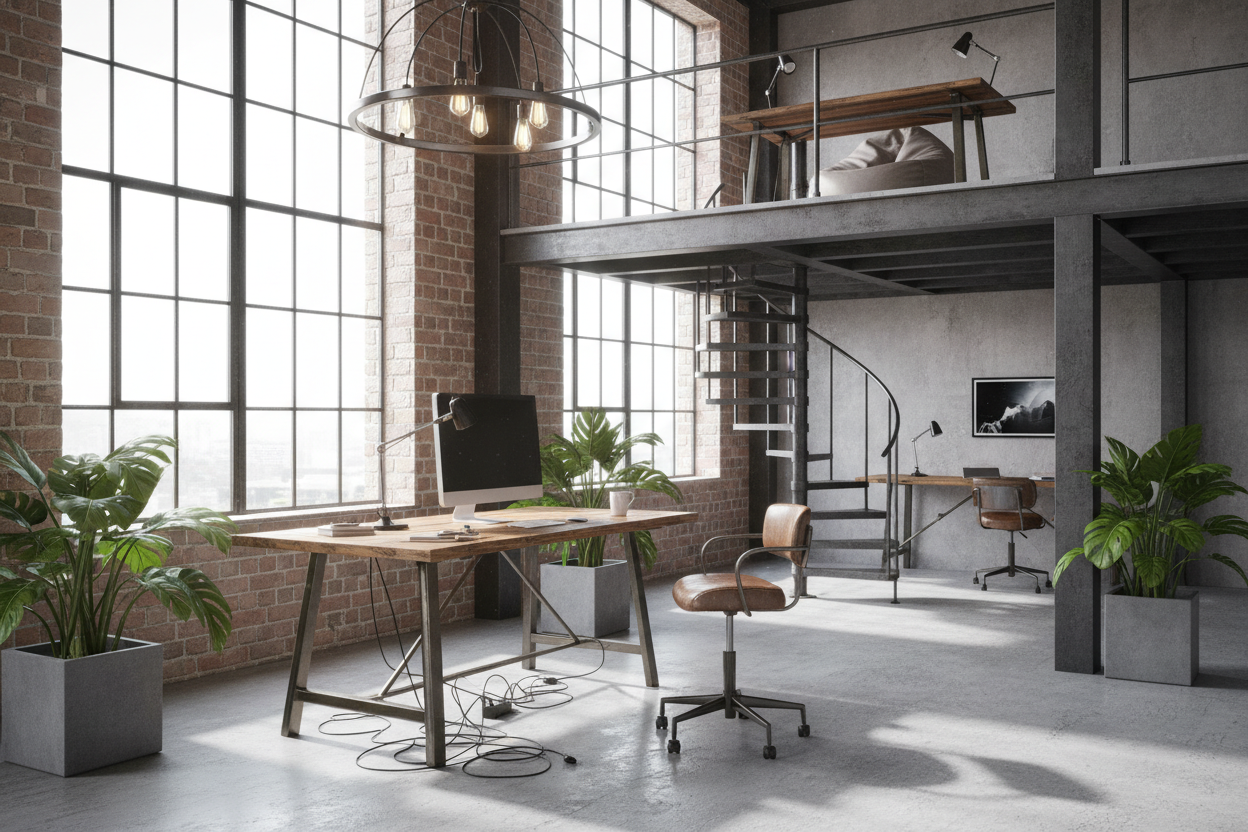
Staring at double-height ceilings can be both exhilarating and intimidating when planning a workspace. The volume suggests limitless potential, yet many homeowners struggle to utilize the verticality without making the room feel cold or cavernous. The challenge isn't just about filling space; it's about creating a cohesive narrative between the ground floor and the mezzanine. In this guide, we will navigate the complexities of designing an **office with loft**, ensuring your workspace is not only architecturally stunning but ergonomically sound.
Key Considerations for Vertical Workspaces
- Structural Load & Access: Verify the weight capacity of the mezzanine for heavy filing cabinets or desks, and ensure the staircase meets code without eating up floor space.
- Acoustic Management: Lofts act as echo chambers; prioritize soft furnishings, acoustic panels, or rugs to dampen sound.
- Lighting Layers: Plan for task lighting on the lower level, as overhead pendants from the high ceiling often fail to illuminate the desk surface adequately.
- Thermal Regulation: Remember that heat rises. Ensure your HVAC system or ceiling fans are positioned to keep the loft area cool during work hours.
Mastering the Layout: Zoning and Flow
The success of a lofted office hinges on spatial hierarchy. A common error is placing the primary workstation in the loft without considering workflow. If you print documents frequently or need to answer the door, a desk located up a spiral staircase becomes a hindrance.
I recommend utilizing the loft area for "deep work"—tasks requiring isolation and focus—while keeping the ground floor for administrative tasks, meetings, or collaborative work. This physical separation helps mentally compartmentalize different work modes.
Materiality: Achieving the Loft Style Office Design
To capture that authentic loft style office design, your material palette must balance raw industrial elements with warmth. We want to avoid a sterile, warehouse feel.
Wood and Metal Balance
If your structure features exposed steel beams or concrete floors, counter these cool tones with solid wood furniture. A walnut or white oak executive desk adds necessary tactile warmth. Avoid cheap veneers here; in an open-concept loft, the back and sides of furniture are visible from multiple angles, so the finish quality must be consistent throughout.
Textural Softening
Hard surfaces bounce sound. Introduce texture through leather desk chairs, heavy drapery on tall windows, and high-pile area rugs. These elements don't just look good; they function as acoustic absorbers, preventing your video conference calls from sounding hollow.
Lighting the Void
Lighting a room with varying ceiling heights is technically complex. You need a three-tiered approach:
- Ambient: Large-scale pendants or chandeliers that utilize the volume of the room.
- Task: Articulated desk lamps are non-negotiable, particularly under the mezzanine where shadows tend to pool.
- Accent: Use wall washers or track lighting to highlight architectural features or artwork, drawing the eye upward and emphasizing the vertical scale.
Lessons from My Own Projects
A few years ago, I designed a high-end office with a metal-deck mezzanine for a client in a converted factory. Visually, it was stunning—exposed trusses, black steel railings, the works. However, we overlooked one specific detail: vibration transfer.
Every time the client walked across the loft floor, the slight bounce in the structure transferred through the desk legs and caused his dual-monitor setup to wobble distractingly. It’s a nuance you don't see in Pinterest photos. We had to retrofit the space with a heavier, solid-base desk and place it on a thick, dense wool rug to absorb the kinetic energy. If you are building a loft office on a wood or metal frame structure, always prioritize a heavy, grounded desk over a lightweight, spindly one. The stability makes a massive difference in your daily focus.
Conclusion
Designing an office with a loft is about respecting the volume while taming it for human use. By carefully selecting materials that dampen sound and arranging your layout to suit your workflow, you can create a space that is as functional as it is impressive. Don't let the height intimidate you—use it to elevate your work experience.
Frequently Asked Questions
How do I heat or cool a loft office effectively?
Since heat rises, the loft area can become significantly warmer than the lower level. Installing a dedicated mini-split system or a high-quality ceiling fan capable of pushing warm air down (destratification) is often necessary for year-round comfort.
What is the best desk placement for a loft?
Ideally, position the desk so you have a view of the lower level or a window, rather than facing a blank wall. This utilizes the open feel of the loft. However, ensure your monitor is not facing a window directly to prevent glare.
How do I maintain privacy in an open loft office?
Visual privacy can be achieved with bookcases acting as room dividers or frosted glass balustrades. For acoustic privacy, consider sound-masking machines (white noise) or installing acoustic baffles on the ceiling to trap noise before it travels downstairs.


Leave a comment
This site is protected by hCaptcha and the hCaptcha Privacy Policy and Terms of Service apply.