










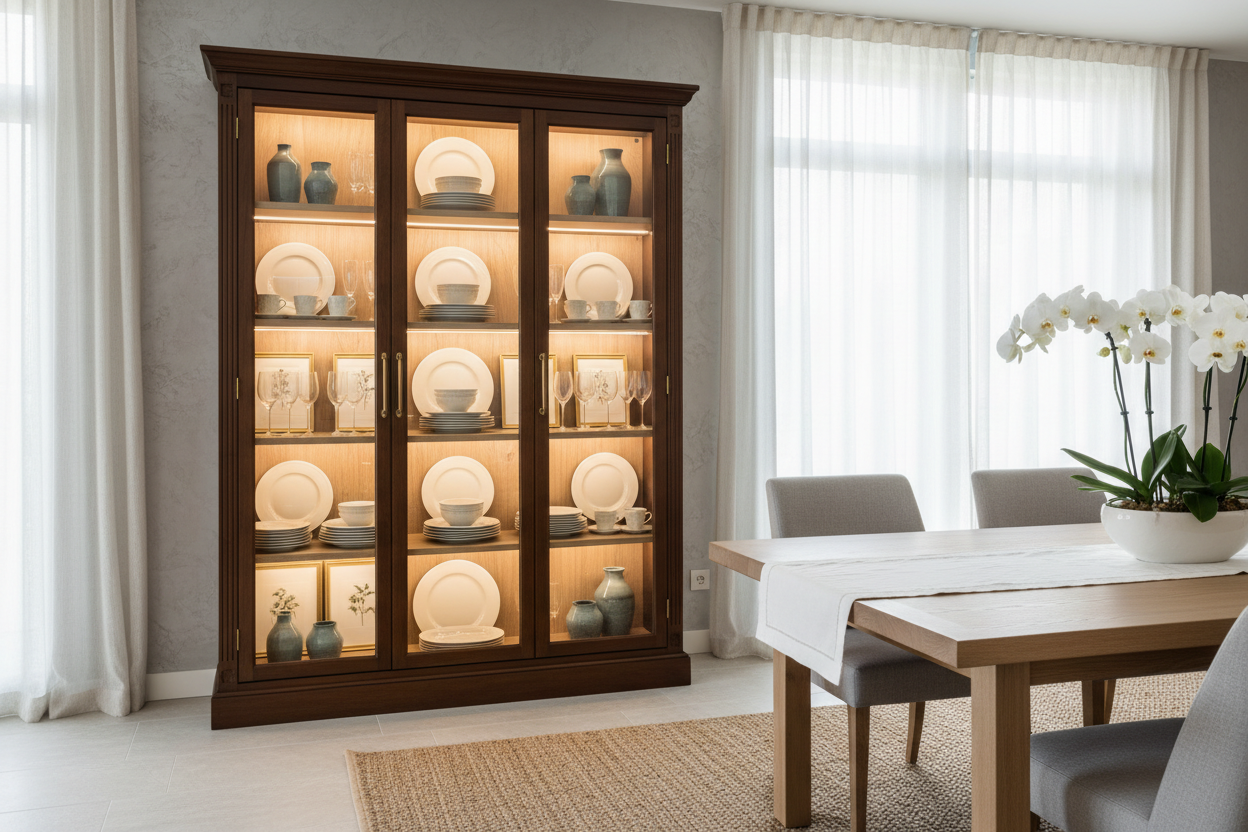
A china cabinet serves as both functional storage and a stunning focal point that showcases your most treasured dishware, glassware, and collectibles. Whether you're looking to display grandmother's heirloom porcelain or your growing collection of vintage teacups, the right display piece transforms these items from closet clutter into conversation starters.
The beauty of a well-chosen china display cabinet lies in its versatility. Unlike standard kitchen storage, these pieces are designed with visibility in mind—glass doors and shelving allow light to dance across crystal and highlight the delicate patterns on fine china. I learned this firsthand when I inherited my aunt's Wedgwood collection and realized storing it in boxes was doing a disservice to pieces that deserved to be seen and appreciated daily.
Understanding Different Display Cabinet Styles
The traditional china cabinet typically features a two-piece construction: a lower cabinet with solid doors for storing linens, serving pieces, or less decorative items, and an upper section with glass panels that provide full visibility. This classic design has endured for good reason—it maximizes both display and practical storage in a single footprint.
A display case china cabinet takes a more modern approach, often featuring glass on multiple sides or even all four sides for 360-degree viewing. These pieces work beautifully as room dividers or centerpieces, though they require more careful consideration of what's displayed since everything is visible from all angles. The contents become part of the room's decor from every vantage point.
For those working with smaller spaces or looking for something less formal, a display hutch cabinet offers an excellent alternative. These pieces usually sit atop a buffet or sideboard, providing the display capabilities of a full china cabinet without requiring as much floor space. They're particularly useful in dining rooms that need to accommodate both storage and serving surfaces.
Selecting the Right Size and Placement
Before falling in love with any particular piece, measure your space carefully. A china display case needs breathing room—crowding it against other furniture or into a tight corner diminishes its impact and makes accessing your items frustrating. Leave at least 30 inches of clearance in front for opening doors comfortably, and consider the visual weight of the piece in relation to your room's proportions.
Corner units offer a smart solution for awkward spaces, turning what might be dead square footage into a display opportunity. These angled cabinets often feature curved glass fronts that add architectural interest while maximizing storage capacity. They work particularly well in formal dining rooms where traditional rectangular pieces might interrupt the flow of traffic.
Material Considerations That Matter
Wood remains the gold standard for quality china cabinets, with options ranging from rich mahogany and cherry to lighter oak and maple finishes. Solid wood construction ensures longevity and can be refinished if styles change or wear occurs. However, well-constructed pieces using quality veneers over engineered wood cores can also serve beautifully while often coming at a more accessible price point.
The glass itself deserves attention too. Tempered glass provides safety, particularly in homes with children or in earthquake-prone areas. Some china display cabinets feature beveled glass or leaded glass accents that add visual interest, though these details can sometimes compete with the items being displayed rather than complementing them.
Lighting Makes All the Difference
Internal lighting transforms a china cabinet display case from simple storage into a gallery-worthy showcase. LED strip lights or puck lights mounted inside the cabinet illuminate your collection without generating the heat that can damage delicate items. Adjustable lighting allows you to highlight specific pieces or create ambient glow depending on the occasion.
The placement of lights matters as much as their quality. Top-down lighting creates dramatic shadows and highlights the upper portions of tall items, while shelving with integrated lighting provides even illumination across all levels. Some collectors prefer lights mounted at the back of shelves, which creates a gentle backlight that makes glass and crystal sparkle.
Organizing Your Display for Maximum Impact
The temptation to fill every shelf to capacity is real, but restraint creates more powerful displays. Group similar items together—all teacups on one shelf, serving platters on another—while leaving enough space between pieces for each to be appreciated individually. This approach also makes retrieving items for actual use much simpler.
Varying heights and depths adds visual interest. Place taller items toward the back and shorter pieces in front, creating layers that draw the eye through the display. A china display case with adjustable shelving provides flexibility to accommodate different sized pieces and allows you to reconfigure as your collection grows or changes.
Maintenance and Care
Dust is the eternal enemy of display cabinets. Glass shelves show every speck, and fine china can develop a dull film if neglected. A monthly cleaning routine keeps things looking their best—remove items shelf by shelf, dust both the pieces and the cabinet interior, and clean glass with a streak-free cleaner. This regular handling also gives you the chance to inspect items for any damage and rotate displays seasonally.
Climate control matters more than most people realize. Extreme temperature fluctuations or high humidity can damage both the cabinet itself and delicate items inside. Keep your display hutch cabinet away from heating vents, air conditioning units, and windows that receive direct sunlight for extended periods. These simple precautions prevent warping, fading, and deterioration.
Making It Work in Modern Homes
China cabinets have evolved beyond their formal dining room origins. Contemporary designs with clean lines and mixed materials like metal and glass fit seamlessly into modern aesthetics. Some homeowners repurpose these pieces in unexpected ways—displaying books and art objects in living rooms, showcasing collections in home offices, or using them as bathroom linen storage with a luxurious twist.
The key is matching the piece to your actual lifestyle rather than adhering to outdated rules about where certain furniture belongs. If your dining room rarely hosts formal dinners, consider placing your china cabinet where you'll see and enjoy it daily. A beautiful display case china cabinet in a hallway or master bedroom can provide just as much pleasure as one in its traditional location.
Ultimately, the best china cabinet is one that makes you happy every time you see it—whether that's because it holds precious family heirlooms, showcases a collection you've built over years, or simply provides beautiful storage for everyday dishes you love using. The right piece elevates both your possessions and your space, turning functional storage into something that genuinely enhances how you live.
Frequently Asked Questions
What's the difference between a curio cabinet and a china cabinet?
While both display items behind glass, curio cabinets are typically taller, narrower, and designed for smaller collectibles like figurines or memorabilia. China cabinets are usually wider with deeper shelves specifically proportioned for dishware and serving pieces, and often include closed storage below.
How do I prevent my china from rattling or shifting in the cabinet?
Use shelf liners made from non-slip material or felt to cushion items and prevent movement. For particularly valuable or delicate pieces, small museum putty dots provide secure anchoring without damaging surfaces. Ensure shelves are level and avoid overloading them, which can cause sagging and instability.
Should I keep the original finish or refinish an antique china cabinet?
Original finishes typically preserve more value for true antiques, even if they show age. However, if you're buying a vintage piece for personal use rather than investment, refinishing can make it work better with your decor. Consult an antiques expert before making changes to potentially valuable pieces.

Leave a comment
This site is protected by hCaptcha and the hCaptcha Privacy Policy and Terms of Service apply.