










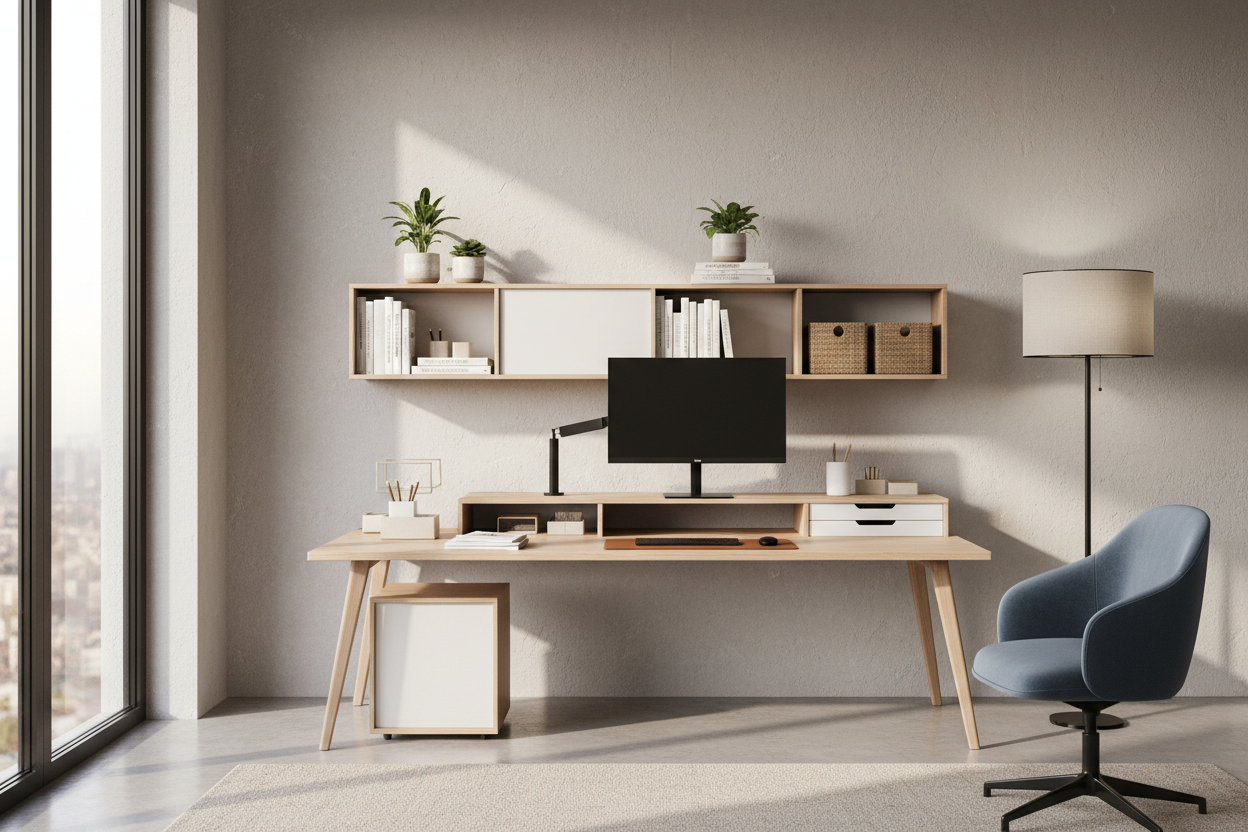
There is a distinct psychological weight to visual clutter. As a designer, I often walk into home offices where the furniture is exquisite, but the surface is chaotic—a graveyard of stray pens, tangled cables, and paper stacks. This visual noise disrupts your workflow and dampens your creativity. True desk organization is not just about hiding mess; it is about curating a workspace that balances ergonomic function with high-end aesthetics. It is about creating a sanctuary where every object has a designated home, allowing your mind to focus entirely on the task at hand.
Key Considerations for Desktop Curation
- Material Integrity: Opt for materials like solid wood, leather, or heavy-gauge metal over flimsy plastics to ensure longevity and visual warmth.
- Scale and Proportion: Ensure your desk organizer does not dominate the surface area; leave at least 40% of the desktop as negative space.
- Ergonomic Reach: Frequently used items should be within the 'primary reach zone' (approx. 14-16 inches from your seated position).
- Visual Cohesion: Select a desk set organizer that complements your desk's finish rather than clashing with it.
Zoning Your Workspace: The Triangle of Efficiency
In interior design, we often speak of the 'kitchen work triangle.' A similar principle applies to workstation organizer layouts. You must distinguish between your active and passive zones. Your computer desk organizer or laptop stand forms the anchor. To the right (or left, if left-handed), place your immediate writing tools in a sleek office desk caddy. This prevents the cross-body reach that causes micro-strain over time.
For items used less frequently—staplers, tape dispensers, or bulk office supplies—relegate them to the secondary zone. This might be a desk topper organizer pushed against the wall or an in desk organizer tray tucked inside a drawer. The goal is to keep the immediate desktop accessories organization minimal.
Selecting Materials: Texture and Durability
The market is flooded with cheap desk organization options, typically wire mesh or brittle acrylic. While these serve a functional purpose, they often lack the tactile quality required for a luxury feel. For executive desk organizers, I recommend full-grain leather or walnut veneers. These materials age beautifully and add warmth to the often sterile technology on a computer table organizer.
If you prefer a modern, minimalist look, matte powder-coated steel desk holders offer durability without the industrial harshness of wire mesh. When looking for nice desk accessories, consider how the material sounds when you drop a pen into it. A lined leather cup absorbs sound; a plastic one amplifies it.
Verticality and The Floating Effect
One common mistake is spreading out horizontally until the table organizer consumes all usable writing space. The solution is verticality. A desk shelf or monitor riser with integrated storage allows you to tuck a keyboard or desk stationery organiser underneath. This utilizes the 'air rights' of your desk.
For small spaces, consider wall-mounted office organizers or a desk stand organizer that lifts papers off the surface. This creates a perception of spaciousness, which is vital for maintaining a calm mental state in a compact home office desk organizer setup.
My Personal Take on Desk Organization
I once specified a stunning, high-gloss acrylic desk set organizer for a client who wanted a 'weightless' modern look. In the showroom, it looked pristine. However, two weeks after installation, I visited the site and realized my mistake. The static charge of the acrylic had turned the organizers into dust magnets, and the pristine clear surface showed every single fingerprint and micro-scratch from paperclips.
It taught me a valuable lesson: desk equipment must be forgiving. Now, I steer clients toward textured finishes—felt, leather, or brushed metal. These materials hide the daily wear and tear of work. Furthermore, I learned that 'all-in-one' desk organizers accessories are rarely as effective as modular pieces. A massive unit forces you to adapt to its layout, whereas separate trays and cups allow you to configure the desk space organizer to your specific workflow.
Conclusion
Transforming your workspace requires a shift in perspective. Move away from viewing office and desk accessories as mere clutter-catchers and start seeing them as architectural elements of your daily life. When you invest in high-quality office furniture organizers that align with your aesthetic and ergonomic needs, you aren't just tidying up; you are designing a workflow that invites success.
Frequently Asked Questions
How do I organize a desk with no drawers?
When you lack an in desk organizer, you must utilize the desktop efficiently without overcrowding it. Use a monitor riser with drawers underneath to hide office supplies, or employ a desk sorter for papers. Aesthetic boxes with lids are excellent for hiding miscellaneous stuff for office desk needs while keeping the look clean.
Is it worth investing in expensive executive desk organizers?
Generally, yes. Cheap desk storage often cracks or peels, and lightweight plastic units can slide around when you pull a drawer open. Heavier, higher-quality office desktop supplies stay planted and provide a tactile satisfaction that improves your daily experience.
What are the essential items for a minimalist desk?
Stick to the trifecta: a writing tool vessel (cup or tray), a paper management system (horizontal tray or vertical desk sorters), and a cable management solution. Anything else, like a supply organizer for desk consumables (clips, bands), should ideally be hidden away to maintain visual calm.

Leave a comment
This site is protected by hCaptcha and the hCaptcha Privacy Policy and Terms of Service apply.