










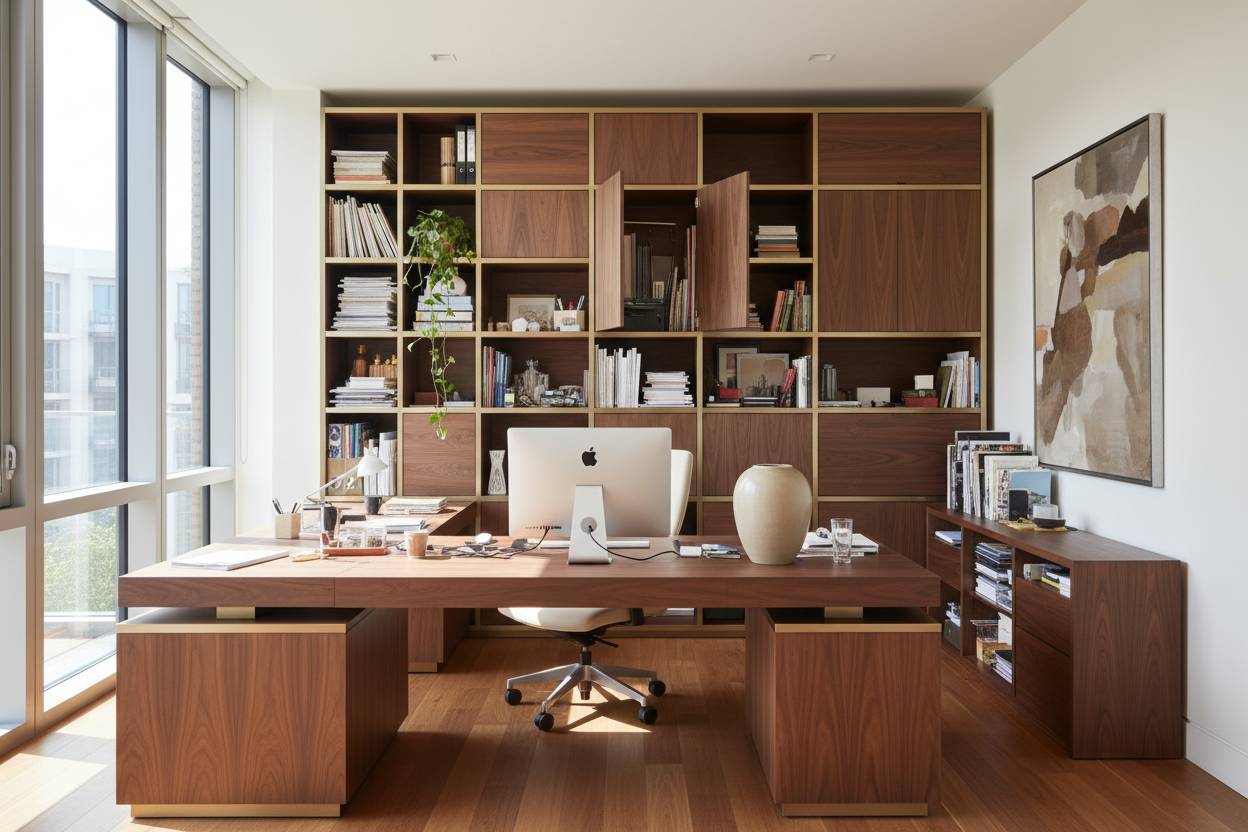
There is a distinct difference between a workspace that feels curated and one that feels cluttered. Often, the culprit isn't the lack of space, but how we utilize vertical and horizontal planes. As a designer, I see homeowners frequently purchase a standalone writing table, only to surround it later with mismatched filing cabinets. The solution is almost always a cohesive desk and storage unit. This integrated approach not only anchors the room but solves the perennial problem of visual noise, allowing your productivity to thrive in a space that feels intentional rather than accidental.
Key Features to Look For
- Footprint vs. Surface Area: Ensure the unit maximizes vertical storage without encroaching on your circulation path.
- Material Continuity: Look for consistent grain direction and finish matching between the work surface and the shelving.
- Cable Management Integration: High-end units should have hidden channels or grommets to keep technology invisible.
- Modular Flexibility: A storage unit with desk attachment allows you to reconfigure the layout if you move or repurpose the room.
Mastering Spatial Planning and Layout
The most common error I encounter is placing a heavy storage desk unit directly facing a wall in a small room. This creates a "cubicle effect" that shrinks the perceived space. Instead, consider floating the desk perpendicular to the wall where the storage resides. This L-shaped configuration—effectively a desk with storage unit return—opens up the room and allows you to command the space rather than facing a blank corner.
Visual Weight and Balance
In design, we talk about "massing." If your storage unit is floor-to-ceiling, it carries significant visual weight. To counterbalance this, the desk portion should feel lighter. Look for a cantilevered design or legs with a slender profile. This contrast between the solid storage volume and the airy desk prevents the furniture from dominating the room's architecture.
Selecting the Right Material
The longevity of your furniture dictates the investment. While laminate is cost-effective, it lacks the tactile warmth and repairability of wood.
Solid Wood vs. Veneer
For a piece you intend to keep for decades, solid wood joinery is superior. However, high-quality architectural veneers are often more stable in fluctuating humidity. If you choose a storage desk unit with a veneer finish, ensure the edges are banded with solid wood. This protects the most vulnerable points from chipping when you swivel your chair or move equipment.
Lessons from My Own Projects
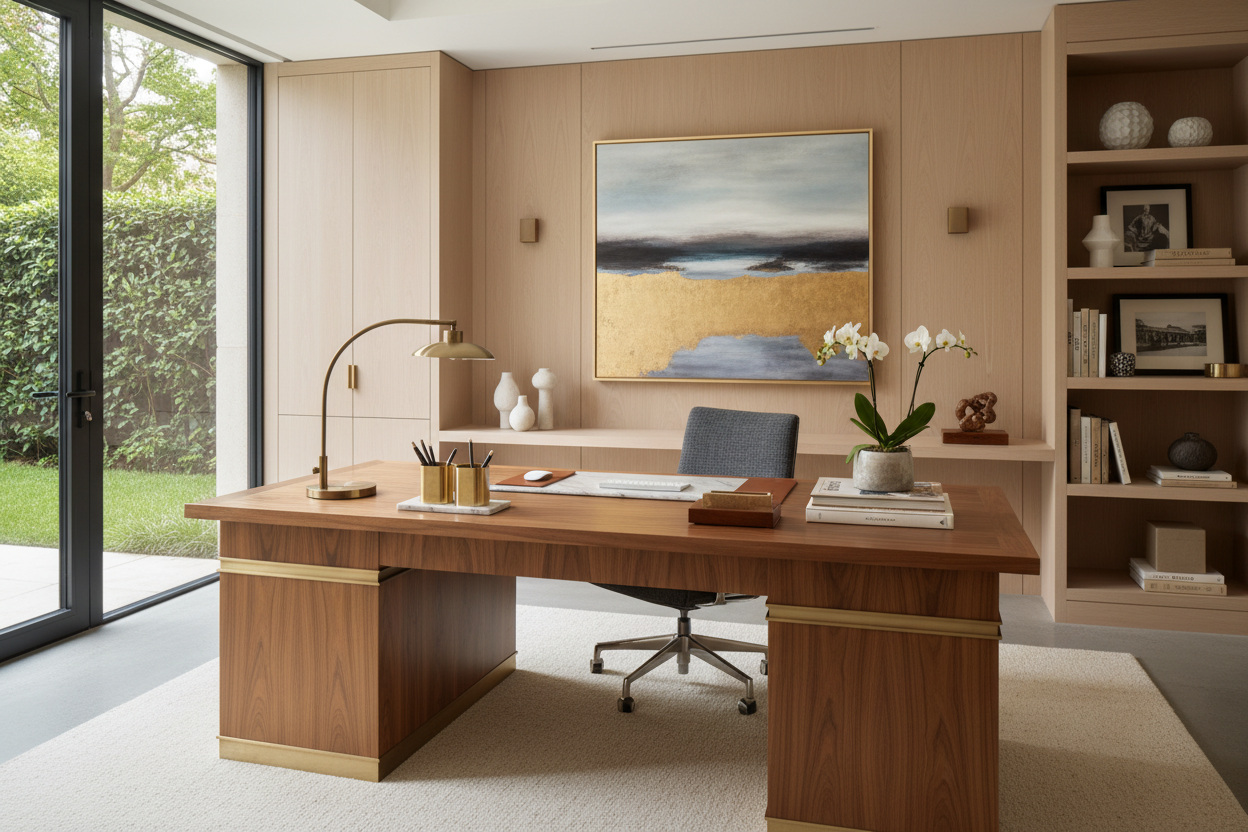
I want to share a specific oversight from a project I designed early in my career, which changed how I specify these units. I commissioned a beautiful custom walnut desk with an integrated credenza for a client. Visually, it was stunning.
However, I hadn't accounted for the "knee swing." The storage drawers under the desk were positioned just two inches too close to the seating center. Every time the client swiveled to exit their chair, their knee grazed the brass hardware of the drawer. It was a minor measurement detail that caused major daily annoyance. Since then, I always ensure a minimum of 30 inches of clear width for the leg cavity, regardless of how compact the storage unit needs to be. It’s these invisible ergonomics that define true luxury.
Conclusion
Investing in the right workspace furniture is about more than just utility; it is about creating an environment that respects your workflow. By prioritizing ergonomic flow, material integrity, and visual balance, your new setup will serve as the grounding element of your home office for years to come.
Frequently Asked Questions
How deep should the desk surface be for computer work?
For a comfortable setup with a monitor, aim for a depth of at least 24 to 30 inches. This ensures your screen is at an ergonomic viewing distance while leaving room for a keyboard and documents.
Can I place a storage unit with desk in a bedroom?
Yes, but visual concealment is key. Opt for a unit with closed cabinetry or doors. Being able to close off the "work" aspect at the end of the day helps maintain the bedroom's role as a space for rest.
What is the best way to maintain a wood veneer desk?
Avoid harsh chemical sprays. Dust regularly with a microfiber cloth and use a damp cloth for spills, drying immediately. Use coasters, as veneer is susceptible to water rings and heat damage compared to high-pressure laminates.

Leave a comment
This site is protected by hCaptcha and the hCaptcha Privacy Policy and Terms of Service apply.