










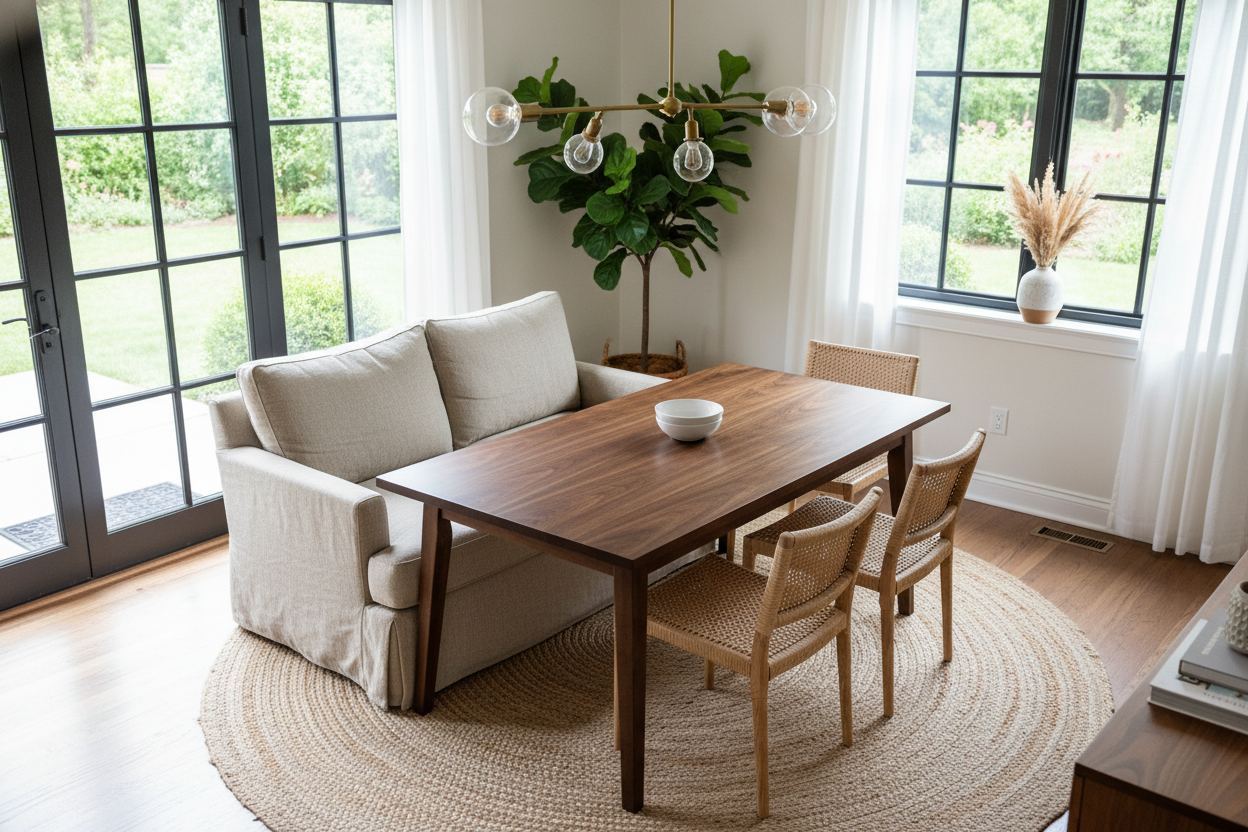
We have all been there: the dinner party is winding down, the wine is still flowing, but guests are shifting uncomfortably in rigid timber chairs. This is usually the moment a client asks me how to bring living room comfort into the culinary space. The solution is elegant, yet often executed incorrectly: the dining loveseat.
Integrating a loveseat into a dining setting bridges the gap between a formal eating area and a lounge. However, it is not merely about pushing a sofa up to a table. It requires a keen eye for ergonomics, textile durability, and spatial planning to ensure the setup looks intentional rather than accidental.
Key Features to Look For
- Seat Height: Must be between 18" and 20". Anything lower is a lounge chair, not a dining seat.
- Foam Density: Look for high-resiliency foam. You need support to sit upright while eating, not a sink-in "slouch" factor.
- Fabric Grade: Only choose performance velvets, treated linens, or top-grain leather.
- Base Style: High legs are essential for visual airflow; avoid skirted bases in small rooms.
Mastering the Layout and Scale
When placing a dining room loveseat, the relationship between the seat and the table base is paramount. The most common error I see is pairing a bench-style seat with a table featuring four corner legs. This creates a "trapped" sensation for the person sliding into the middle.
For a seamless experience, pair your dining room table with loveseat seating using a pedestal or trestle table. This eliminates corner interference and allows for smoother ingress and egress. Visually, the loveseat acts as an anchor. In a rectangular room, place the dining table loveseat along the longest wall to establish a focal point, flanking it with lighter, open-frame chairs on the opposite side to maintain visual balance.
The Kitchen Nook Application
In less formal settings, a kitchen loveseat can transform a cold breakfast corner into a cozy "keeping room" vibe. If you are placing a loveseat in kitchen areas, consider armless silhouettes. Arms can often clash with the table apron (the vertical piece of wood beneath the tabletop), preventing the furniture from tucking away neatly when not in use.
Materiality: The Practicality of Luxury
A loveseat at dining table height is high-risk real estate for spills. As a designer, I strictly advise against natural, untreated fibers like cotton or silk. Instead, opt for solution-dyed acrylics or Crypton fabrics that mimic the hand-feel of linen but repel liquids. Leather is also a fantastic option for a loveseat in dining room settings, as it develops a patina over time and wipes down effortlessly, though it can feel cool to the touch initially.
My Personal Take on Dining Loveseats
I want to share a specific lesson from a project I completed in a pre-war apartment last year. We installed a stunning, high-back velvet loveseat. It looked incredible. However, we realized a week later that the piece was too heavy to "scoot."
Unlike a dining chair, you cannot sit on a loveseat and pull yourself toward the table. You have to position the loveseat exactly where you want it before you sit down. Because we had placed a thick wool rug underneath, the friction made micro-adjustments impossible.
The fix? We actually had to replace the rug with a lower pile flatweave and attach teflon glides to the loveseat legs. If you are buying this piece, check the weight. If it's over 60lbs, ensure your floor surface allows it to slide, or your guests will be eating at an awkward distance from their plates.
Conclusion
Introducing a loveseat to your dining arrangement is a bold stylistic move that pays dividends in comfort. It invites conversation to linger and softens the architectural lines of a room. By respecting the rules of scale and choosing forgiveness-prone fabrics, you can create a space that is as functional as it is beautiful.
Frequently Asked Questions
What is the ideal length for a dining loveseat?
Ideally, the loveseat should be slightly shorter than the length of your table (between the legs). For a standard 72-inch table, a 60-inch loveseat provides ample room without looking crowded.
Can I use a regular living room loveseat?
Rarely. Living room furniture usually has a seat height of 16-17 inches and a deep recline. Dining requires an 18-19 inch seat height and a more upright back angle for proper digestion and table reach.
How do I clean a fabric loveseat near food?
Vacuum crevices weekly to prevent crumbs from settling. For spills on performance fabric, blot (never rub) with a clean, white cloth and a mild water-soap solution immediately.

Leave a comment
This site is protected by hCaptcha and the hCaptcha Privacy Policy and Terms of Service apply.