










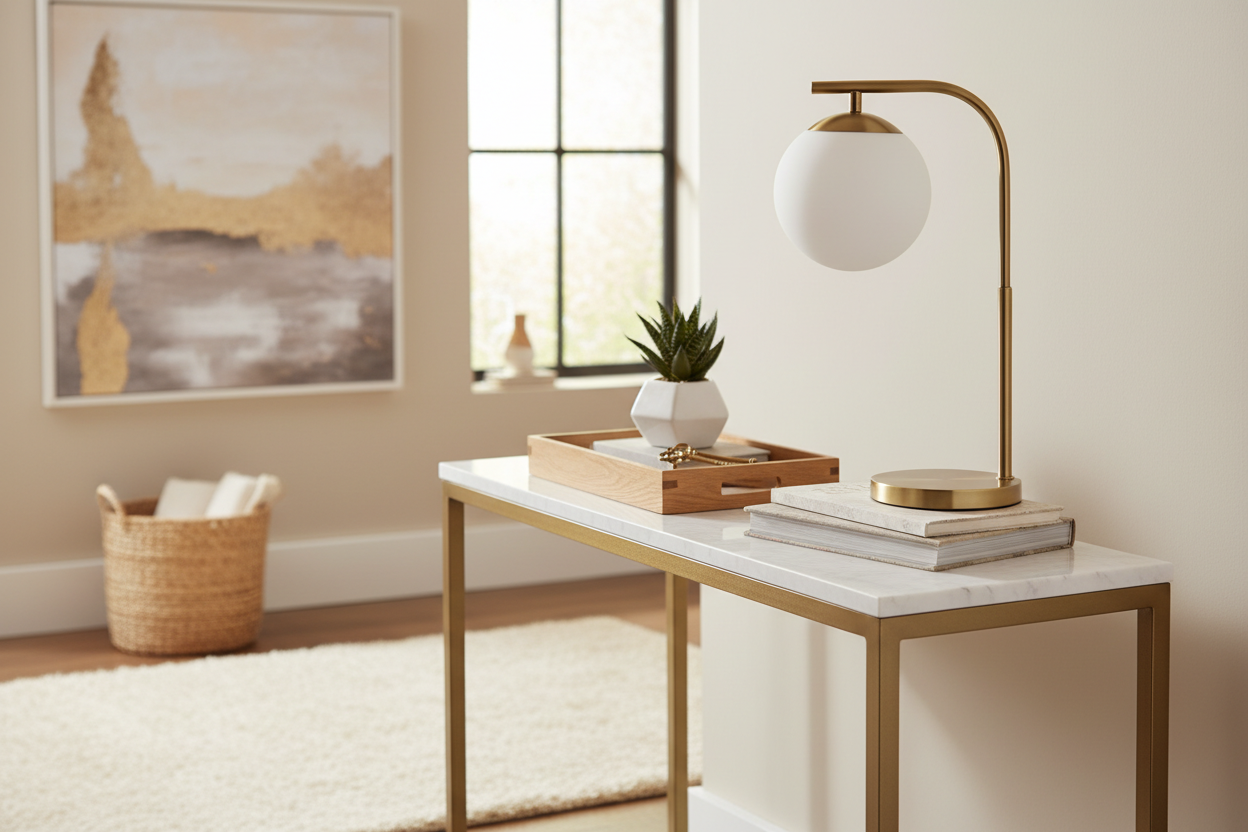
Finding the right furniture often feels like a geometry puzzle where the pieces refuse to fit. You have a hallway that feels empty, or a stretch of wall behind a sofa that looks unfinished, but standard furniture sizes betray you. The 60-inch sideboards dominate the room, blocking traffic flow, while the petite 30-inch accent tables look like toys that were left out by mistake. This is where the 45 inch long console table shines. It sits squarely in the "Goldilocks zone" of interior design—large enough to make a statement and provide utility, yet compact enough to respect the spatial limitations of modern apartments and older homes with quirky floor plans.
Many homeowners overlook this specific dimension because it isn't as commercially ubiquitous as the standard four-foot options. However, opting for a slightly narrower profile can be the difference between a cramped entryway and a welcoming foyer. If you are working with a wall segment that measures around 50 to 55 inches, a 45-inch piece leaves just enough "breathing room" on either side (about 2.5 to 5 inches), which is visually pleasing and prevents the space from feeling overcrowded.
Function Meets Form: The Power of Storage
A flat surface is great, but a flat surface with hidden compartments is a game-changer. When I'm helping friends organize their entryways, I almost always steer them toward a 45 console table with drawers. The reason is simple: horizontal surfaces are magnets for clutter. Without dedicated storage, your beautiful new table will become a graveyard for unopened mail, car keys, loose change, and sunglasses within a week.
Drawers change the narrative. They transform the piece from a display shelf into a functional "drop zone." In a 45-inch width, you typically get two generous drawers or three smaller ones. This configuration is perfect for categorizing the mess. You can designate one drawer for outgoing mail and documents, and another for items you need to grab on your way out the door, like dog leashes or spare chargers. The visual weight of a table with drawers also tends to feel more grounded and substantial, anchoring the space better than a spindly, open-shelf model might.
My Experience with the "Odd" Size
I learned the value of this specific measurement the hard way during a renovation of my own downstairs hallway. The space was a transition zone between the living room and the kitchen, and it felt incredibly bare. I initially bought a standard 48-inch table. It looked fine on paper, but once assembled, the corner of the table jutted out just enough to catch my hip every time I turned the corner into the kitchen. It was a daily annoyance.
Downsizing to a 36-inch table fixed the traffic flow issue, but it looked ridiculous—floating in the middle of the wall with no presence. It took weeks of hunting to find a console table 45 inches wide. When I finally slid it into place, the difference was immediate. It cleared the walkway path perfectly while still filling the visual void on the wall. It taught me that in interior design, three inches can absolutely make or break the functionality of a room.
Styling Your Console Table
Once you have secured your table, the fun part begins. Because a 45-inch surface is substantial but not expansive, you have to be intentional with your decor. You don't want to clutter the surface you just bought to help you declutter. A reliable method for this size is the "triangle" or pyramid arrangement.
Start with an anchor piece. This is usually a mirror or a piece of art hung on the wall above the table. For a 45 inch long console table, look for a mirror that is roughly two-thirds the width of the table—so about 30 inches wide. This maintains vertical balance. If the mirror is too wide, the table will look top-heavy.
Next, add height on one side. A tall, slender table lamp works wonders here. On the opposite side, balance that height with a grouping of lower items, such as a stack of two or three coffee table books topped with a small succulent or a decorative bowl. This creates a visual line that guides the eye across the piece without overwhelming it. If your table has an open bottom shelf, use large woven baskets to store blankets or shoes. This adds texture and utilizes the vertical space effectively.
Material Selection for High-Traffic Zones
Since these tables often live in hallways or entryways, they take a beating. They get bumped by grocery bags, scratched by keys, and subjected to fluctuating temperatures near the front door. Material choice is not just about aesthetics; it is about longevity.
Solid wood is obviously the gold standard. A heavy oak or walnut table can withstand decades of abuse and can be refinished if the surface gets marred. However, if you are looking for a 45 console table with drawers on a budget, you might encounter engineered wood with veneers. These can look fantastic, but be wary of the edges. If the veneer starts to peel, the piece loses its charm quickly. Metal and glass options offer a modern, airy look that works well in smaller spaces because they don't block visual sightlines, making the room feel larger. However, they lack the hidden storage that a wood unit with drawers provides.
Where Else Does a 45-Inch Table Fit?
While the entryway is the natural habitat for this furniture, it is surprisingly versatile elsewhere in the home. One of my favorite applications is using a console table 45 inches long as a vanity in a guest bedroom. With a small stool tucked underneath and a mirror above, it serves as a perfect getting-ready station that doesn't consume the floor space of a traditional desk or dresser.
Another excellent spot is behind a loveseat. Standard sofas are usually 72 to 96 inches long, demanding a longer console. But a loveseat, which typically ranges from 52 to 71 inches, pairs beautifully with a 45-inch table. It acts as a barrier between the seating area and the rest of the room, providing a place to set down a drink or display family photos without extending past the edges of the sofa.
Measuring for Success
Before you click "add to cart," grab your tape measure. Width is the primary concern, but depth is the silent killer of hallway design. A standard console depth is anywhere from 14 to 18 inches. If your hallway is narrow (standard width is 36 to 42 inches), an 18-inch deep table will make the passage feel claustrophobic. Look for "slim" or "narrow" profiles that are 10 to 12 inches deep. This ensures that your 45-inch long table hugs the wall tight and keeps the traffic lane open.
Also, consider the clearance for the drawers. If you opt for a table with deep drawers, ensure you can actually open them fully without hitting the opposite wall or a piece of furniture across the way. It sounds obvious, but it is a common oversight that leads to frustration later.
Frequently Asked Questions
How tall should a 45-inch console table be?
Most console tables stand between 30 and 36 inches high. If you are placing it behind a sofa, the table should be level with or slightly lower than the top of the sofa back. For entryways, a taller height (around 34-36 inches) is generally more comfortable for dropping off keys without stooping.
Can I use a 45-inch console table as a TV stand?
Yes, but with caveats regarding weight and stability. A 45-inch width is suitable for TVs up to about 50 inches (measured diagonally), as the TV's actual width will be roughly 44 inches. However, console tables are often taller and narrower than media centers, so ensure the table is sturdy enough to prevent tipping, especially if you have pets or children.
What is the difference between a console table and a sofa table?
Historically, sofa tables were designed to be lower and wider to sit behind a couch, while console tables were taller and placed against a wall. Today, the terms are used almost interchangeably. A console table 45 inches in length works for both purposes, provided the height aligns with your specific needs.


Leave a comment
This site is protected by hCaptcha and the hCaptcha Privacy Policy and Terms of Service apply.