










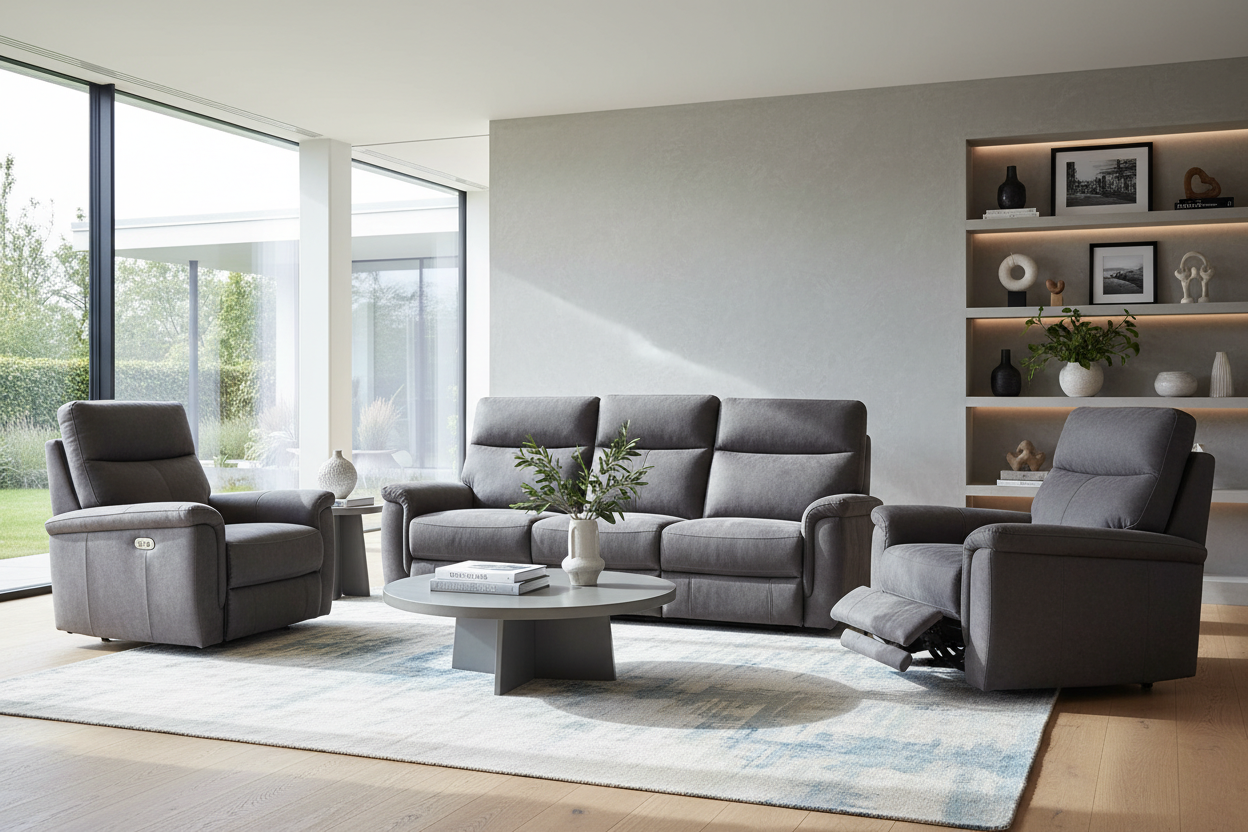
In the world of interior design, we often navigate a tense negotiation between high-end aesthetics and pure, unadulterated comfort. One partner typically advocates for a sleek, low-profile silhouette, while the other prioritizes the ability to kick back after a long day. The sophisticated compromise is often a **couch with recliners on each end**. However, integrating these substantial pieces into a cohesive living room layout requires more thought than simply checking dimensions. It is about balancing visual weight with mechanical function.
Quick Decision Guide: Key Features to Look For
- Wall Clearance: Determine if the mechanism is a "wall-hugger" (needs 2-4 inches) or a standard recline (needs 8-12 inches).
- Power vs. Manual: Power offers infinite positions and USB charging but requires floor outlets or battery packs; manual is cord-free but offers limited angles.
- Upholstery Durability: Look for "high rub count" fabrics or top-grain leather, as the friction between moving parts wears down cheap materials quickly.
- Seat Structure: Opt for high-density foam (2.0 lbs or higher) wrapped in down for a seat that retains its shape despite constant movement.
Mastering the Layout and Space Planning
The most common error I see homeowners make is underestimating the footprint of a reclining sofa when it is fully extended. A standard sofa is a static object; a reclining sofa is dynamic. When you choose a sofa with recliner on each end, you must account for the "pitch"—the angle at which the back moves and the footrest extends.
If you have a narrow living room, a "wall-hugger" mechanism is non-negotiable. These designs slide the seat forward as the back reclines, keeping the furniture stationary relative to the wall behind it. Furthermore, consider your coffee table. Because the footrests require clearance, you need a coffee table that is either narrower or easier to move. I often recommend nesting tables or a round ottoman on casters to maintain flow without hindering the reclining function.
Material Selection: Beyond the Look
Recliners involve friction. Every time you extend that footrest, fabric rubs against fabric. In cheaper models, this is where you will see pilling or tearing within the first year. As a specialist, I advise clients to invest in performance velvets or top-grain leathers.
Leather Considerations
Avoid "bonded" leather at all costs; it will peel at the stress points of the reclining mechanism. Top-grain leather is ideal because it becomes more supple with movement. However, be aware of the acoustic factor: leather-on-leather friction can be squeaky. Higher-end manufacturers often put a strip of felt or cloth between the touching leather parts to mitigate this noise.
Balancing Visual Weight
Reclining sofas are inherently bulky. They often lack the negative space provided by legs on a standard mid-century modern sofa. To prevent your room from feeling heavy or crowded, you need to balance this visual weight.
If your couch is heavy and grounded, pair it with armchairs that have exposed legs and open frames. Use a rug that is large enough (at least 8x10 or 9x12) to anchor the piece properly. If the sofa looks like it is swallowing the rug, the room will feel claustrophobic.
Lessons from My Own Projects
I want to share a specific mistake I made early in my career so you don't have to repeat it. I specified a stunning, high-end power reclining sofa for a client's open-concept living room. We decided to "float" the sofa in the center of the room, facing the fireplace.
It looked beautiful until the delivery team plugged it in. I had completely forgotten that power recliners have thick black cords trailing out the back. Because the sofa wasn't against a wall, we had ugly cables snaking across the hardwood floor to the nearest wall outlet. It was a tripping hazard and an eyesore.
We eventually solved it by purchasing rechargeable lithium-ion battery packs that hide underneath the mechanism, eliminating the cords entirely. Now, whenever I suggest a power couch with recliners on each end that won't be placed against a wall, I immediately budget for battery packs. It’s a small detail that saves the entire aesthetic.
Conclusion
Choosing a dual-reclining sofa doesn't mean you have to sacrifice style for comfort. By selecting the right mechanism for your square footage and balancing the heavy silhouette with lighter accent furniture, you can create a space that looks curated yet feels incredibly inviting. Focus on the mechanics as much as the fabric, and your investment will serve your home for years.
Frequently Asked Questions
How much space do I need behind a reclining couch?
This depends entirely on the mechanism. Standard recliners generally require 8 to 12 inches of clearance from the wall. However, "zero-wall" or "wall-hugger" models are designed to operate with as little as 2 to 4 inches of space, making them ideal for tighter layouts.
Can I use a coffee table with a dual-reclining sofa?
Yes, but distance is key. You typically need at least 14 to 18 inches of space between a standard sofa and a coffee table. With a recliner, you need to measure the length of the footrest when fully extended and add another 12 inches for walking room. Oval or round tables often work best to avoid sharp corners near the leg rest.
Are power recliners more durable than manual ones?
Surprisingly, often yes. While motors can fail, manual lever or pull-tab mechanisms undergo violent physical stress every time you yank them to recline or kick them closed. Power mechanisms move smoothly and consistently, reducing the structural shock to the frame over time.


Leave a comment
This site is protected by hCaptcha and the hCaptcha Privacy Policy and Terms of Service apply.