










Introduction
Setting up a productive workspace at home does not require an extravagant investment. However, choosing among inexpensive home office desks requires careful attention to structural details, surface finishes, and spatial fit. A budget desk should offer dependable stability for daily computing, ample leg clearance, and sufficient surface area to keep daily tools organized. By understanding how budget workstations are engineered and assembled, you can select an affordable piece that integrates cleanly into your room layout while supporting long-term utility.
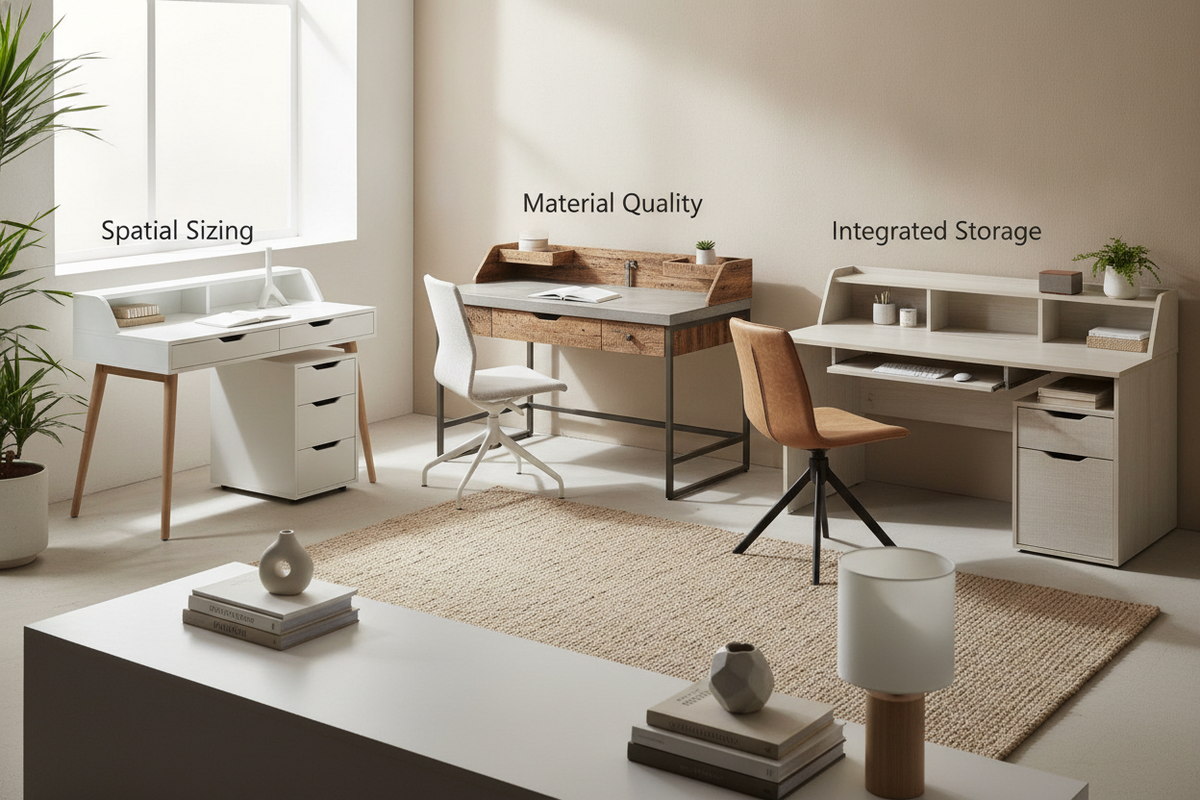
Spatial Sizing Categories for Budget Workstations
When selecting inexpensive desks for home office use, the primary constraint is often room dimensions. Desks generally fall into distinct spatial categories designed for varying workflow demands.
- Compact Writing Desks: These streamlined tables feature shallow depths and modest widths, making them well-suited for bedrooms, small studio apartments, or designated landing zones where a laptop and small notebook are the primary tools.
- Standard Rectangular Workbenches: Offering moderate depth and wide surface spans, rectangular desks comfortably accommodate external monitors, separate keyboards, and desktop accessories without overwhelming mid-sized rooms. For broader layout considerations, reviewing a comprehensive desks office guide helps map workstation dimensions against room proportions.
- Corner and L-Shaped Configurations: L-shaped designs maximize unused room perimeters by wrapping around corners. These layouts divide active typing zones from writing or reference surfaces, providing substantial workspace without claiming the center of a room.
Material and Framing Quality: What to Inspect in Affordable Desks
The longevity of budget workstations hinges on core materials and structural reinforcement. Evaluating these elements prior to selection ensures your workstation remains sturdy over time.
- Engineered Wood Substrates: Most budget-friendly desks utilize high-density particle board or medium-density fiberboard (MDF) cores. Quality boards feature uniform compression that holds fasteners firmly without crumbling under routine use.
- Laminate and Melamine Protective Overlays: Durable exterior laminates resist light moisture, minor scratches, and daily friction. Look for well-adhered edge banding along the perimeter to shield the underlying core from moisture absorption.
- Powder-Coated Steel Tubing: Metal frames paired with engineered wood tops deliver substantial rigidity. Thicker frame profiles and welded corner brackets provide reliable resistance against lateral sway.
- Stabilizing Hardware and Cross-Bracing: Diagonal metal tension bars or solid rear modesty panels contribute significantly to lateral stability, keeping the work surface firm during intensive typing.
Storage Configurations: Maximizing Value per Square Foot
Surface clutter can quickly compromise a compact workstation. Inexpensive home office desks often incorporate diverse storage solutions to maintain an organized desktop.
Integrated open shelving beneath or beside the work surface provides accessible space for reference binders, power banks, and computer towers. Reversible shelves that can be installed on either the left or right side offer added flexibility when arranging furniture around wall outlets. For closed storage, desks featuring shallow utility drawers or integrated filing pedestals keep supplies hidden and dust-free.
Alternatively, pairing an open-frame writing desk with standalone mobile drawer units or nearby shelving allows you to scale storage independently. For creative inspiration on balancing open surfaces with surrounding cabinetry, consulting an office desks guide can assist in styling a coordinated and practical workspace.
Room Layout and Workflow Harmony
An affordable desk functions best when positioned thoughtfully within your living environment. Before locking in a specific desk orientation, consider natural lighting, traffic flow, and electrical access.
Positioning a desk perpendicular to windows reduces direct screen glare while maintaining access to natural ambient light. In multi-functional spaces such as living rooms or guest suites, maintaining adequate clearance behind the desk chair ensures unobstructed walking pathways. It is often wise to step back and evaluate overall room zoning before finalizing furniture purchases; reviewing an office desks guide can provide helpful perspective on coordinating room flow, storage units, and task lighting collectively.
Assembly Inspection, Hardware Alignment, and Longevity Tips
Proper assembly is critical to achieving maximum stability and longevity from budget furniture. Taking time during the initial build prevents premature wobbling or loose joinery.
- Square the Frame: Loosely connect structural frame components first, checking that all angles are perpendicular before fully tightening bolts.
- Secure Fasteners Uniformly: Tighten cam locks, dowels, and machine screws evenly across the assembly to distribute tension without over-torquing the engineered wood.
- Adjust Leveling Feet: Most modern metal-framed desks include threaded leveling glides. Adjusting these compensates for uneven flooring, eliminating wobbles and protecting floor surfaces.
- Manage Surface Care: Clean laminate finishes using a slightly damp microfiber cloth, avoiding harsh abrasive cleansers or excessive moisture pooling along seam edges.
Conclusion
Selecting inexpensive home office desks does not require compromising on stability, practical storage, or visual appeal. By prioritizing solid frame reinforcement, resilient surface laminates, and dimension-appropriate footprints, you can create a dedicated and ergonomic workspace tailored to your everyday tasks and budget.

Leave a comment
This site is protected by hCaptcha and the hCaptcha Privacy Policy and Terms of Service apply.