










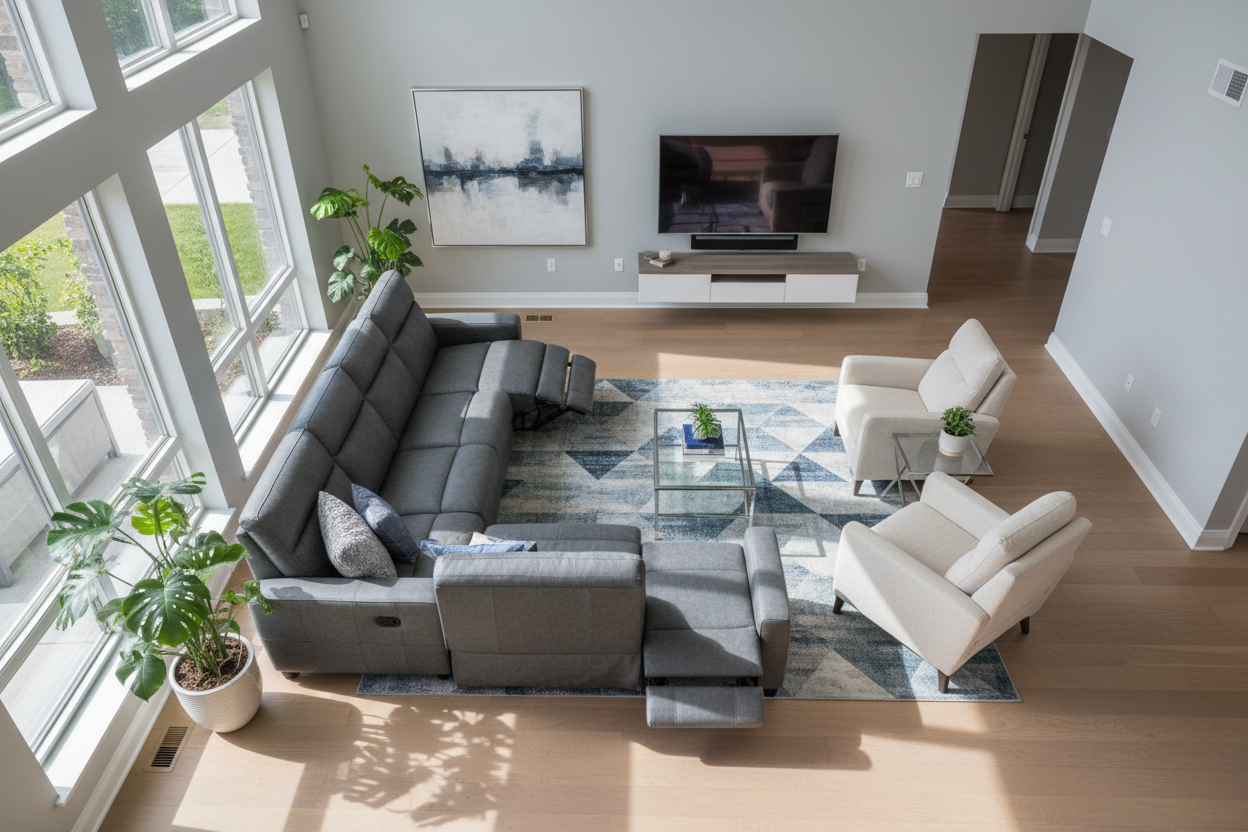
We often face a classic tension in interior design: the battle between high-end aesthetics and Saturday night comfort. Clients frequently come to me wanting a showroom-ready living room, but they also want a space where the whole family can kick back. This is where the 4-seat reclining sectional sofa enters the conversation. It is a substantial piece of furniture that promises relaxation, but without careful curation, it can easily dominate a room and disrupt the visual flow.
If you are considering this investment, you aren't just buying seating; you are anchoring your living space. The challenge lies in selecting a silhouette that offers ergonomic support without looking like a bulky monolith.
Key Features to Look For
- Wall Clearance: Always check if the mechanism is a "wall-hugger" (requiring 2-4 inches) or a standard recline (requiring 10+ inches).
- Upholstery Durability: Look for full-grain leather or performance velvet with a double-rub count over 50,000 for longevity.
- Modular Configuration: Ensure the sections lock securely but can be rearranged if your room layout changes.
- Power Source: Determine if you need a battery pack option if the sofa will float in the center of the room.
Mastering the Layout and Flow
The most common error I see with large reclining sectionals is poor spatial planning. A piece with 4 recliners built-in requires more than just floor space; it requires "motion space." When fully extended, the footrests change the traffic pattern of the room.
When drafting your floor plan, allow for at least 30 inches of walking clearance around the footrest when it is extended. If you place a coffee table in front of the sectional, I recommend a nesting oval or round table. Hard corners on a square coffee table often clash with the extended leg rests, creating a functional hazard and a visual block.
Material Selection: Beyond the swatch
Leather vs. Performance Fabric
For a piece this large, texture is paramount. A high-gloss leather can sometimes look too commercial or cold in a residential setting. I often steer clients toward matte, aniline leathers that develop a patina over time, softening the visual impact of the sofa.
If you opt for fabric, avoid flat weaves. A reclining mechanism creates friction between the cushions. A flat weave will show wrinkling and pooling fabric much faster than a textured chenille or a basketweave, which hides the natural movement of the material.
Visual Balance and Scale
Because a 4-seat reclining sectional sofa is visually heavy, the rest of the room needs to counterbalance it. Avoid heavy, blocky side tables. Instead, opt for leggy, open-frame accent furniture to let light pass through. This negative space prevents the room from feeling overstuffed. Rug sizing is also critical; the front legs of the sectional must sit on the rug to ground the composition, or the sofa will look like a floating island.
My Personal Take on 4-seat reclining sectional sofa
I want to share a specific lesson I learned the hard way during a project in a renovated loft. We ordered a stunning, Italian-leather power reclining sectional. It looked perfect on the blueprint. However, I overlooked one "unpolished" detail: the power cords.
We decided to float the sofa in the middle of the room, facing the fireplace. When the delivery team set it up, we realized we had four distinct power cables trailing across the hardwood floor because I hadn't specified a battery pack upgrade, and we didn't have floor outlets installed. It ruined the clean lines immediately. We had to scramble to install a custom rug with a slit to hide the cords.
Furthermore, be aware of the "gap" sound. On lower-end models, when leather rubs against leather during the recline motion, it creates a friction noise that can be surprisingly loud. I now always test the friction sound in the showroom before approving a purchase order. It’s these tactile, sensory details that define the difference between a house and a home.
Conclusion
Integrating a large sectional with motion capabilities doesn't mean sacrificing style. By paying attention to the mechanical footprint, choosing forgiving textures, and planning your electrical layout, you can create a sanctuary that looks as good as it feels. Focus on quality mechanisms and timeless upholstery, and this piece will serve your family for years.
Frequently Asked Questions
How much space do I need behind a reclining sectional?
This depends entirely on the mechanism. "Zero-wall" or "wall-hugger" designs can sit as close as 2 to 4 inches from the wall. However, standard reclining mechanisms often require 8 to 12 inches of clearance to fully recline without hitting the paint or drywall.
Can I separate the pieces of a 4-seat sectional?
Generally, yes, as they are modular. However, keep in mind that the sides of the interior pieces are often finished in a lower-grade lining fabric (muslin) rather than the main upholstery. If you separate them, those unfinished sides will be exposed.
What is the best way to clean the mechanism?
Dust and pet hair are the enemies of reclining motors. Once every three months, fully extend the footrests and use a vacuum with a hose attachment to clear out the metal scissor mechanisms underneath. This prevents the motor from seizing up over time.

Leave a comment
This site is protected by hCaptcha and the hCaptcha Privacy Policy and Terms of Service apply.