










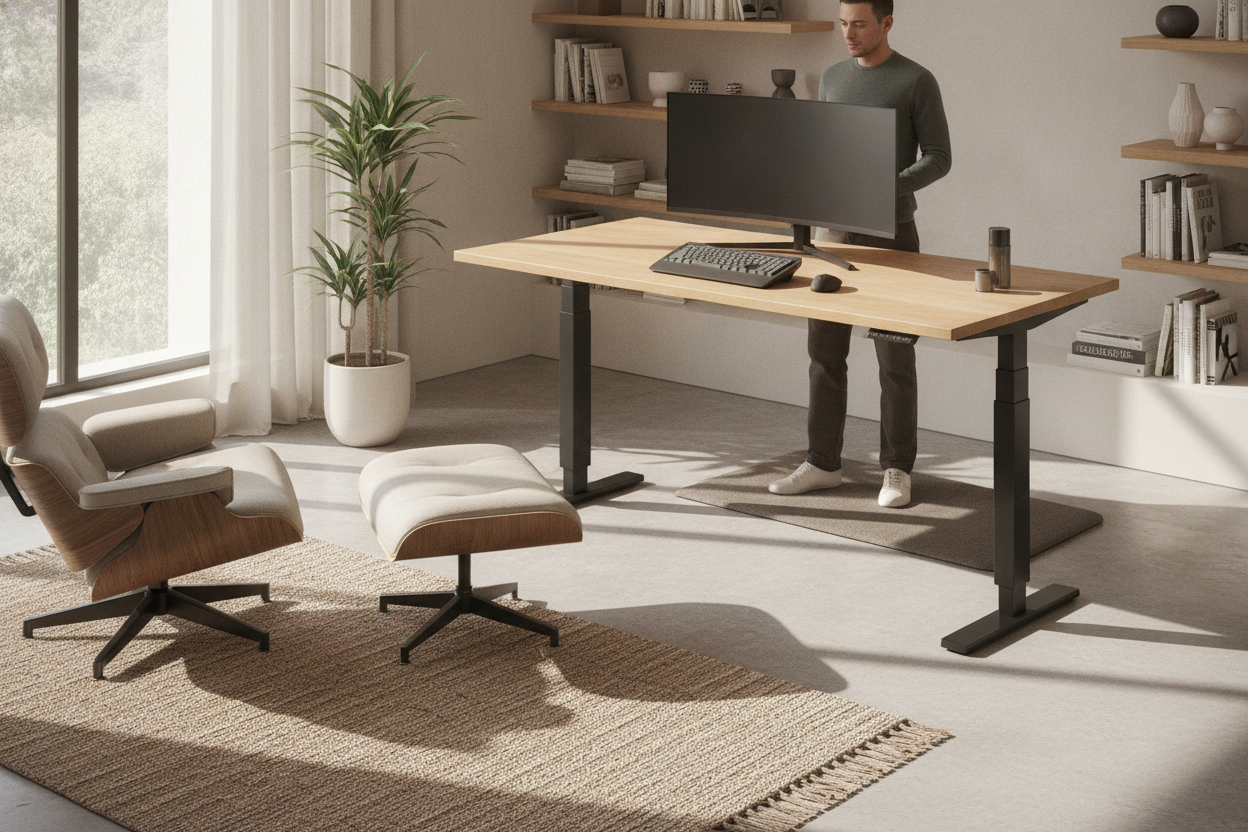
When planning an active workspace, many people immediately think of motorized sit-stand furniture. However, a non-adjustable standing desk offers a compelling alternative built around structural simplicity, unyielding stability, and long-term durability. By removing motorized components and telescoping frame segments, a fixed-height standing surface provides a rock-solid workstation suited for dedicated tasks, craft studios, drafting environments, and home offices.
Understanding how a standing desk not adjustable integrates into your daily routine involves balancing ergonomics, specialized seating, under-desk organization, and room aesthetics. When designing a standing desk setup that actually looks good, choosing a static frame can streamline your layout and open up practical design possibilities.
Understanding the Non-Adjustable Standing Desk: Core Concepts and Structural Benefits
A non-adjustable standing desk is built to a single, static elevation. Unlike motorized or hand-crank desks that rely on multi-stage leg columns to raise and lower the desktop, a fixed standing unit utilizes solid leg posts, reinforced joinery, and structural crossbars. This design approach introduces several distinct advantages:
- Frame Rigidity and Zero-Wobble Performance: Because the legs do not feature telescoping sleeves or internal mechanical clearances, the desk maintains exceptional lateral and front-to-back stiffness, reducing monitor shake during vigorous typing or drawing.
- Mechanical Simplicity: Without electrical control boxes, motors, drive rods, or electronic keypads, static desks eliminate electrical failure points and mechanical wear over time.
- Streamlined Furniture Lines: Traditional joinery, integrated side panels, and cohesive materials allow a fixed standing desk to resemble refined architectural furniture rather than utilitarian office machinery.
Determining Your Fixed Ergonomic Height Before Selecting a Desk
Because a fixed-height surface cannot adapt on the fly, determining your correct ergonomic working posture prior to purchasing is essential. In a dedicated single-user workspace, a properly sized static desk delivers tailored ergonomic support without daily re-calibration.
To establish your optimal desk elevation, stand naturally with your shoulders relaxed and elbows bent at approximately ninety degrees. The distance from the floor to the underside of your forearms represents your target work surface height. When calculating this measurement, be sure to account for several real-world workspace variables:
- Footwear and Floor Mats: Always measure while wearing the type of shoes you use during work, and factor in the compression thickness of any anti-fatigue standing mats.
- Peripherals and Desktop Accessories: Account for keyboard thickness, wrist rests, and whether you plan to use an under-desk keyboard tray or a tabletop monitor arm.
- Shared vs. Dedicated Use: If multiple family members or colleagues of varying heights plan to share the surface, a flexible option like a 71 w height adjustable standing desk may be preferable over a rigid, single-height unit.
Hybrid Seating Strategies: Incorporating Drafting Chairs and Tall Stools
Working at a standing desk not adjustable does not mean remaining on your feet all day. In practice, seasoned standing desk users rely on hybrid seating setups that bring sitting ergonomics up to the standing plane.
By pairing a static standing desk with an elevated drafting chair, architectural stool, or active leaning perch, you can transition between sitting, leaning, and full standing without changing desk height. Key elements of an effective hybrid seating strategy include:
- Integrated Foot Rings: Drafting chairs feature circular foot rings or supportive foot bars that keep your knees at comfortable angles and relieve pressure on your lower back.
- Active Perching Stools: Saddle stools and weighted wobble perches encourage open hip angles and core engagement while giving your legs a periodic rest.
- Tuck-Away Clearance: Ensure the distance between the desk legs accommodates the width of your stool base so it can slide neatly out of the way when you stand.
Maximizing Under-Desk Storage and Modular Organization
One of the most significant advantages of a fixed-height standing surface is the expansive vertical clearance beneath the desktop. Motorized sit-stand desks present a constant pinch hazard, requiring open space below to avoid crushing filing cabinets or storage boxes when lowering. A non-adjustable standing desk eliminates this constraint entirely.
With a dependable vertical cavity, you can customize the area underneath the desktop with tall multi-drawer units, computer tower stands, or deep shelving. Integrating adjustable shelf storage beneath or adjacent to your standing surface allows you to keep reference binders, equipment, and office supplies easily accessible without cluttering your main workspace. Surrounding the perimeter with matching bookcases and credenzas creates an efficient, cohesive command center.
Cable Routing and Perimeter Layouts for Static Standing Workstations
Cable management on dynamic sit-stand desks often requires heavy-duty cable spines, lengthy slack loops, and careful tethering to prevent unplugging during transit. Static standing desks dramatically simplify cord management:
- Direct Vertical Drops: Power and display cables can be routed straight down a single desk leg using clean wire channels, adhesive clips, or fabric sleeves without requiring extra slack.
- Under-Frame Power Mounting: Power strips, surge protectors, and power bricks can be securely mounted along the rigid under-desk crossbeams for a clean, floating aesthetic.
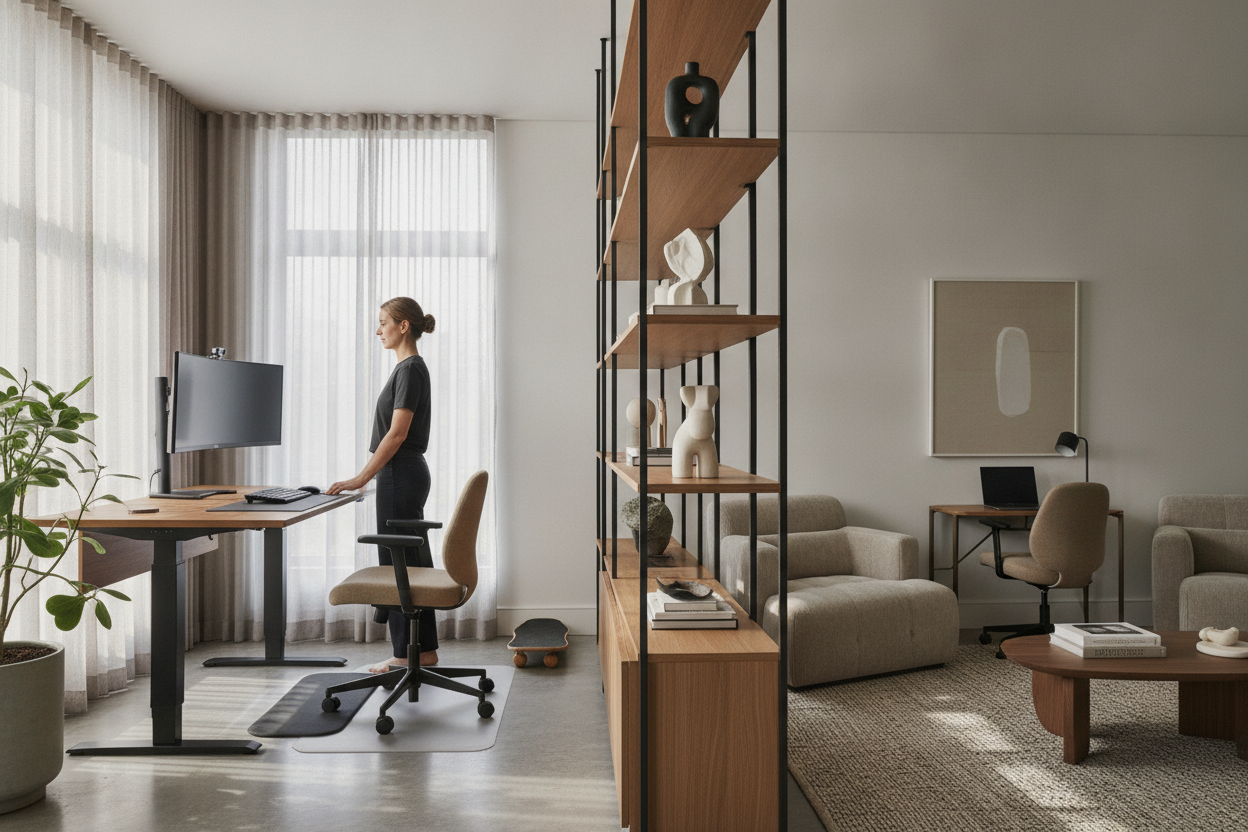
- Flexible Room Positioning: Because cables remain stationary, fixed standing desks work beautifully as freestanding islands, room dividers, or wall-aligned workstations. When exploring ideas to elevate your space designer ideas for standing desk layouts, a static frame offers balanced proportions that blend smoothly with surrounding cabinetry.
Fixed Standing Desks vs. Motorized Adjustable Models: Decision Framework
Choosing between a non-adjustable standing desk and an electric sit-stand workstation comes down to workflow habits, user flexibility, and aesthetic priorities. A static standing desk excels when you want a dedicated task bench, a cost-effective standing corner, or absolute frame rigidity for heavy equipment. It allows you to build out custom under-desk cabinetry and maintain a timeless furniture style.
Conversely, if your daily workflow demands frequent shifts between standard chair height and standing height at the push of a button, an adjustable standing desk product provides effortless motorized transitions for multiple users. By assessing your height requirements, seating strategy, and organizational needs, you can select the perfect workstation architecture to support an energetic and organized working routine.

Leave a comment
This site is protected by hCaptcha and the hCaptcha Privacy Policy and Terms of Service apply.