










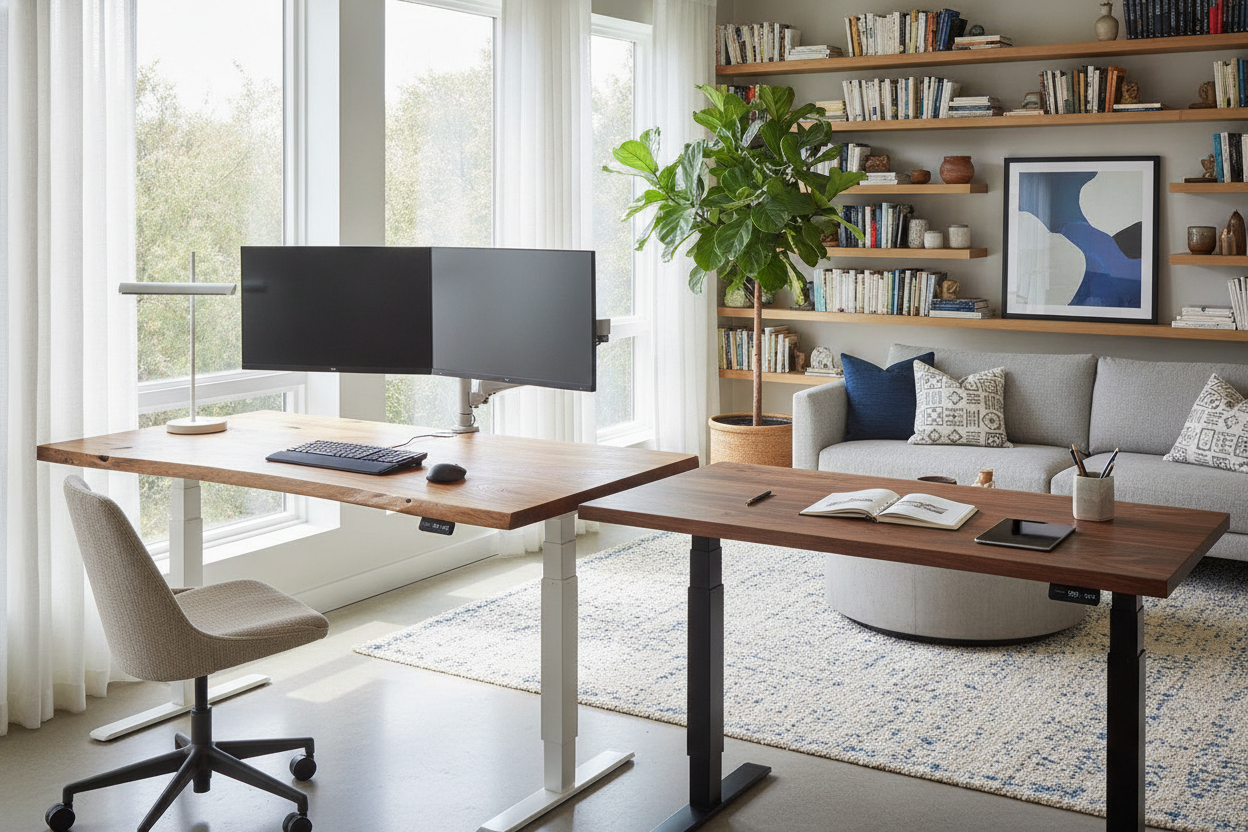
I spent three weeks researching standing desks only to realize that most 'all-in-one' kits are a bit of a scam. You pay $800 for a motor that’s fine, but it arrives with a piece of particle board that feels like it was salvaged from a 1990s dorm room. After my third return—this time because the laminate chipped if I so much as looked at it—I realized the secret: desk tops for standing desks are better when you source them yourself.
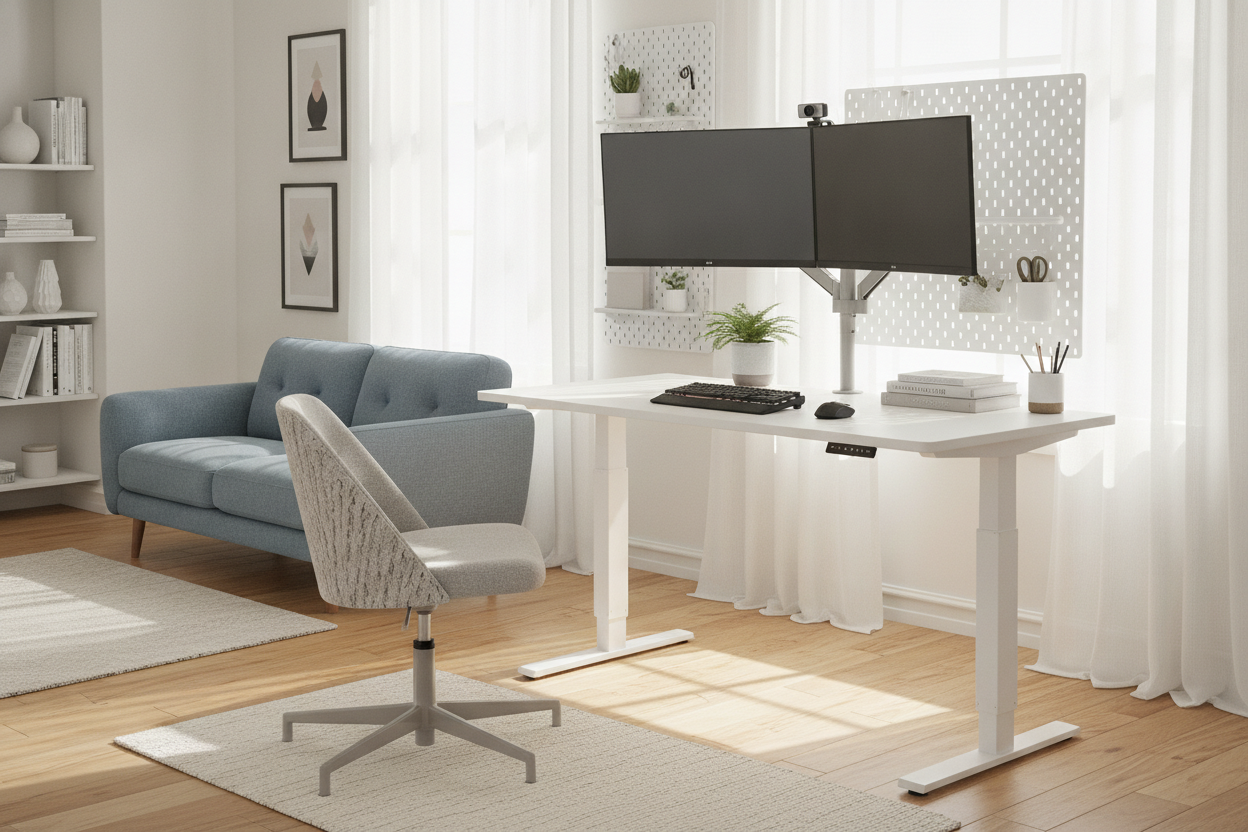
The 'Franken-desk' method is simple: buy a rock-solid motorized frame from a reputable manufacturer and pair it with a surface that actually looks like furniture. This isn't just about saving money (though you will); it's about not having a giant slab of white plastic as the focal point of your home office.
Quick Takeaways
- Buying separately lets you get a solid wood surface for the price of a mid-range laminate kit.
- Custom dimensions mean you can fit a workspace into a weird corner without wasting floor space.
- Solid wood is repairable; if you scratch a cheap laminate top, it's ruined forever.
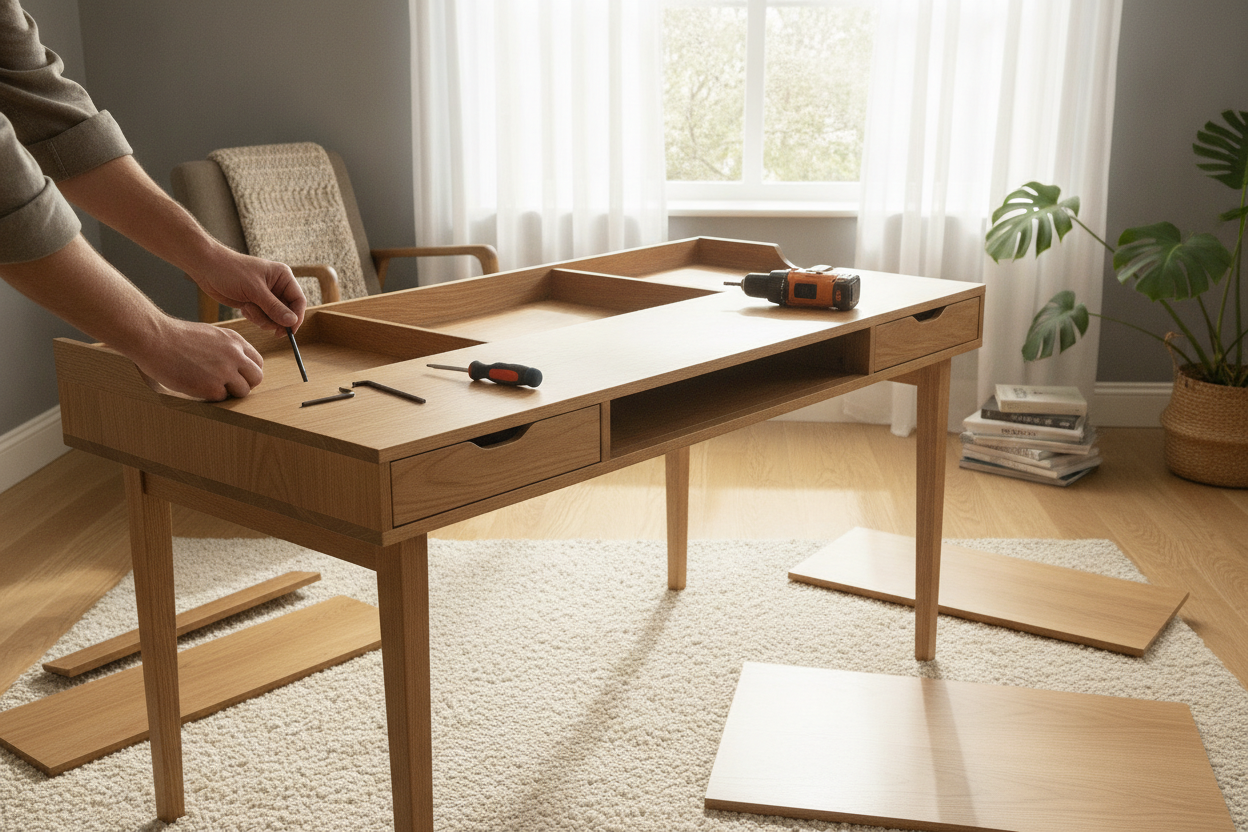
- A standard hand drill and 20 minutes are all you need for assembly.
The Epiphany: Why You Should Split the Frame and the Surface
Most big-name brands make their money on the markup of the surface, not the motor. They’ll sell you a frame for $300, but charge an extra $400 for a 'premium' top that is really just MDF with a thin veneer. By shopping for a separate table top for sit stand desk, you break that cycle. You can find a heavy-duty, dual-motor frame on sale and spend your savings on a surface that won't bow under the weight of two monitors.
My first 'custom' build used a generic frame and a butcher block slab. It was sturdier than any $1,000 pre-built desk I’d ever tried. When you use a high-quality sit stand tabletop, the whole unit feels more grounded. There's less of that annoying micro-wobble when you're typing at full height because the mass of the wood helps dampen the vibration.
Material Matters: Laminate, Bamboo, or Solid Wood?
If you're touching a surface for eight hours a day, the material matters. Laminate is the budget king, but it’s cold and loud. Bamboo is popular because it's sustainable, but it can be surprisingly soft and prone to 'checking' or small cracks if your home gets too dry in the winter. For me, a wood table top for standing desk is the only way to go.
Solid wood—think walnut, oak, or maple—offers a tactile warmth that makes working a little less soul-crushing. It ages with you. If you spill your coffee or dent it with a heavy microphone arm, you can sand it down and refinish it. You can't do that with the hollow-core standing desk table tops that come in those flat-pack boxes. Those are basically cardboard sandwiches that end up in a landfill the moment they get wet.
Getting the Proportions Right for Awkward Rooms
Most pre-made desks come in two sizes: 'Too Small' and 'Takes Over the Room.' When you buy a table top for adjustable desk separately, you get to be the architect. I once needed a desk that was exactly 54 inches wide to fit between a window and a radiator. Try finding that in a standard catalog.
This flexibility is a lifesaver if you're trying to make a computer desk in dining room setup look intentional. Instead of a bulky office beast, you can use a slim, beautifully finished wood slab that matches your dining table. It makes the transition from 'work mode' to 'dinner mode' feel less like you’re eating in a call center.
The Dreaded Drill Phobia: Is Assembly Actually Hard?
I get it—drilling into a brand-new piece of wood is terrifying. But attaching a sit stand tabletop to a frame is actually the easiest part of the build. Most frames come with universal mounting brackets. You just center the frame, mark the holes, and drill shallow pilot holes. If you’re worried about going too deep, just wrap a piece of painter's tape around your drill bit as a depth gauge.
The biggest mistake I see? Not centering the raised table top properly. If your top is 60 inches wide, your frame needs to be perfectly centered at the 30-inch mark. If it's off-balance, one motor will work harder than the other, leading to a premature death for your desk and a lot of annoying grinding noises.
Solving the Storage Dilemma When You Build Your Own
The one downside to the custom sit stand tabletop desk is the lack of built-in drawers. Most solid slabs don't come with a pencil tray. However, I’ve found that the 'clean' look is actually better for productivity. I prefer using a table bookshelf combo positioned right next to the desk to handle my storage needs.
By keeping the storage separate, your desk remains a dedicated zone for your computer and your coffee. It also makes the lifting mechanism last longer because you aren't hoisting 40 pounds of stationary and old receipts every time you want to stand up. Keep the surface minimal, and let a nearby shelf do the heavy lifting.
Frequently Asked Questions
Can I use any table top for a standing desk?
Mostly, yes. Just ensure the thickness is at least 1 inch so the screws have enough 'bite' and the wood doesn't sag. Also, check your frame's weight capacity to make sure it can handle a heavy solid wood slab plus your gear.
Do I need to drill holes in the desktop?
Yes, you'll almost certainly need to drill pilot holes. Most separate desk tops don't come pre-drilled because every frame has a different hole pattern. It takes about 10 minutes and a basic power drill.
Is a solid wood top too heavy for the motors?
Standard dual-motor frames usually handle 200–350 lbs. A 60-inch solid oak top weighs about 50–70 lbs. You'll have plenty of overhead for monitors, speakers, and your laptop.

Leave a comment
This site is protected by hCaptcha and the hCaptcha Privacy Policy and Terms of Service apply.