










The Strategic Rationale for a Dual-Function Work and Dining Surface
Modern residential architecture increasingly prioritizes open layouts and compact footprints, creating an operational challenge for remote workers and urban dwellers. Balancing a productive, clutter-free workstation by day with a warm, welcoming meal space by evening requires eliminating redundant furniture. When a single surface must alternate between focus work and communal dining, selecting a specialized dual-purpose piece transforms how an entire room functions.
Choosing a desk convert to dining table setup eliminates the awkward compromise of balancing laptops beside dinner plates. By leveraging adaptable geometry, a single room can host rigorous daily professional tasks and quickly transition into a formal gathering area without visual chaos. When orchestrating a hybrid space, consulting a dedicated desk dining guide ensures work equipment does not detract from mealtime ambiance.
Conversion Architecture: Extension Mechanics and Structural Formats
The core utility of any convertible furniture piece depends directly on its underlying structural mechanics. Different extension systems address distinct spatial constraints and user routines:
- Drop-Leaf and Gateleg Systems: Hinged outer leaves drop flush against the frame during work hours to preserve clearance in narrow corridors, swinging upward onto pivoting support legs when dining capacity is required.
- Butterfly and Internal Slide Leaves: A central leaf folds seamlessly beneath the tabletop, allowing an executive-depth workstation to expand horizontally into a long banquet table suitable for larger gatherings.
- Flip-Top and Expanding Console Designs: These configurations sit against a wall as a slim console or compact writing desk, then rotate and unfold outward to double their surface area for multi-person meals.
- Height-Adjustable Scissor and Column Frames: Counterbalanced pneumatic or manual gear assemblies allow low coffee desks to elevate to standard dining heights, serving multiple ergonomic postures throughout the day.
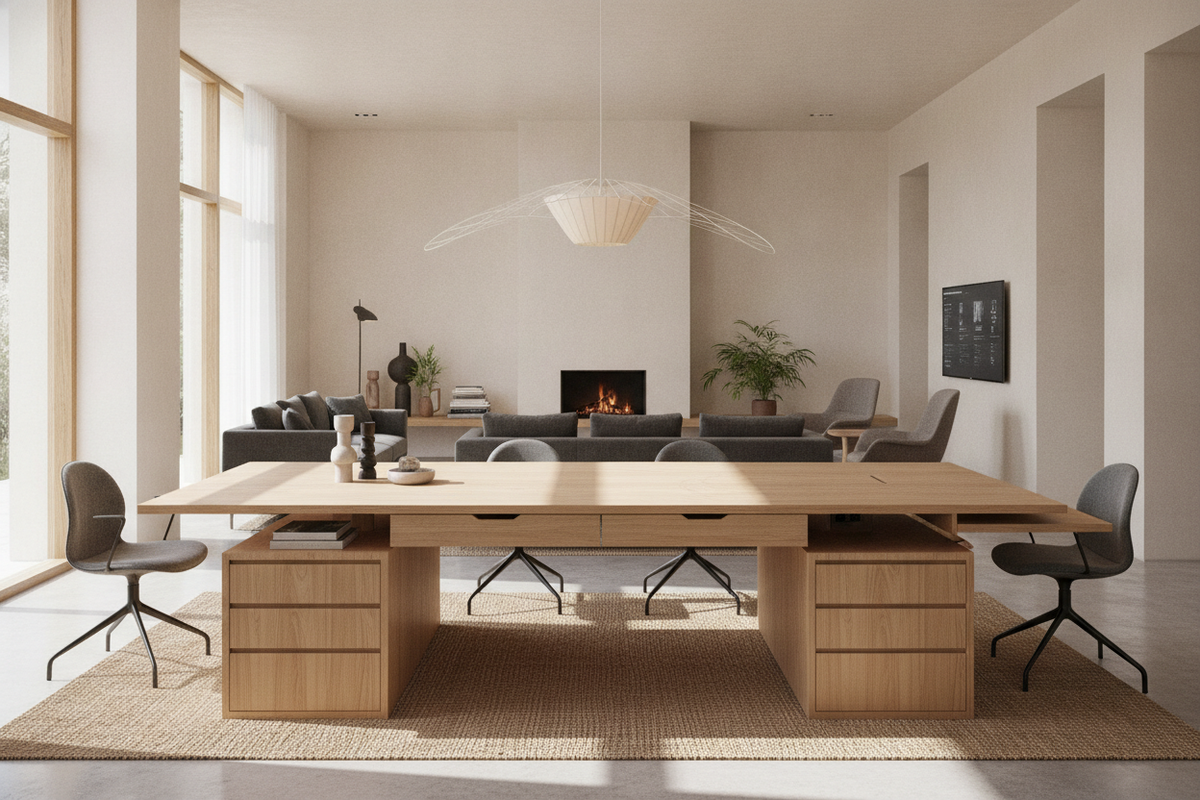
Exploring specialized multi-functional furniture, such as a versatile convertible product with drawer systems, reveals how dual-purpose engineering optimizes limited floor areas while keeping essential items concealed.
Spatial Footprint Tiers: Matching Table Geometry to Room Dimensions
Achieving fluid room transitions requires selecting table dimensions that harmonize with available walkway clearances in both collapsed and extended states:
Compact Studio Tier
In narrow micro-apartments or studio living areas, maintaining open circulation is essential. A slim console or drop-leaf unit that occupies minimal depth during daytime focus sessions can swing open to seat two to four people without blocking primary pathways.
Mid-Size Apartment Tier
Standard urban apartments often benefit from a dedicated single-user desk footprint that expands laterally. In this configuration, the table comfortably supports monitors, task lighting, and desk organizers during work hours, unfolding into a balanced six-person dining setting for dinner parties.
Open-Concept Great Room Tier
In expansive open layouts, a convertible centerpiece can function as a substantial library-style conference desk during the week and lengthen into an extended dining table for weekend entertaining. Ensuring adequate perimeter space behind all chairs allows dinner guests to slide seats back comfortably without brushing against surrounding walls or cabinetry.
Storage Parity and Rapid Workstation Deconstruction
The primary barrier to maintaining a dual-purpose dining environment is the transition time. If clearing away screens, keyboards, and paperwork takes extensive effort, the conversion process quickly becomes a daily chore. Designing an efficient transition routine keeps the living area organized and functional.
Pairing your convertible desk with dedicated perimeter storage makes transitions effortless:
- Mobile Rolling Pedestals: Compact file carts can slide beneath the desk during work hours and roll into a nearby closet or corner nook before dinner.
- Sideboard and Buffet Credenzas: Organizing dedicated storage bins inside nearby dining cabinets creates designated cubbies for laptops, docks, and power banks right next to dinnerware.
- Concealed Cable Troughs: Using modesty panel raceways and quick-disconnect cable hubs allows you to unplug a laptop and store all peripheral wiring out of sight within moments.
Homeowners redesigning shared zones can follow a structured convert guide to repurpose open floor plans without permanent construction or visual clutter.
Material Resilience, Finish Synergy, and Long-Term Care
A multi-functional surface experiences varied daily demands, from keyboard friction and mouse movement to warm dinnerware, beverage condensation, and occasional spills. Selecting the right finish ensures the piece retains its aesthetic appeal over years of continuous conversion.
High-pressure laminates and engineered surfaces offer exceptional resistance against scratching, pen marks, and moisture, making them reliable options for high-frequency daily transitions. Solid wood and premium veneers introduce natural warmth and tactile elegance, though they benefit from protective desk mats during the workday and placemats or trivets during meals. Regularly checking mechanical hinge tension and keeping slide tracks clean ensures smooth, quiet conversions across every season.
Step-by-Step Decision Framework: Selecting Your Ideal Convertible Setup
Before selecting a convertible table, evaluate how your household operates daily:
- Determine Conversion Frequency: Clarify whether you intend to transform the surface twice daily or primarily for weekend dinner hosting. For daily shifts, prioritize lightweight, single-motion mechanisms.
- Plan Flexible Seating: Complement the table with stackable upholstered dining chairs, nesting stools, or an upholstered bench that tucks neatly beneath the frame during office hours.
- Align Aesthetic Tones: Match the wood tones, metal hardware, and surface silhouettes with your existing storage credenzas, accent shelving, and lighting fixtures to maintain a cohesive interior atmosphere.
By harmonizing geometric flexibility, durable finishes, and strategic perimeter storage, a convertible work-to-dining table transforms a compact home into an adaptable, organized living space.


Leave a comment
This site is protected by hCaptcha and the hCaptcha Privacy Policy and Terms of Service apply.