










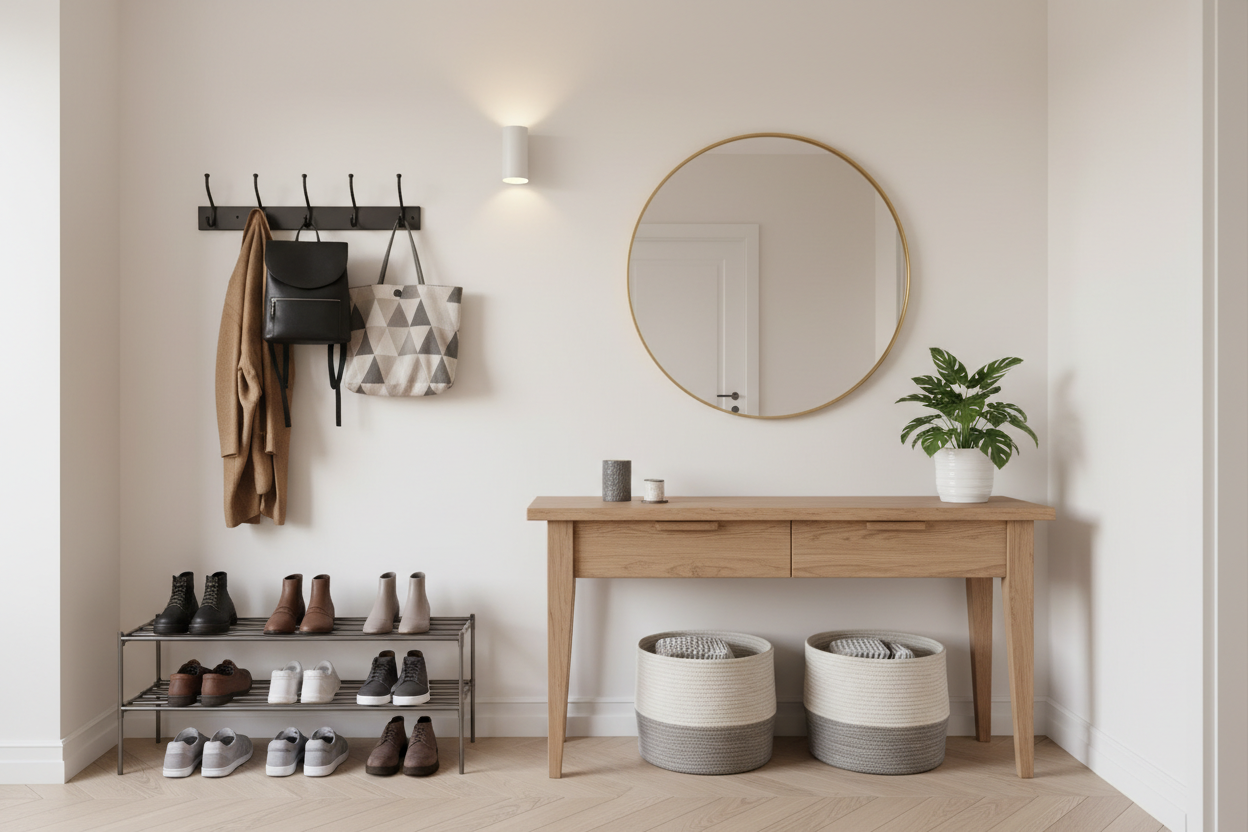
Walking through your front door should feel like a relief, not a reminder of your to-do list. Yet, for many of us living with compact foyers or narrow corridors, the entryway becomes a chaotic dumping ground for keys, mail, dog leashes, and sunglasses. The solution isn't necessarily a massive renovation or a coat closet you don't have space for. Often, the most effective fix is a dedicated landing strip, specifically a small hall table with storage designed to maximize utility without encroaching on your walking path.
A well-chosen piece of furniture does two things simultaneously: it anchors the space visually, making a cramped area feel intentional, and it provides a designated home for the daily clutter that otherwise migrates to the kitchen counter or the dining table. When you select the right piece, you aren't just buying wood or metal; you are buying a streamlined morning routine.
The Reality of Living with a Narrow Entryway
I learned the hard way that square footage doesn't dictate how much stuff you carry home every day. In my first apartment, the "foyer" was essentially a three-foot-wide hallway that ran directly into the living room. For months, I relied on a system I affectionately called "The Pile." I would kick off my shoes near the door, toss my mail on a dining chair, and lose my keys somewhere in between. It was stressful, and leaving the house every morning involved a frantic five-minute scavenger hunt.
Eventually, I hunted down a vintage demi-lune table—one of those half-moon shapes that sit flush against the wall. It was barely 12 inches deep, but it had a single, shallow drawer and a lower shelf. That drawer became the exclusive home for keys and wallets. The shelf held a woven basket for mail. Suddenly, the hallway wasn't just a passage; it was a functional room. That experience taught me that a small hallway table with storage is less about size and more about smart vertical utilization.
Defining Your Storage Needs
Before pulling out your credit card, you have to audit what actually lands in your hallway. A table that looks beautiful but lacks the right kind of compartments will just become another surface to clutter up. If your primary issue is paper clutter like bills and flyers, you need a console with drawers. Open shelves won't hide the mess; they will just elevate it.
Conversely, if your entryway is the drop zone for bulkier items like scarves, gloves, or dog walking gear, a small hall table with storage that features open shelving or a lower cabinet is superior. You can slide textured baskets or bins onto the shelves to contain these items. This keeps the visual noise down while keeping essentials accessible. The goal is to hide the ugliness of everyday life while keeping it within arm's reach.
The Mathematics of a Tight Squeeze
Scale is the place where most entryway designs fail. In a narrow hall, every inch of depth matters. Standard console tables often run 15 to 18 inches deep, which can choke a hallway that is only 36 to 40 inches wide. You generally want to maintain at least 30 inches of clear walking space to avoid bumping your hip every time you walk past with groceries.
Look for "slim" or "narrow" profiles. Many furniture makers now design specifically for urban living, offering pieces that are only 8 to 10 inches deep. While you won't fit a large lamp on a table that shallow, it is perfectly adequate for a mail tray and a small catch-all bowl. If you choose a piece with legs rather than a solid boxy base, the visibility of the floor underneath will trick the eye into thinking the space is larger than it is.
Material Selection and Visual Weight
Since this furniture will likely be the first thing guests see, the material sets the tone for your entire home. However, in a small space, visual weight is just as important as physical dimensions. A solid oak cabinet with doors might offer great storage, but it can look heavy and imposing in a dark corridor.
Acrylic or glass-top tables are excellent for maintaining an airy feel, though they often lack hidden storage. A great compromise is a metal frame with wood drawers. The open legs keep the sightlines clear, while the wooden elements provide the warmth and concealment you need. If you prefer a solid wood look, opting for a lighter wood tone or a painted finish can keep the piece from feeling like a black hole absorbing all the light in the hallway.
Styling Without Cluttering
Once you have your small hallway table with storage in place, the temptation is to over-decorate it. Resist this urge. In a small space, negative space (empty space) is luxury. Limit your decor to three distinct items. A mirror hung above the table is a classic move for a reason: it reflects light and allows for a final check before you head out the door.
On the surface, consider a tray to corral loose items. A tray creates a boundary; if the items don't fit in the tray, they don't belong on the table. Add a vertical element, like a tall, slender vase with greenery or a candlestick, to draw the eye up. This emphasizes the height of the room rather than the narrowness of the floor plan.
Lighting the Way
Entryways are notoriously dark. If your table surface is too small for a lamp, consider wall sconces flanking the mirror or a battery-operated picture light above it. Good lighting transforms a utilitarian drop zone into a design moment. If you do have room for a small lamp, choose one with a narrow base to preserve your precious surface area for the things you actually need to put down.
Alternatives for the Ultra-Narrow Hall
Sometimes, even a 10-inch deep table is too much. If your hallway is extremely tight, wall-mounted floating shelves with drawers are a brilliant alternative. These units have zero footprint on the floor, making vacuuming easier and keeping the walkway completely clear. You can mount them at whatever height feels natural for your reach.
Another option is a shoe cabinet with tip-out drawers. These are incredibly slim—often just 6 or 7 inches deep—because the shoes are stored vertically. While designed for footwear, the top surface functions exactly like a console table, and the tip-out bins can easily be repurposed to hold umbrellas, bags, or mail if you don't need the shoe storage.
Creating a functional entryway in a small home isn't about magic; it's about respecting the constraints of the space and choosing furniture that works hard. A small hall table with storage is the anchor that stops the drift of clutter into your living areas, giving you a sense of order the moment you step inside.
Frequently Asked Questions
How deep should a hallway table be for a narrow corridor?
For narrow hallways, aim for a table depth between 8 and 12 inches. This ensures you maintain a comfortable walking path (ideally 30 inches or more) while still providing enough surface area for keys, mail, and small decor items.
Can I use a shoe cabinet as a hallway table?
Yes, this is a popular hack for tight spaces. Tip-out shoe cabinets are designed to be extremely slim (often under 10 inches deep) and provide significant hidden storage, while the top surface functions perfectly as a console table for your entryway essentials.
How do I style a small entry table without making it look messy?
Use the "rule of three" and rely on containers. Place a tray on the table to catch loose items like keys and sunglasses, add a mirror on the wall to expand the space visually, and include one vertical decor element like a vase or lamp. Keep the rest of the surface clear.

Leave a comment
This site is protected by hCaptcha and the hCaptcha Privacy Policy and Terms of Service apply.