










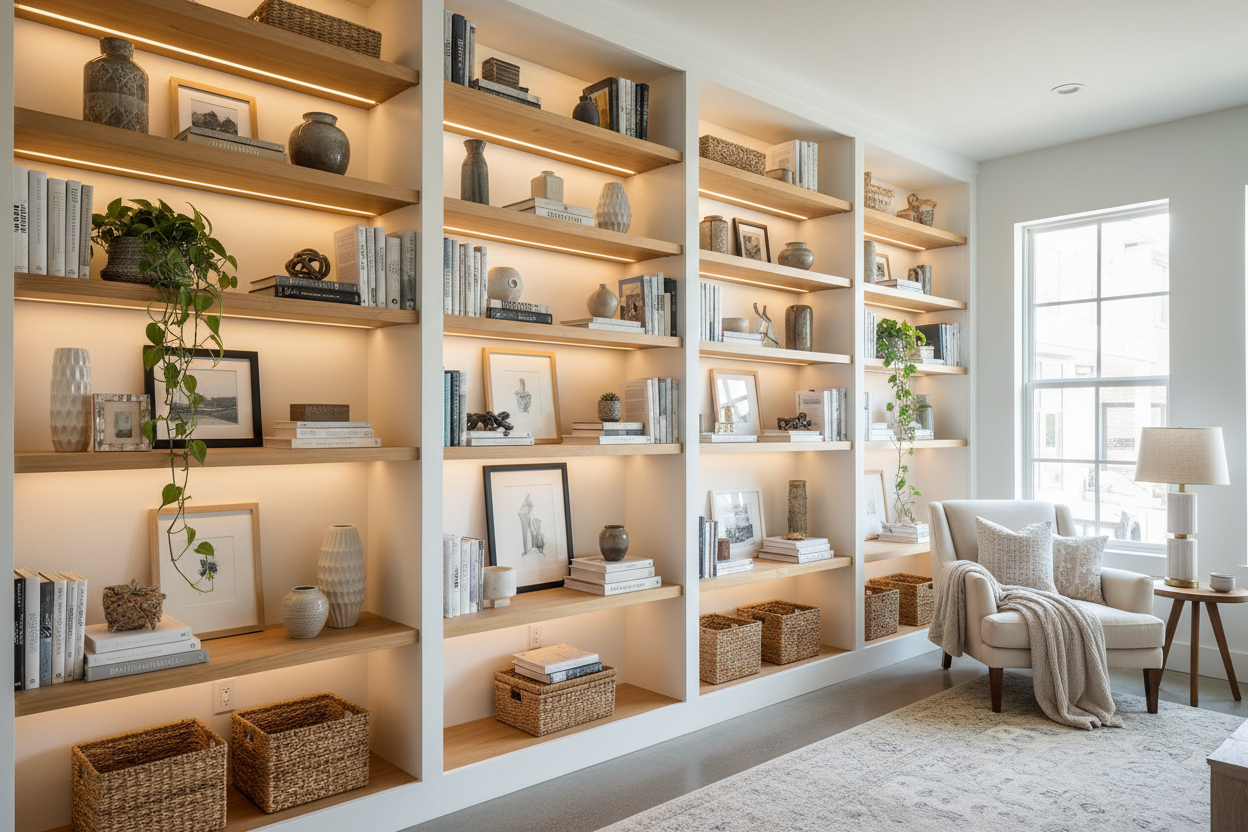
Built-in bookshelves aren't just storage solutions—they're architectural statements that can completely transform how a room feels and functions. Whether you're dealing with awkward alcoves, empty walls crying out for purpose, or simply dreaming of a library-worthy space, the right built-in bookcase design can add both character and value to your home.
The beauty of bookshelves built into wall spaces is their ability to maximize every inch while looking like they've always belonged there. Unlike freestanding furniture that can feel temporary or mismatched, custom installations create a cohesive look that elevates your entire interior design scheme.
Why Built-In Bookcases Make Sense
I'll never forget the first time I tackled a built-in bookshelf project in my own home. We had this strange nook beside our fireplace—too small for furniture, too prominent to ignore. After months of scrolling through built in bookcases pictures and built in bookshelves photos, I finally committed to a custom design. The transformation was remarkable. What was once wasted space became the focal point of our living room, and suddenly we had a home for everything from books to family photos to decorative objects.
The practical advantages go beyond aesthetics. Built-in bookcase bedroom installations, for instance, can replace bulky nightstands and dressers, creating a streamlined look while actually increasing storage capacity. The same principle applies to home offices, living rooms, and even hallways where traditional furniture might feel cramped.
Exploring Different Design Approaches
Modern built-in bookcase ideas tend toward clean lines, minimal ornamentation, and often incorporate mixed materials like metal brackets or glass shelving. These contemporary built-in bookshelves work beautifully in minimalist spaces where simplicity reigns. Think floating shelves with hidden brackets, asymmetrical arrangements, and neutral color palettes that let your book collection become the visual interest.
On the flip side, traditional built in bookshelves embrace classic architectural details—crown molding, decorative trim work, and often richer wood tones or painted finishes in deep colors. These designs reference library aesthetics and create a sense of timeless elegance. Looking through images of built-in bookcases in historic homes reveals how these pieces were originally conceived as permanent fixtures worthy of fine craftsmanship.
For those seeking something different, unique built in bookshelves might incorporate unexpected elements: ladder systems for reaching high shelves, integrated lighting that showcases collectibles, or even hidden compartments. Some of the best built in bookcases I've encountered blend multiple purposes—a built in bookshelf with drawers at the base, for example, provides both open display and concealed storage.
Contemporary Versus Classic Styles
The distinction between modern and traditional approaches often comes down to proportion and detail. Contemporary designs favor horizontal emphasis, wider spacing between shelves, and integration with other elements like media centers or desks. Browse through built in bookshelf images from current design magazines, and you'll notice how these installations often disappear into the architecture rather than announcing themselves.
Traditional designs, by contrast, tend toward vertical emphasis, more closely spaced shelving, and standalone presence. Pictures of built-in bookshelves in older homes show how these were meant to be noticed—crafted focal points that demonstrated both wealth and learning.
Planning Your Built-In Bookcase
Before diving into construction, spend time gathering inspiration. Look at built in bookshelf design ideas across various sources—not just photos of built in bookcases, but also pics of built in bookshelves in real homes rather than staged showrooms. Real installations reveal practical considerations that styled shots often hide.
Measure carefully and consider what you'll actually store. Books are heavy, so shelf spans need appropriate support. If you're planning to display collectibles or family photos alongside books, you might want varied shelf heights. The inbuilt bookshelves concept means you're committing to a permanent fixture, so getting the proportions right matters enormously.
Custom bookcase ideas should reflect your specific needs. A home office might benefit from lower shelves with workspace above, while a living room installation might prioritize display over storage. Built in style bookshelves can incorporate closed cabinets at the bottom—perfect for hiding clutter while maintaining the refined look of open shelving above.
Material and Finish Considerations
The materials you choose dramatically affect both appearance and durability. Solid wood remains the gold standard for beautiful built-in bookcases, offering longevity and the ability to refinish over time. However, quality plywood with hardwood facing provides excellent results at lower cost and with greater dimensional stability.
Paint versus stain is another crucial decision. Painted finishes, especially in white or light colors, create an airy feel and make spaces appear larger. They're particularly effective in modern built-in bookcase ideas where the architecture should recede. Stained or natural wood finishes showcase material beauty and suit traditional aesthetics better.
Design Elements That Elevate the Ordinary
The difference between adequate and exceptional often lies in details. Looking through images of built in bookcases that truly impress, certain elements appear repeatedly. Lighting—whether integrated LED strips, picture lights, or recessed pucks—transforms shelving from purely functional to genuinely dramatic, especially for evening ambiance.
Backing material deserves consideration too. While many built-in shelves simply expose the wall behind them, adding beadboard, wallpaper, or even a contrasting paint color creates depth and visual interest. Some designs for built in bookcases incorporate mirrored backs, which reflect light and make spaces feel larger.
The bookshelf cabinet design at the base of many installations provides essential concealed storage. This is where you hide the unsightly necessities—electronics, office supplies, kids' toys—while maintaining the curated appearance of the open shelves above. A next bookshelf trend worth watching involves integrating charging stations and cable management directly into these base cabinets.
Making the Most of Awkward Spaces
Built in shelf ideas really shine when dealing with challenging architecture. That sloped ceiling in the attic? Perfect for graduated shelving. The space flanking a window? Ideal for symmetrical installations that frame the view. Even narrow hallways can accommodate shallow built-in shelving that adds function without impeding traffic flow.
Resources like This Old House built-in bookshelves projects demonstrate how to work with existing architecture rather than fighting it. The key is viewing limitations as design opportunities. That odd corner or unused nook might become your favorite feature once properly shelved.
Bringing Your Vision to Life
Whether you're hiring a carpenter or tackling this as a DIY project, clear communication about expectations matters. Share those pictures of built-in bookcases you've been collecting. Discuss not just aesthetics but also practical concerns: weight capacity, accessibility, and how the installation integrates with existing electrical and HVAC systems.
Budget considerations vary wildly depending on size, materials, and labor. Simple painted MDF installations might run a few hundred dollars for a modest alcove, while elaborate hardwood libraries with custom millwork can reach five figures. Most homeowners find that built-in bookcases offer excellent return on investment, both in daily enjoyment and eventual resale value.
The beauty of built-in bookshelves ideas is their adaptability. Your installation can grow and change with you—repainted, restocked, repurposed. What starts as a book storage solution might eventually house your vinyl collection, display your pottery, or showcase your children's achievements. The permanence of the structure provides a constant framework for your evolving life.
Frequently Asked Questions
How deep should built-in bookshelves be?
Standard bookshelf depth ranges from 10 to 12 inches, which accommodates most books comfortably. However, if you plan to store larger items or want to create display depth, 14 to 16 inches works better. Shallower shelves (8 inches) can work in tight spaces or for paperback-only collections.
Can built-in bookcases work in small rooms?
Absolutely. Built-ins actually maximize space efficiency in smaller rooms by utilizing vertical space and eliminating the gaps that freestanding furniture creates. Light colors and open shelving prevent the installation from feeling heavy or overwhelming.
Should I hire a professional or DIY my built-in bookcase?
This depends on your skill level and the complexity of your design. Simple installations using pre-made components can be successful DIY projects for moderately handy homeowners. However, custom millwork, complex joinery, or installations requiring electrical work typically benefit from professional expertise to ensure both safety and quality results.

Leave a comment
This site is protected by hCaptcha and the hCaptcha Privacy Policy and Terms of Service apply.