










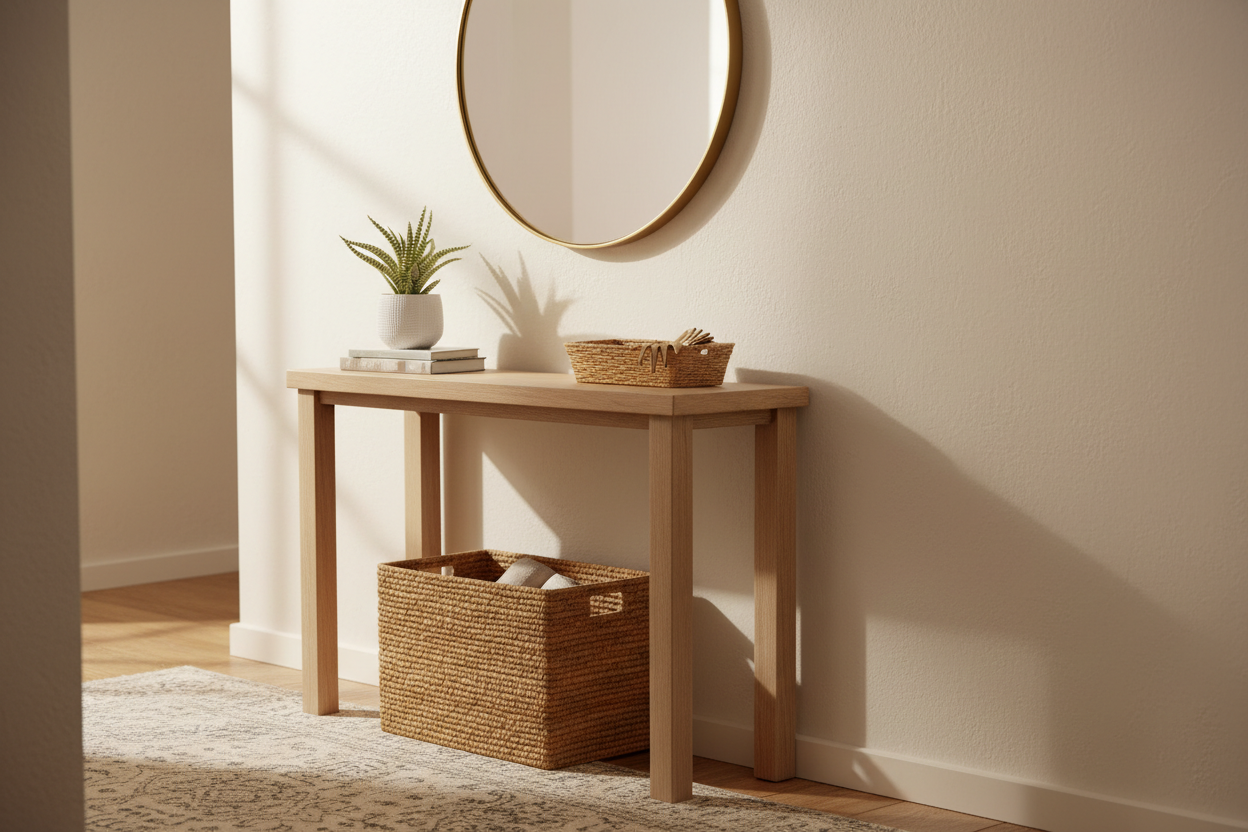
Walking through the front door should feel like a breath of fresh air, not a squeeze past a bulky obstacle course. For many of us living in apartments or older homes, the hallway is often an afterthought—a dark, tight tunnel that collects shoes and mail. The solution isn't to leave the space empty, but to find the right furniture that hugs the wall while providing a crucial drop zone. A well-chosen narrow entrance table bridges the gap between functionality and maximizing your square footage.
I remember moving into my first city apartment where the entryway was essentially a glorified corridor, barely three feet wide. I desperately needed a place to toss my keys and sunglasses, but standard console tables turned the walkway into a hip-bumping hazard. That experience taught me that inches matter. Finding a piece that is less than 10 or 12 inches deep changes the entire dynamic of a home. It anchors the space without blocking the flow of traffic.
The Visual Magic of Proportion
When dealing with a tight corridor, your instinct might be to buy the smallest, shortest furniture possible. Surprisingly, this often makes a space look cluttered or disjointed. A long narrow foyer table can actually make a hallway feel larger. By extending down the length of the wall, the table draws the eye forward, emphasizing the length of the room rather than its lack of width.
Think of the table as a visual underline for your hallway. If you have a long, blank wall, placing a tiny stand in the middle looks like an accident. A longer console, perhaps 40 to 60 inches in width but only 8 inches deep, creates a deliberate architectural line. It provides a stage for lamps or art, turning a dead space into a designed vignette. If you are worried about visual weight, opt for legs that are spindly or made of acrylic or glass. These "ghost" materials take up physical space but zero visual space.
Prioritizing Function in Small Footprints
While aesthetics are great, the primary job of this furniture is to catch the debris of daily life. If you have a household that tends to pile up mail, dog leashes, and spare change, a simple slab of wood on hairpin legs might not suffice. You likely need a narrow foyer table with storage. This is the holy grail of small-space living: furniture that hides the mess while looking sleek.
Look for designs that incorporate shallow drawers. Even a drawer that is only 8 inches deep is perfect for hiding keys, wallets, and emergency flashlights. If drawers make the unit look too bulky for your taste, consider a table with a lower shelf. You can place matching baskets or bins on the bottom tier to corral shoes or scarves. This keeps the top surface clear for decor, maintaining that airy, organized feel. The goal is to separate the "pretty" from the "practical"—keys go in the drawer, a vase of flowers stays on top.
Styling Your Slim Accent Table for Entryway Impact
Once you have the furniture in place, the fun part begins. Styling a slim accent table for entryway appeal requires a bit of restraint. Because the surface area is limited, you cannot clutter it with too many knick-knacks. A good rule of thumb is to rely on the wall above the table rather than the table surface itself.
Hang a large mirror directly above the console. Mirrors bounce light around dark hallways and create the illusion of depth, effectively doubling the visual width of the corridor. Flank the mirror with wall sconces if you don't have space for table lamps. If you do want lighting on the table, choose tall, slender buffet lamps with small bases. A small tray for catching coins, a stack of two or three books, and a touch of greenery are usually all you need to complete the look. Keep the arrangement asymmetrical for a more modern, relaxed vibe.
Budget-Friendly Solutions
Furniture for specific spatial needs can sometimes come with a high price tag, but you don't have to break the bank. Finding a cheap narrow table that looks expensive is entirely possible with a creative eye. Many budget retailers sell basic metal or laminate consoles that fit these dimensions. The trick to elevating them is in the customization.
If you buy a basic black metal frame table for under fifty dollars, consider spray painting it a brushed gold or matte navy to match your decor. If the top looks like cheap particle board, cover it with high-quality contact paper that mimics marble or solid oak. Another route is the DIY approach. A simple shelf mounted on brackets at hip height functions exactly like a table but with zero floor footprint. This floating effect is incredibly modern and costs a fraction of buying a solid piece of furniture. You can source a beautiful piece of reclaimed wood and two architectural brackets for a custom look that fits your exact width requirements.
Stability and Safety Considerations
One technical aspect often overlooked with these skinny pieces is stability. Because they are top-heavy and possess a narrow base, they can be prone to tipping, especially on carpet. If you have children, pets, or just heavy bags that you might lean against the table, securing it is non-negotiable.
Most reputable furniture comes with anti-tip hardware, but if yours doesn't, a simple L-bracket attached to the back of the table and the wall stud will do the trick. This also allows you to level the table perfectly if you live in an older home with uneven floors. A wobbly table makes the whole entry feel cheap, so take the extra ten minutes to anchor it properly.
Material Matters
The material you choose sets the tone for the rest of the home. A lucite or glass table disappears into the room, making it ideal for ultra-tight squeezes where you don't want the furniture to visually encroach on the walkway. Natural wood brings warmth and texture, which is welcoming in an entry, but be mindful of dark stains in windowless hallways as they can suck up light. Metal frames offer an industrial or contemporary edge and are usually the most durable options for high-traffic zones where vacuum cleaners might bump into the legs.
Selecting the right piece is about balancing the physical constraints of your hallway with the daily demands of your lifestyle. Whether you opt for a floating shelf, a vintage find, or a sleek modern console, the addition of a surface near your door transforms a pass-through space into a proper room.
Frequently Asked Questions
How deep should an entryway table be for a narrow hallway?
Ideally, you want to aim for a depth between 8 to 12 inches. Anything deeper than 12 inches can impede traffic flow in a standard corridor, while anything shallower than 8 inches might be too narrow to hold a lamp or a bowl for keys safely.
Can I use a radiator cover as a narrow entrance table?
Yes, radiator covers are an excellent hack for tight spaces. They are naturally slim, designed to hug the wall, and provide a long shelf surface. Even if you don't have a radiator, you can buy the cover or build a similar structure to act as a super-slim console.
How do I decorate a narrow table without making it look cluttered?
Focus on vertical styling rather than horizontal spread. Use the wall space above the table for art or mirrors, and limit tabletop items to a "rule of three"—perhaps a lamp, a small tray, and a plant. Using a tray to group small items helps the surface look organized rather than messy.

Leave a comment
This site is protected by hCaptcha and the hCaptcha Privacy Policy and Terms of Service apply.