










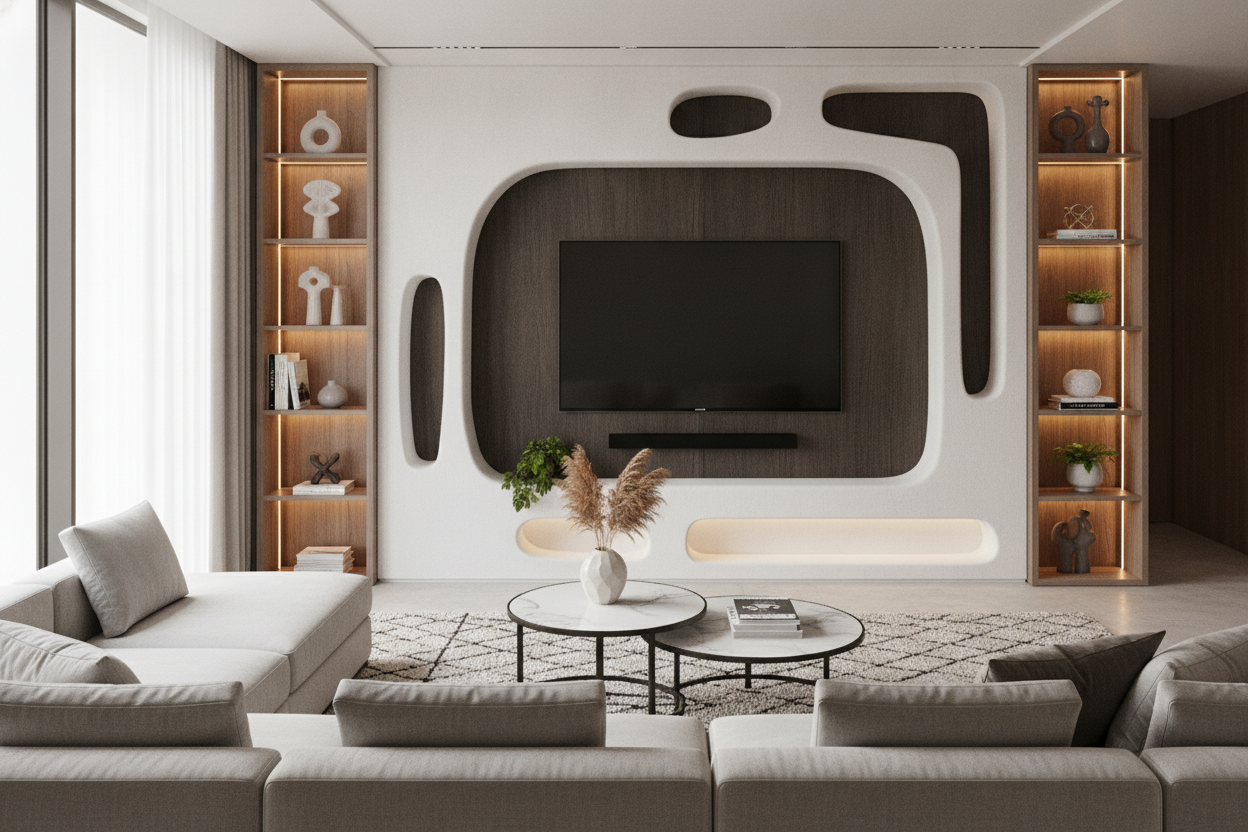
I spent six months staring at a tangled nest of black HDMI cables dangling behind a $200 particleboard console. It looked fine, I guess, but it felt like a temporary solution in a home I actually plan to live in for a decade. I wanted that architectural, built-in look—the kind where the wall itself seems to cradle your tech. That is how I ended up knee-deep in white dust, building a custom pop television stand.
- Total Cost: Roughly $400 for materials, though labor varies wildly if you hire out.
- The Mess Factor: 10/10. Your cat will look like a powdered donut for at least a week.
- The Result: A seamless, gallery-style wall that makes a 65-inch screen look like intentional art.
- Maintenance: Once it is painted, it is just like any other wall—no more dusting under heavy legs.
The Problem With Pushing Furniture Against a Flat Wall
Standard furniture is great for flexibility, but it rarely solves the 'flat wall' problem. Even the nicest console leaves you with a massive black rectangle floating in a sea of drywall. Before I committed to the plaster route, I actually considered a modern wall cabinet for living room storage to bridge the gap. But I realized that even a high-end cabinet still feels like an object pushed against a surface rather than part of the room’s DNA.
A custom pop tv stand changes the geometry of the room. It adds depth. Instead of a box on the floor, you get shadows, recessed lighting, and a sense of permanence that a freestanding unit just cannot match. If you are tired of the 'furniture showroom' vibe, building into the wall is the only real escape.
What Exactly Are We Building Here?
Plaster of Paris (POP) isn't just for crown molding. In modern interiors, we use it to create structural-looking features that are actually lightweight. A simple pop design for tv wall might just be a raised rectangular frame that hides your wires. On the other end of the spectrum, you have the modern pop design for lcd tv wall unit which usually involves multiple levels, floating shelves, and recessed niches.
I went for a modern pop design for tv wall unit that featured a cantilevered bottom ledge and a recessed 'pocket' for the TV to sit flush. This isn't just slapping plaster on the wall; it involves a metal or wood frame, gypsum boards, and then the POP finish to smooth everything into a single, monolithic piece. It is the difference between a pop t v stand and a piece of the architecture.
The Messy Reality of Framing and Plastering
Let's be real: the construction phase of a modern pop tv unit design is a nightmare. My living room looked like a construction site for four days. We started with the metal framing—lightweight C-channels that define the shape. Then comes the board, and finally, the plastering. The pop design for tv wall requires several coats of joint compound and an ungodly amount of sanding.
If you are doing this yourself, buy the best respirator you can find. The dust is fine, invasive, and gets into every corner of your house. But as the pop tv wall design started to take shape, and those rough edges were sanded down to a buttery-smooth finish, the chaos started to feel worth it. The tv pop design isn't about the materials; it's about the silhouette it creates once the dust settles.
Planning the Niches for Glowing LEDs
The secret to making a pop tv stand design look expensive is the lighting. We carved out 2-inch deep channels along the inner edges of the niches. By installing COB LED strips (which don't have those annoying visible 'dots'), the entire wall glows from within. You have to plan this before the plaster goes on. If you forget the wiring channels, you’re stuck with surface-mounted lights that look like an afterthought.
The Ultimate Payoff: Zero Visible Cords
The biggest win of a custom pop tv stand is the cable management. We ran a 3-inch PVC pipe behind the gypsum board, connecting the TV recess to the lower equipment niche. I can drop an HDMI cable or a power cord through the top, and it magically appears at the bottom. No zip ties, no plastic cord hiders, and no 'cable spaghetti' behind the console. It is the cleanest my living room has ever looked.
When You Should Just Buy Floating Furniture Instead
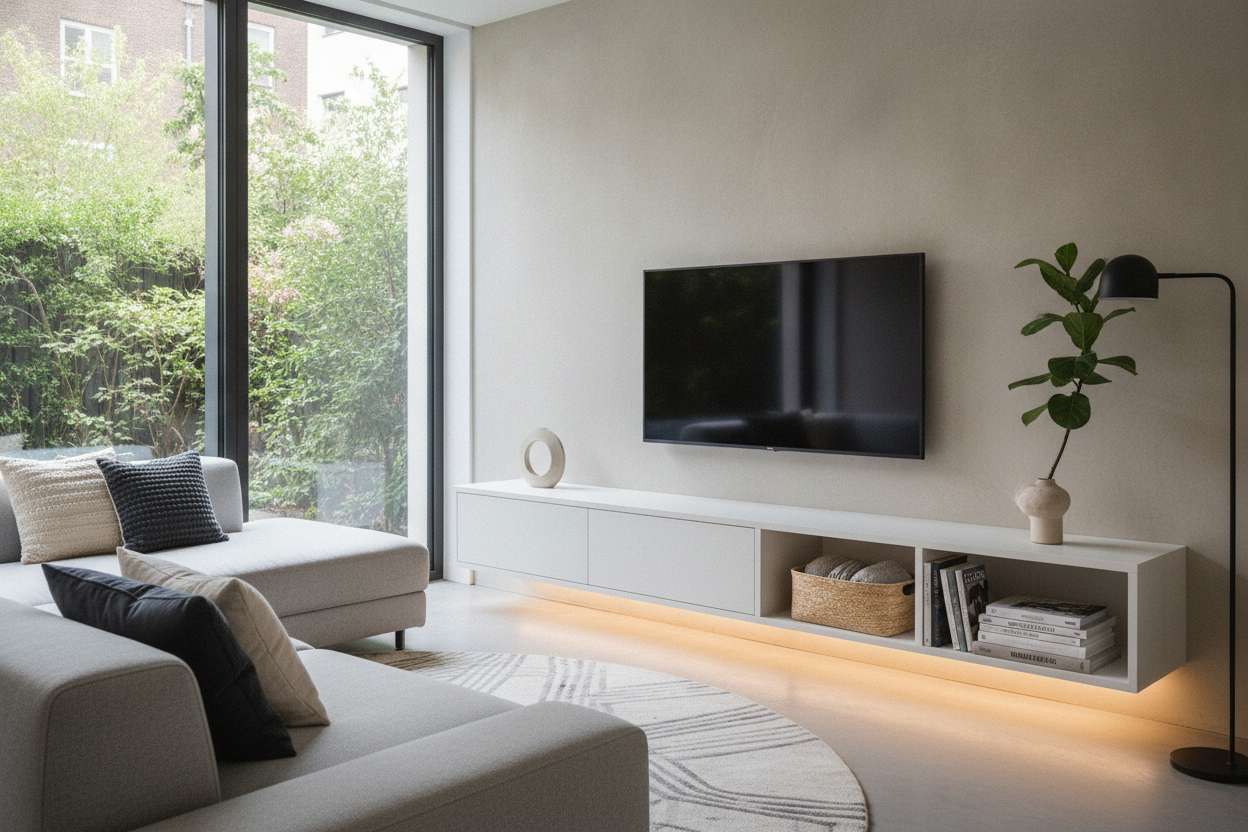
As much as I love my plaster wall, it is permanent. If you are a renter, or if you like to rearrange your living room every six months, do not do this. You are better off learning how to style a wall-mounted modern TV stand. You get 80% of the look with 0% of the demolition.
For those who want the look without the plaster mess, a modern TV stand with cabinets can offer a similar minimalist profile. And honestly, if the idea of sanding plaster for ten hours sounds like hell, there is no shame in sticking to traditional freestanding TV stands. They are portable, they have resale value, and they won't require you to deep-clean your carpets when the project is done.
FAQ
Is POP better than wood for a TV unit?
POP is better for a seamless, 'built-in' look that matches your walls perfectly. Wood is better if you want warmth, texture, or the ability to move the furniture later. POP is also generally more fire-resistant.
How much weight can a POP TV wall hold?
The POP itself carries no weight. The TV is mounted to the metal or wood studs behind the plaster. As long as your framing is solid, it can hold the largest 85-inch screens with ease.
Can I change my TV size later?
This is the downside. If you build a specific 'recess' for a 65-inch TV, a 75-inch won't fit later. I recommend making your TV niche slightly larger than your current screen to 'future-proof' the design.

Leave a comment
This site is protected by hCaptcha and the hCaptcha Privacy Policy and Terms of Service apply.