










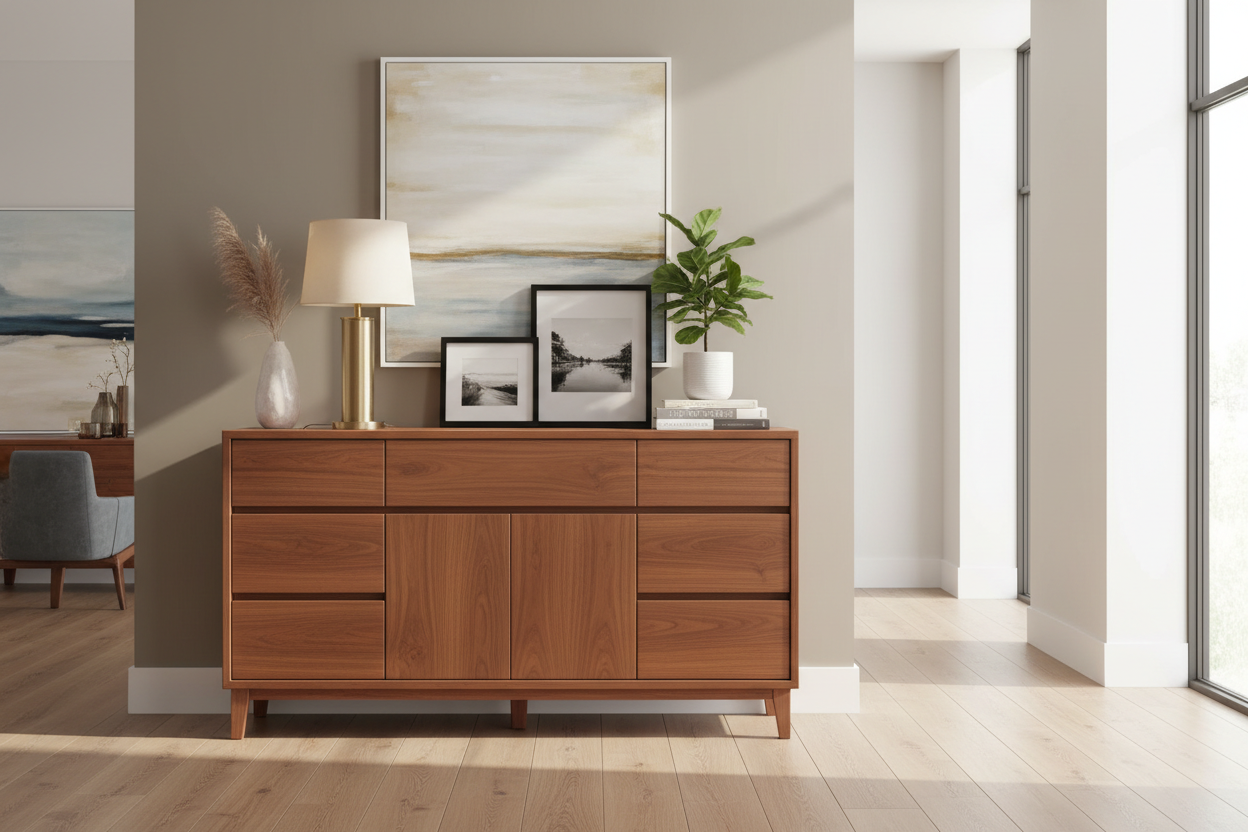
A dresser buffet combines the best of both worlds: the clothing storage capacity of a traditional dresser with the elegant, elongated profile of a dining room buffet. These versatile pieces typically measure between 60 to 72 inches wide but stand only 30 to 36 inches tall, making them perfect for bedrooms with low ceilings or spaces where you want to hang artwork or mirrors above your storage furniture.
The beauty of these hybrid pieces lies in their adaptability. Unlike standard tall dressers that can make a room feel cramped, a buffet style dresser spreads out horizontally, creating visual balance while offering surprising storage depth. I discovered this myself when moving into a bedroom with unusually high windows—a traditional dresser would have blocked natural light, but a buffet-style piece fit perfectly underneath while providing all the drawer space I needed.
What Makes These Pieces Different From Regular Furniture
The construction of a dresser buffet differs from both standard dressers and traditional buffets in meaningful ways. Most feature deeper drawers than dining room buffets (typically 16-20 inches deep versus 12-14 inches), allowing them to accommodate folded clothing, linens, and bulkier items. The drawer configuration usually includes 6 to 9 drawers arranged in two or three rows, though some designs incorporate a combination of drawers and cabinet doors.
Quality matters significantly with these pieces because of their width. A poorly constructed buffet style dresser may sag in the middle over time, while well-built versions use center supports and reinforced frames to maintain structural integrity. Look for solid wood or high-quality engineered wood with dovetail drawer joints—these details indicate furniture that will last decades rather than years.
Placement Ideas Beyond the Bedroom
While bedrooms are the obvious choice, these pieces shine in unexpected locations throughout your home. Hallways benefit enormously from the low profile of a buffet style dresser, providing storage without obstructing sightlines. I've seen them used brilliantly at the foot of beds in guest rooms, topped with luggage racks and spare blankets for visitors.
Living rooms and entryways represent another frontier. The wide surface area becomes a display space for family photos, table lamps, or decorative objects, while drawers hide everything from board games to winter accessories. One friend converted hers into a media console, with the center drawers removed to accommodate electronics and cable management.
Styling the Top Surface
The expansive top of a dresser buffet invites creative styling. A common approach involves the rule of thirds: divide the surface mentally into three sections, then arrange items in varying heights. A tall mirror or piece of art anchors one end, while lower objects like jewelry boxes or small plants balance the other side. The key is avoiding a cluttered appearance—these pieces look best when the surface remains somewhat open.
Seasonal rotation keeps the display fresh. Summer might call for a simple vase of fresh flowers and a stack of favorite books, while winter invites candles and evergreen branches. The low height means you're looking down at the surface rather than straight at it, so layering objects creates visual interest without appearing messy.
Choosing the Right Finish and Hardware
Wood tone selection impacts how a buffet style dresser integrates with existing furniture. Dark walnut or espresso finishes lend formality and hide wear well, making them practical for high-traffic areas. Lighter oak or maple brightens spaces and works beautifully in Scandinavian or coastal design schemes. Painted finishes—particularly in whites, grays, or navy—offer versatility and can be refreshed over the years as your style evolves.
Hardware might seem like a small detail, but it dramatically affects the overall aesthetic. Sleek bar pulls create a contemporary look, while ornate knobs add traditional charm. Some people replace factory hardware immediately to customize their piece, which is a relatively inexpensive way to make mass-produced furniture feel unique.
Size Considerations for Your Space
Measuring carefully prevents costly mistakes. Beyond the obvious width measurement, consider depth—these pieces typically run 18-22 inches deep, which can protrude further into a room than expected. Allow at least 36 inches of clearance in front for drawer operation, though 42 inches feels more comfortable. In narrow bedrooms, this might mean choosing a slightly shorter dresser buffet or positioning it on a different wall than originally planned.
Ceiling height plays a role too. Rooms with 8-foot ceilings benefit from the low profile, as taller furniture can feel oppressive. Conversely, in rooms with 10-foot or higher ceilings, you may need to add substantial artwork or mirrors above the piece to avoid it appearing lost on the wall.
Maintenance and Longevity
Proper care extends the life of these substantial pieces. Dust weekly with a microfiber cloth, following the wood grain to avoid scratching. Every few months, treat wood surfaces with appropriate polish or oil depending on the finish. Avoid placing the dresser near heating vents or in direct sunlight, both of which can cause warping or fading over time.
Drawer maintenance often gets overlooked until problems arise. If drawers stick, rubbing a white candle along the runners usually solves the issue. Loose hardware should be tightened promptly—a wobbly knob can stress the drawer front and lead to more serious damage. These simple habits keep a quality buffet style dresser functioning smoothly for generations.
Investment Value and Budget Options
Prices range dramatically based on materials and construction. Solid hardwood pieces from established furniture makers might cost $1,500 to $4,000, while engineered wood versions from big-box retailers start around $400. The middle ground—quality engineered wood with solid wood drawer fronts and good hardware—typically falls between $700 and $1,200 and represents excellent value for most buyers.
Vintage and antique dresser buffets deserve consideration too. Mid-century modern pieces from the 1950s and 60s often feature superior craftsmanship at prices comparable to new mid-range furniture. Estate sales, auctions, and online marketplaces yield genuine finds, though you may need to invest in refinishing or new hardware.
Frequently Asked Questions
Can a buffet style dresser work in a small bedroom?
Absolutely, and it might actually work better than a tall dresser. The low profile doesn't overwhelm the space visually, and the horizontal orientation can make a small room feel wider. Just ensure you have adequate wall length—at least 65 inches for a 60-inch piece when accounting for breathing room on either side.
How much weight can the top surface safely hold?
Most quality pieces can support 100-150 pounds when weight is distributed evenly across the surface. Avoid placing extremely heavy items like large aquariums or concentrated weight in one spot. Always check manufacturer specifications, as cheaper furniture may have lower weight limits.
Is it difficult to move a dresser buffet?
The width makes them more awkward than heavy tall dressers, but they're manageable with proper technique. Remove all drawers before moving to reduce weight and prevent them from sliding out. Two people can typically handle the job, though furniture sliders make the process much easier and protect your floors from scratches.

Leave a comment
This site is protected by hCaptcha and the hCaptcha Privacy Policy and Terms of Service apply.