










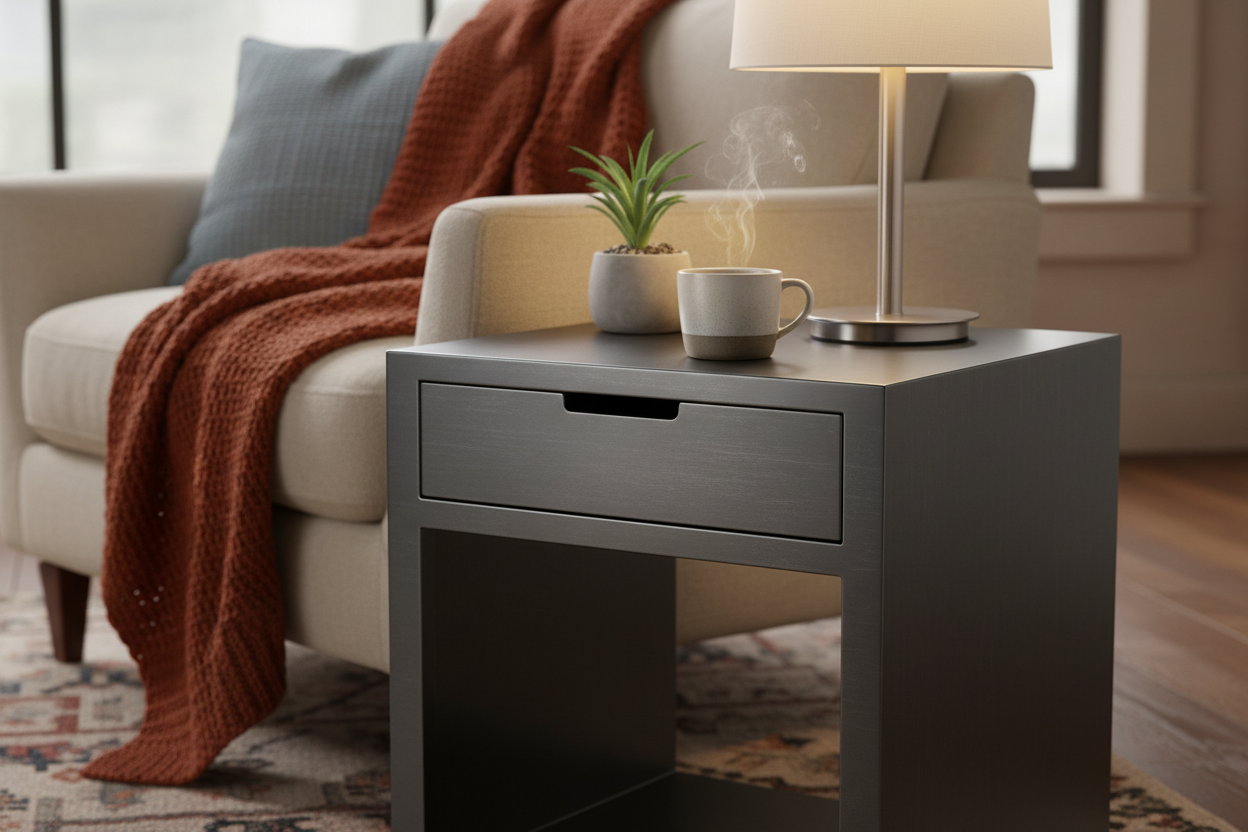
After knocking over my coffee for the third time in a month, I realized my minimalist side table wasn't cutting it anymore. I needed something functional, durable, and honestly, something that could handle my chaotic lifestyle. That's when I discovered the beauty of a metal side table with drawer—a piece of furniture that's changed how I think about small-space organization.
Metal end tables with drawer offer something wooden alternatives simply can't match: resilience. They don't warp from moisture, they're incredibly easy to clean, and they bring an industrial elegance that works with practically any decor style. The drawer component transforms what could be just another surface into genuine storage space, which matters more than you might think when you're dealing with limited square footage.
What Makes Metal Tables with Drawers Different
The construction quality sets these pieces apart immediately. Most metal end table with drawer designs use steel or aluminum frames that can support significant weight without wobbling or creaking. I've stacked books, placed heavy lamps, and even used mine as a temporary laptop stand without any concerns about stability.
The drawer mechanisms vary considerably between manufacturers. Some use simple glide systems, while higher-end models incorporate ball-bearing slides that open smoothly even when fully loaded. I learned this the hard way with my first purchase—a budget model whose drawer would stick whenever I tried to access my reading glasses at night.
Industrial Charm Meets Practical Design
There's something inherently honest about metal furniture. You can see the welds, appreciate the rivets, and understand exactly how the piece is constructed. This transparency appeals to people who appreciate craftsmanship and want furniture that doesn't hide behind veneers or complicated assembly instructions.
The drawer on a metal table with drawer typically features either a mesh front for visibility or a solid panel for concealing clutter. I prefer the mesh style in my living room because I can quickly spot my remote control or phone charger without rummaging around. In the bedroom, though, a solid drawer front makes more sense for hiding away personal items.
Sizing Considerations That Actually Matter
Standard metal side tables with drawers range from 18 to 24 inches in height, which positions them perfectly alongside most sofas and beds. The drawer depth usually measures between 8 to 12 inches—enough for magazines, tablets, medications, or those random items that always seem to accumulate on surfaces.
Width matters more than most people realize. A table that's too narrow will tip easily if you place anything on the edge, while an oversized piece can make a room feel cramped. I measure the space next to my furniture before shopping, leaving at least 3 inches of clearance on each side for easy movement.
Finishes and Protective Coatings
Powder-coated metal end tables with drawer resist scratches and corrosion far better than painted alternatives. The powder coating process creates a harder, more durable finish that can withstand daily use without chipping. I've had mine for two years, and despite regular contact with keys, cups, and the occasional bumped vacuum cleaner, the surface still looks pristine.
Some manufacturers offer brushed metal finishes that hide fingerprints and minor scratches naturally. These work particularly well in homes with children or pets, where furniture inevitably takes more abuse than in adult-only spaces.
Assembly and Maintenance Reality Check
Most metal end table with drawer options arrive partially assembled, requiring you to attach legs and install the drawer. The process typically takes 15 to 30 minutes with basic tools. Unlike particle board furniture that can strip easily if you overtighten screws, metal frames are forgiving and allow for adjustments.
Maintenance couldn't be simpler. A damp cloth removes dust and spills instantly, and the metal won't absorb stains like wood can. I occasionally apply a thin coat of furniture wax to the drawer slides to keep them operating smoothly, but that's the extent of upkeep required.
Styling Options Beyond Industrial
While metal furniture naturally complements industrial and modern aesthetics, these tables adapt surprisingly well to other design schemes. In a farmhouse setting, a distressed metal table with drawer adds character alongside reclaimed wood pieces. For mid-century modern rooms, sleek hairpin legs and minimal drawer pulls create the right vintage vibe.
I've seen metal side tables with drawers work beautifully in eclectic spaces too, where the contrast between metal and softer textiles creates visual interest. Placing a woven basket underneath or draping a textured throw nearby softens the harder edges while maintaining the table's functional benefits.
Weight Capacity and Real-World Use
Quality metal end tables with drawer can support 50 to 100 pounds on the surface, which exceeds what most people will ever place there. This capacity means you can confidently use these tables for more than just decorative purposes—they become genuine work surfaces when needed.
The drawer itself usually handles 10 to 20 pounds, depending on the slide mechanism quality. This limitation rarely poses problems unless you're planning to store your rock collection or extensive tool kit inside.
Price Points and Value Proposition
Entry-level metal tables with drawers start around $50 to $80, offering basic functionality without premium features. Mid-range options between $100 and $200 typically include better drawer slides, thicker metal construction, and more refined finishes. High-end designer pieces can exceed $300, but you're paying for brand names and unique designs rather than dramatically improved functionality.
I've found the sweet spot around $120 to $150, where build quality meets reasonable pricing. At this range, you get powder-coated finishes, smooth drawer operation, and construction that will last for years rather than months.
Common Problems and How to Avoid Them
Sharp edges plague cheaper metal furniture. Running your hand along the frame and drawer edges before purchasing can reveal poor finishing work that might cause cuts or snags. Reputable manufacturers deburr all edges and round corners for safety.
Drawer alignment issues frustrate many buyers. The drawer should slide straight in and out without angling or catching. Testing this in the store or checking return policies for online purchases protects you from getting stuck with a defective product.
Some metal end table with drawer designs use thin gauge metal that dents easily. Pressing firmly on the tabletop and drawer front reveals whether the construction can handle normal use or if it's purely decorative quality.
Where These Tables Work Best
Living rooms benefit most obviously, but I've discovered metal side tables with drawers excel in unexpected places. Next to an entryway bench, they provide a spot for keys and mail while offering a surface for a welcome lamp. In home offices, they serve as printer stands with storage for paper and supplies.
Bedside use works well, especially for people who prefer cooler surfaces that don't trap heat like wood can. The drawer keeps sleep aids, books, and electronics organized without cluttering the bedroom aesthetic.
FAQ
Can metal tables with drawers rust in humid environments?
Powder-coated or galvanized metal tables resist rust effectively even in humid climates. Avoid raw steel or iron finishes in bathrooms or basements where moisture exposure is constant. If surface rust appears, remove it immediately with fine steel wool and touch up with clear metal sealant.
Are metal end tables with drawers difficult to move on hardwood floors?
Most metal tables are lighter than solid wood equivalents, making them easier to relocate. However, metal feet can scratch hardwood if dragged. Apply felt pads to the bottom of each leg to protect flooring and allow smooth sliding when rearranging furniture.
Do metal side tables with drawers require special cleaning products?
Standard household cleaners work fine on powder-coated metal. Avoid abrasive scrubbers that might scratch the finish. For stubborn marks, a paste of baking soda and water provides gentle cleaning power without damaging the protective coating.


Leave a comment
This site is protected by hCaptcha and the hCaptcha Privacy Policy and Terms of Service apply.