










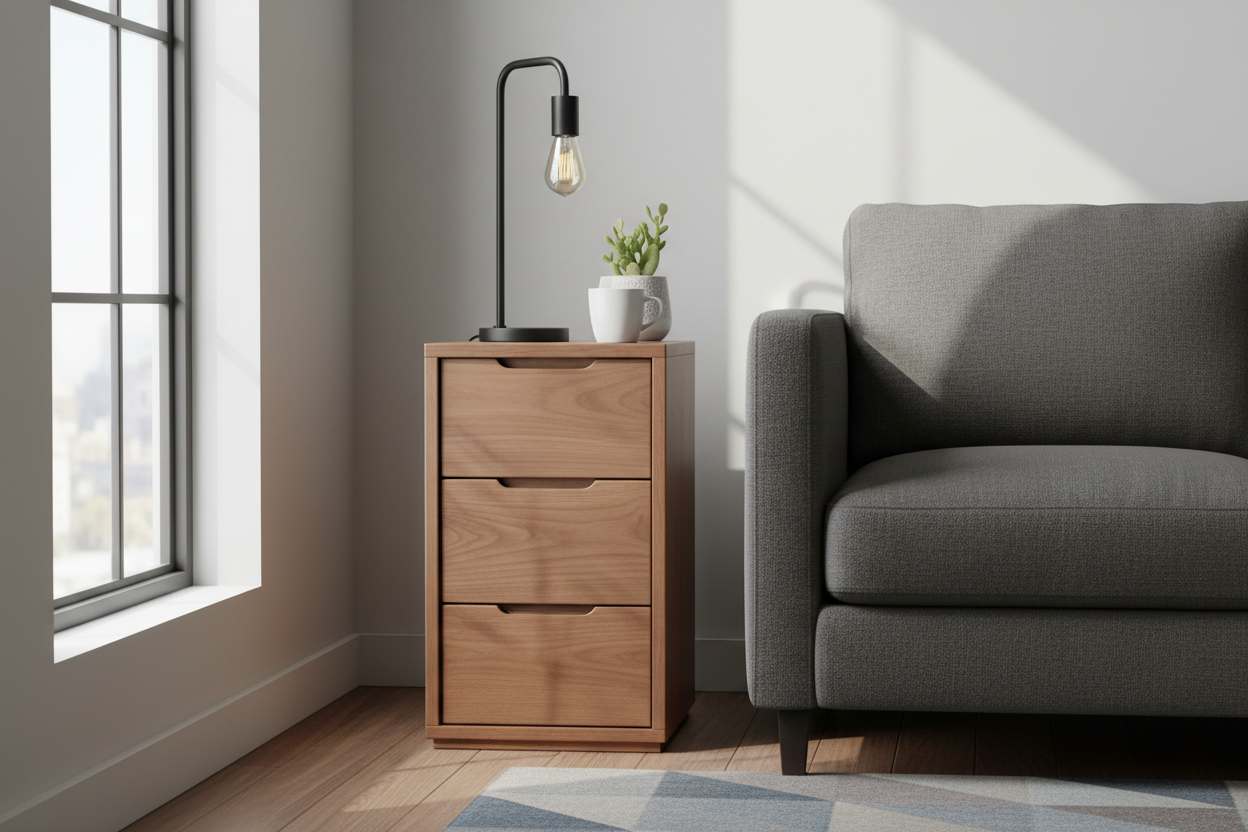
Living in a space where every inch counts taught me something valuable: furniture that looks good but doesn't function well is just expensive clutter. After squeezing a bulky nightstand into my bedroom only to realize I couldn't fully open the closet door, I started searching for something more practical. That's when I discovered the world of narrow side tables with drawers—compact pieces that don't sacrifice storage for space-saving design.
These slender tables typically measure between 10 to 18 inches in depth, making them perfect for tight spots where traditional furniture simply won't work. The addition of drawers transforms what could be just another surface into a genuine storage solution, keeping remotes, reading glasses, chargers, and other daily essentials organized and out of sight.
Understanding the Different Types of Slim Side Tables
The terminology can get confusing because manufacturers use different names for essentially similar pieces. A skinny side table with drawers and a narrow end table with drawers often refer to the same type of furniture—the key difference usually lies in marketing rather than actual design. However, understanding these distinctions helps when you're searching online or browsing furniture stores.
End tables traditionally sit beside sofas or at the ends of furniture arrangements, while side tables can be more versatile in placement. A slim end table with drawers works beautifully flanking a couch in your living room, while the same piece could function as a nightstand in your bedroom. The beauty of these pieces is their adaptability.
Some designs feature a single drawer, marketed as a slim end table with drawer, while others stack two or three drawers vertically. The single-drawer versions tend to be even more streamlined, sometimes measuring as narrow as 10 inches deep, making them ideal for hallways or behind doors.
Where These Space-Saving Tables Shine
Bedrooms benefit enormously from skinny end tables with drawers, especially in older homes where room layouts weren't designed with modern furniture dimensions in mind. I've placed one between my bed and the wall in a space that measured just 14 inches—enough for a lamp, a book, and the drawer holds everything from sleep masks to hand lotion.
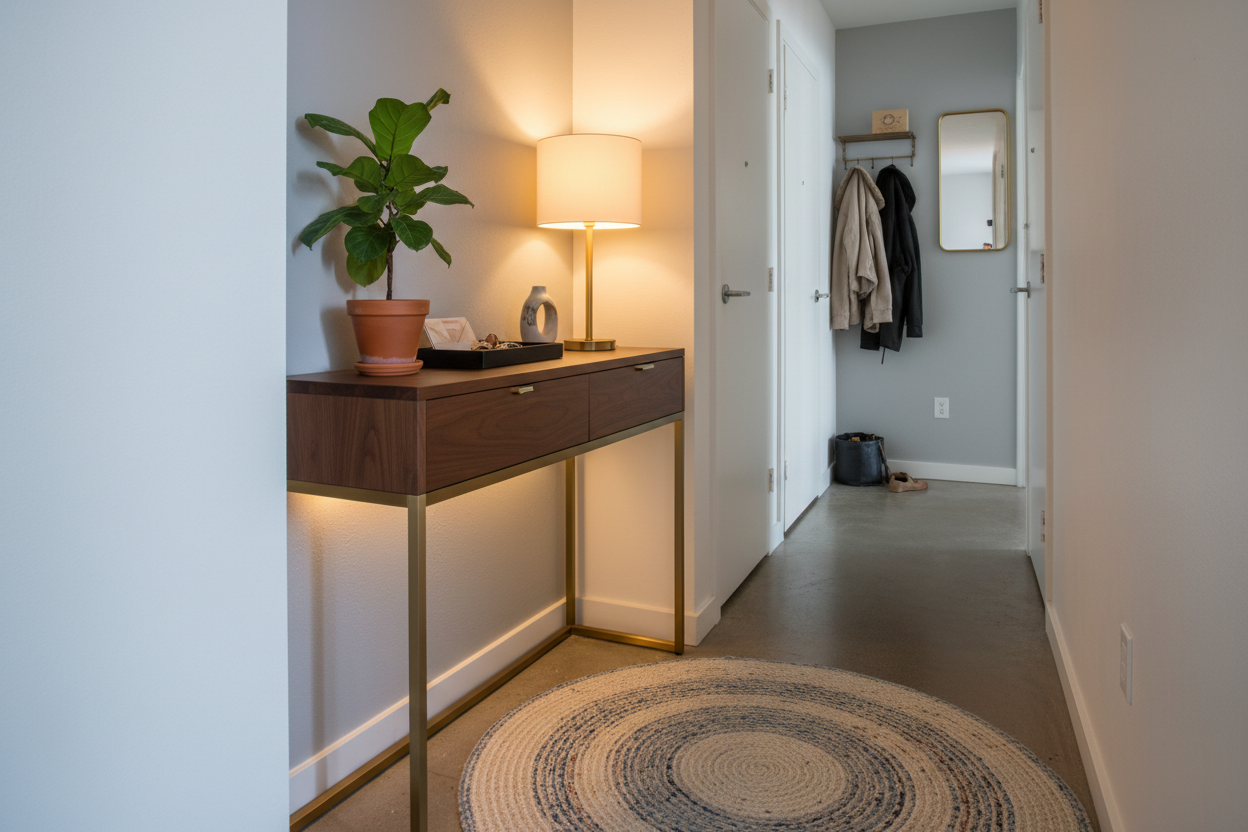
Hallways and entryways represent another perfect application. A narrow accent table with drawer near your front door creates a landing spot for keys and mail while the drawer conceals dog leashes, sunglasses, or other items you grab on your way out. The slim profile means you're not creating an obstacle course in a high-traffic area.
Living rooms with challenging layouts also benefit from these pieces. If you have a sofa floating in the middle of the room or positioned away from walls, a skinny side table with drawers can tuck behind it, providing surface space and storage without the visual bulk of deeper furniture.
Material Choices and Their Impact
Wood remains the most popular material, offering durability and a range of finishes from light oak to deep walnut. Solid wood tables typically cost more but last longer, while engineered wood or MDF options provide budget-friendly alternatives that still look attractive.
Metal frames with wood or glass tops create an industrial aesthetic while keeping the visual weight light. These work particularly well in modern or minimalist spaces where you want the table to almost disappear into the background.
Glass-topped versions maximize light flow and create the illusion of more space, though they require more frequent cleaning and may not suit homes with young children. The drawers on these pieces are usually wood or metal, providing the necessary structure.
What to Look for When Shopping
Drawer construction matters more than you might think. Dovetail joints indicate quality craftsmanship and ensure drawers won't fall apart after a few months of use. Metal glides make opening and closing smoother than plastic alternatives, and soft-close mechanisms prevent slamming—a feature worth paying extra for if you're placing the table in a bedroom.
Measure your space carefully before purchasing. A table that's too narrow might look disproportionate, while one that's too wide defeats the purpose. The ideal depth leaves you with at least a few inches of clearance for comfortable movement around the piece.
Consider the drawer depth as well. Some narrow tables sacrifice drawer capacity to maintain their slim profile, resulting in shallow drawers that barely hold anything. Look for designs that maximize interior space through clever engineering—drawers that extend nearly the full depth of the table offer significantly more storage.
Styling Your Narrow Table
The limited surface area means you need to be intentional about what you display. A single lamp and one small decorative object often look better than cluttering the top with multiple items. The narrow profile creates an elegant vertical line that can actually make a room feel taller.
Drawers should contain items you access regularly. There's no point in having storage if you have to move furniture to reach it. I keep a small flashlight, phone charger, and notepad in mine—things I need at arm's reach but don't want visible.
Color choice affects how the piece integrates into your space. Lighter finishes help small rooms feel more open, while darker woods add warmth and can anchor a seating area. If you're renting or frequently redecorate, neutral tones offer more flexibility.
Common Mistakes to Avoid
Buying based solely on width without considering height can throw off your room's proportions. A table that's too tall or too short compared to your sofa or bed will look awkward no matter how perfectly it fits the available floor space.
Ignoring the drawer hardware is another oversight. Knobs that protrude too far can catch on clothing or create a hazard in tight spaces. Recessed pulls or flat handles work better on narrow pieces positioned in high-traffic areas.
Assuming all narrow tables are created equal leads to disappointment. Quality varies dramatically, and a cheaply made piece will wobble, develop drawer issues, or simply fall apart. Reading reviews and checking return policies protects you from costly mistakes.
Making the Most of Limited Space
Pairing a narrow accent table with drawer alongside other space-efficient furniture creates a cohesive, functional room that doesn't feel cramped. Wall-mounted shelves, nesting tables, and furniture with exposed legs all contribute to an airy atmosphere.
Vertical storage becomes your friend when working with slim furniture. A tall, narrow table with multiple drawers provides more storage than a wider, shorter piece while occupying the same floor footprint. Think upward rather than outward.
The right narrow table doesn't just save space—it can actually improve your room's flow and functionality. After living with mine for two years, I can't imagine going back to bulkier alternatives. The combination of accessible storage and minimal footprint has proven invaluable in making my home work better for how I actually live.
Frequently Asked Questions
What's the ideal depth for a narrow side table with drawers?
Most narrow side tables range from 10 to 18 inches deep. For placement beside furniture, 12-15 inches works well, providing enough surface area without protruding too far into the room. Hallway or tight-space applications benefit from the 10-12 inch range.
Can narrow tables with drawers support heavy lamps?
Quality narrow tables can absolutely support standard lamps, but check the construction and weight capacity. Solid wood or metal-framed tables offer better stability than particle board. Ensure the table sits level and the base is wide enough to prevent tipping.
How do I keep drawers in a narrow table organized?
Small drawer organizers or dividers prevent items from sliding around in narrow drawers. Group similar items together and avoid overstuffing. Since space is limited, regularly purge items you don't actually use to maintain functionality.

Leave a comment
This site is protected by hCaptcha and the hCaptcha Privacy Policy and Terms of Service apply.