










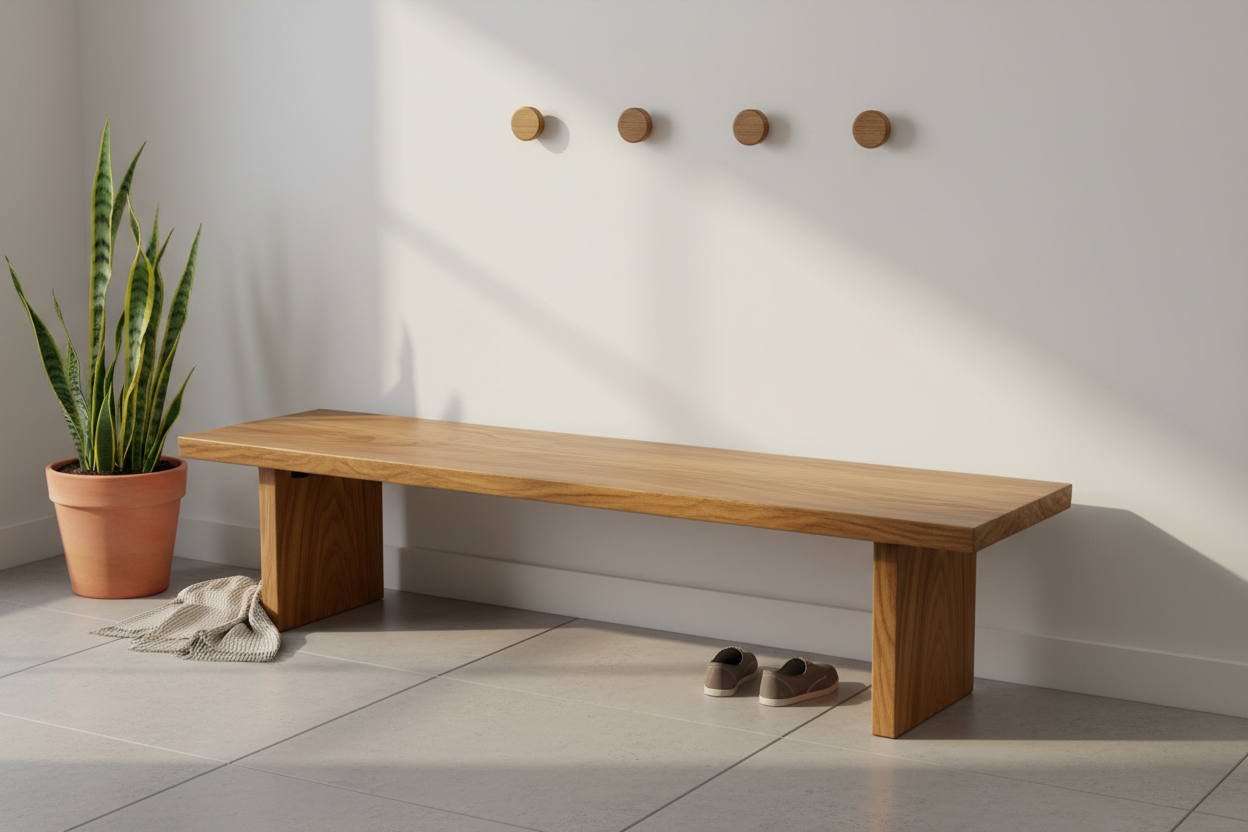
Your front door is the handshake of your home. It sets the tone the moment you step inside. If that first interaction involves a wobbly piece of plastic veneer furniture that groans under the weight of a grocery bag, the whole atmosphere feels cheap. A solid wood entryway bench changes that dynamic instantly. It offers a literal and figurative place to land, providing stability, warmth, and a level of durability that engineered materials simply cannot match. Unlike particle board that swells with the first sign of wet boots, real timber ages gracefully, developing a patina that tells the story of your home over decades.
I learned this lesson the hard way in my first apartment. I bought a budget-friendly, flat-pack bench that looked great in the photos. It lasted exactly six months. One rainy Tuesday, I sat down to take off my boots, and the cam-lock fasteners ripped right through the cardboard-like side panel. The bench collapsed, and I ended up on the floor. When I replaced it with a heavy, second-hand oak bench, the difference was night and day. It didn't budge. It felt permanent. That is the core value of choosing authentic materials; you are buying peace of mind along with a place to sit.
Understanding the Material Difference
When shopping for furniture, the term "wood" gets thrown around loosely. You will see descriptions like "wood finish" or "composite wood," which are marketing terms for sawdust and glue. An entryway bench solid wood construction is entirely different. It is milled directly from trees—lumber like oak, maple, walnut, or pine. This creates a structural integrity that allows the piece to withstand daily abuse from kids, pets, and heavy bags.
Hardwoods are generally the better choice for high-traffic areas. Maple and oak are incredibly dense, making them resistant to dents and deep scratches. Walnut offers a softer, darker aesthetic but commands a higher price point. Pine is a softwood and is often used for farmhouse styles. It is lighter and cheaper, but be aware that it will dent easily. For many, those dents add to the rustic charm, but if you want a pristine look, stick to the harder species.
Function Meets Form: The Storage Factor
A bench is rarely just a seat; in a busy household, it is the first line of defense against chaos. Shoes, umbrellas, dog leashes, and backpacks tend to pile up near the door. This is where a solid wood entryway bench with storage becomes an essential tool for organization. The weight of the timber allows for robust design features that flimsy materials can't support, like heavy drawers or hinged lids.
There are generally two types of storage configurations to consider:
The Flip-Top Chest
This is the classic monk's bench style. The seat lifts on hinges to reveal a deep cavity underneath. This is excellent for bulky items you don't need every day, like winter scarves in July or emergency blankets. However, it is less practical for daily shoes, as you have to clear off the seat to access the storage.
Open Shelves and Drawers
For most families, a solid wood entryway storage bench with open shelving or pull-out drawers is more practical. You can slide baskets into the open cubbies to hide clutter while keeping it accessible. Because the frame is solid timber, these benches can handle the friction of drawers opening and closing thousands of times without the tracks loosening, a common failure point in MDF furniture.
Sizing and Placement in Your Hallway
Measuring for a bench involves more than just checking if it fits between the walls. You need to account for traffic flow. In a narrow hallway, a depth of 14 to 16 inches is usually the maximum before the space starts to feel cramped. You want to be able to walk past someone sitting on the bench without having to turn sideways.
Visual weight is also a factor. A chunky, dark walnut bench might look majestic in a wide foyer but could swallow a small apartment entrance. In tighter spaces, look for a design with longer legs and open space underneath. Seeing the floor continue beneath the furniture tricks the eye into thinking the room is larger than it is.
Maintenance and Longevity
One of the biggest advantages of a solid wood entryway bench is repairability. If you scratch a laminate bench, it is ruined forever. If you scratch solid oak, you can sand it down and refinish it. In fact, most surface scratches can be hidden with a simple rub of walnut oil or a wax stick.
To keep the wood looking its best, avoid placing it directly over a heat vent, as drastic temperature changes can cause the wood to expand and contract, potentially leading to cracks. If your entryway gets direct sunlight, rotate any pillows or decor on the bench occasionally so the wood creates a natural patina evenly rather than fading in patches. Cleaning is simple: a damp cloth for dust and a wood-specific cleaner once a season is usually all that is required.
Styling Your Entryway
Once you have the bench, the styling brings the look together. Since wood is a warm, neutral material, it pairs well with almost any texture. A woven basket placed underneath adds to the organic feel. If the wood is dark, contrast it with light-colored throw pillows or a cream throw blanket draped over the arm. A mirror hung above the bench not only allows for a last-minute outfit check but also reflects light, making the entryway feel brighter and more welcoming.
Ultimately, this piece of furniture is a workhorse. It needs to support your weight while you lace up boots, hold your bag when you walk in tired, and look good doing it. By choosing solid timber, you are investing in a piece that will likely outlast the house itself.
Frequently Asked Questions
What is the weight limit for a typical solid wood bench?
Most solid wood benches are designed to support significant weight, typically ranging from 300 to 500 pounds, depending on the thickness of the legs and the quality of the joinery. Unlike composite materials, solid wood has a high shear strength, allowing two or three adults to sit comfortably without the frame bowing.
Can I use an indoor wood bench on a covered porch?
You should be cautious. Indoor furniture usually lacks the marine-grade sealants required to withstand humidity and temperature swings. If you want to use a solid wood entryway bench outdoors, even under a roof, you must treat it with a UV-rated spar varnish and ensure the wood species (like teak or cedar) is naturally rot-resistant.
How do I fix water rings or white spots on the wood?
White rings are usually moisture trapped in the finish, not the wood itself. You can often remove them by gently applying a hair dryer on a low setting to evaporate the moisture, or by rubbing the spot with a mixture of baking soda and toothpaste. For darker rings, which indicate water has reached the wood, you may need to lightly sand and re-oil the area.

Leave a comment
This site is protected by hCaptcha and the hCaptcha Privacy Policy and Terms of Service apply.