










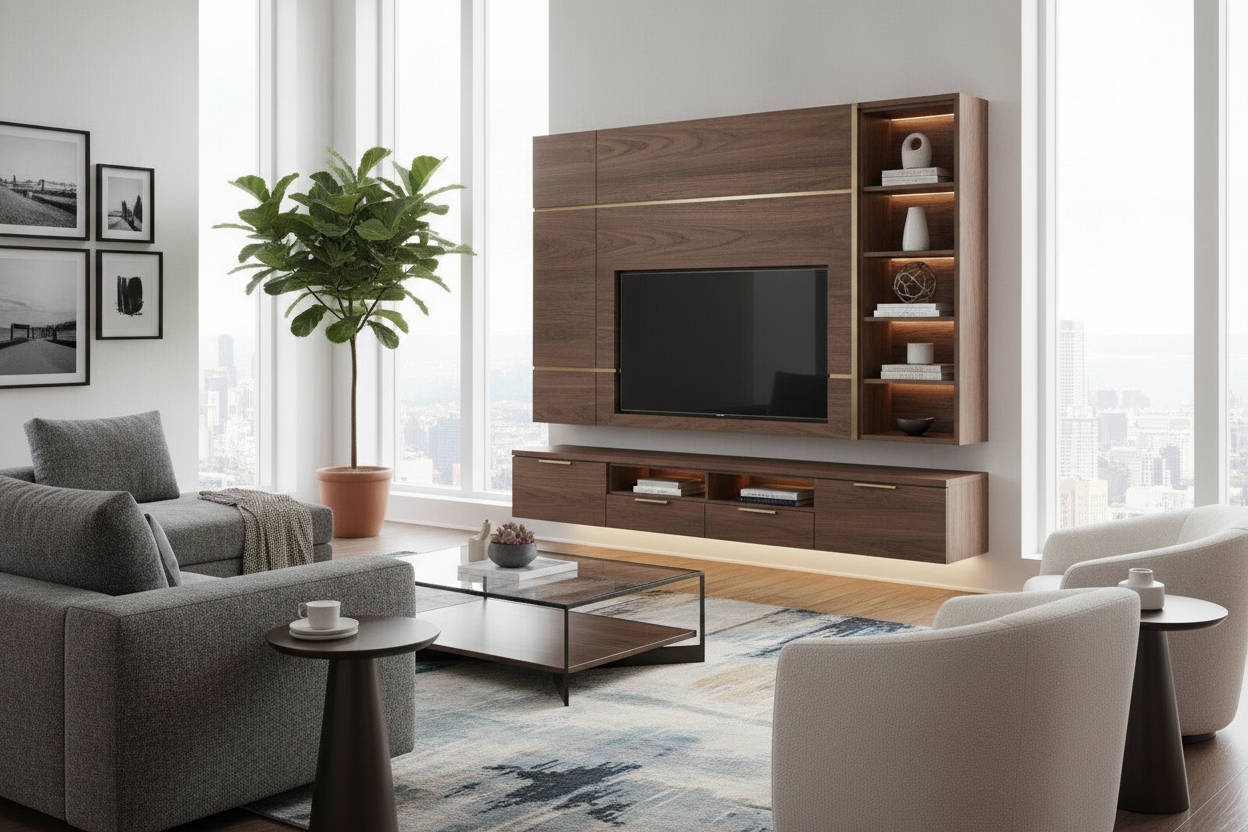
I have spent way too many Friday nights staring at a 65-inch black rectangle that feels like it is sucking the soul out of my living room. It is the classic design trap: you spend thousands on a high-end OLED, then stick it on a wobbly, $80 particle-board shelf that screams 'first apartment.' Finding the right furniture design for tv stand units is the difference between a room that feels curated and one that feels like a tech repair shop.
I have learned the hard way that if the stand is too small, the TV looks like a top-heavy monster; if it is too big, the wall feels swallowed whole. The piece underneath your screen is your only chance to anchor that visual weight and make the room feel grounded rather than cluttered.
Quick Takeaways
- The Golden Ratio: Your console should be at least 6 to 10 inches wider than the screen on both sides to avoid a 'top-heavy' look.
- Material Integrity: Skip the thin MDF; look for kiln-dried hardwood or high-grade veneers that won't bow under a 50-pound screen.
- Cable Management: If you can see a tangled mess of HDMI cords, the furniture has failed its primary job.
- Airflow: Ensure your gaming consoles have at least 2 inches of clearance or ventilated cabinet doors to prevent overheating.
The Giant Black Box Problem in Your Living Room
A massive TV is an aesthetic vacuum. When it is off, it is just a giant, dark void reflecting your messy coffee table. The furniture sitting underneath it is the only thing keeping the room feeling like a home rather than a tech shrine. It is not just a shelf; it is a visual foundation that tells the eye, 'This belongs here.'
I often see people mount their TVs way too high—the 'TV Too High' phenomenon is real—and then leave the space underneath totally empty. A proper console bridges that gap, softening the hard edges of the electronics and making the screen feel like part of the architecture. Without that grounding piece, your living room lacks a focal point that actually feels cozy.
What Actually Makes Good Furniture Design for TV Stand Units?
Good design is about scale and substance. Most people buy a stand that is exactly the width of their TV, which is a major mistake. You want breathing room. A 60-inch TV needs a stand that is at least 70 inches wide to look balanced. If the stand is the same width as the screen, the whole setup looks cramped and accidental.
Material choice is where most people cheap out. I have seen enough saggy shelves to know that 1.5-inch thick solid wood is worth the investment. For years, I wondered why good TV stand furniture design is so hard to find, but the market is finally catching up. We want pieces that look like actual furniture—think tapered legs, solid brass hardware, and real wood grain—not plastic accessories meant to be hidden.
Exploring the Latest Designs of TV Stand Trends
Right now, we are seeing a massive shift toward texture. Fluted wood panels are the current favorite, adding vertical lines that catch the light and hide the seams of cabinet doors. It is a great way to incorporate the latest designs of tv stand without going full 'ultra-modern,' which can often feel cold and sterile.
Matte finishes are also winning out over high-gloss. A stylish black TV stand entertainment center in a soft matte finish can anchor a bright room beautifully without reflecting the glare from your screen. Mixed materials—like stone tops with wood bases—are helping these pieces feel more like heirlooms and less like disposable flat-packs that you will throw out in two years.
Functionality First: How the TV Stand Design Latest Releases Hide the Mess
Let’s talk about the 'rat’s nest.' We have all been there—trying to shove a power strip and six oversized power bricks behind a thin piece of cardboard. The tv stand design latest models actually account for this. Look for units with internal 'gutters' for cables and removable back panels that do not require a degree in engineering to access.
Heat is the other silent killer. If you have a PS5 or a high-end receiver, you cannot just lock it in a wooden box. I always look for a modern TV stand with cabinets and drawers that includes built-in ventilation or mesh door inserts. This allows for airflow and IR remote signals to pass through while keeping the clutter of controllers and manuals completely out of sight.
How to Choose the Latest TV Stand Design for Your Vibe
Choosing the latest tv stand design for your space comes down to your specific layout. If your room is small, a floating, wall-mounted console keeps the floor visible and makes the room feel larger. If you have high ceilings, a beefy freestanding unit provides the necessary visual weight to fill the volume of the room.
Do not feel pressured to match your coffee table perfectly. In fact, a slight contrast in wood tones or a different texture makes the room look like it evolved over time rather than being bought from a single catalog page. Before you commit, browse a collection of modern TV stands to see how different heights impact your eye level. Your neck will thank you for keeping the screen at a comfortable viewing height.
My Personal Take on Quality
I once bought a mid-century 'inspired' stand from a big-box retailer because the price was too good to pass up. Two weeks in, the weight of my center-channel speaker caused the top to bow so badly the cabinet doors wouldn't close. I ended up having to reinforce it with L-brackets, which ruined the look. Now, I never buy a stand without checking the weight capacity for the top shelf. If it is under 100 lbs, skip it for a large TV.
Frequently Asked Questions
How high should my TV stand be?
Ideally, your eyes should be level with the center of the screen when you are seated. For most sofas, this means a stand height of 18 to 24 inches.
Can the TV be wider than the stand?
It can, but it shouldn't. It creates a 'top-heavy' look that makes the room feel unstable. Always aim for a stand that is at least 20% wider than the TV.
How do I hide cables if the stand has no back?
Use adhesive cable clips along the back of the legs or the underside of the top shelf. If the stand is open, use decorative baskets to hide the power strips and excess cord length.

Leave a comment
This site is protected by hCaptcha and the hCaptcha Privacy Policy and Terms of Service apply.