










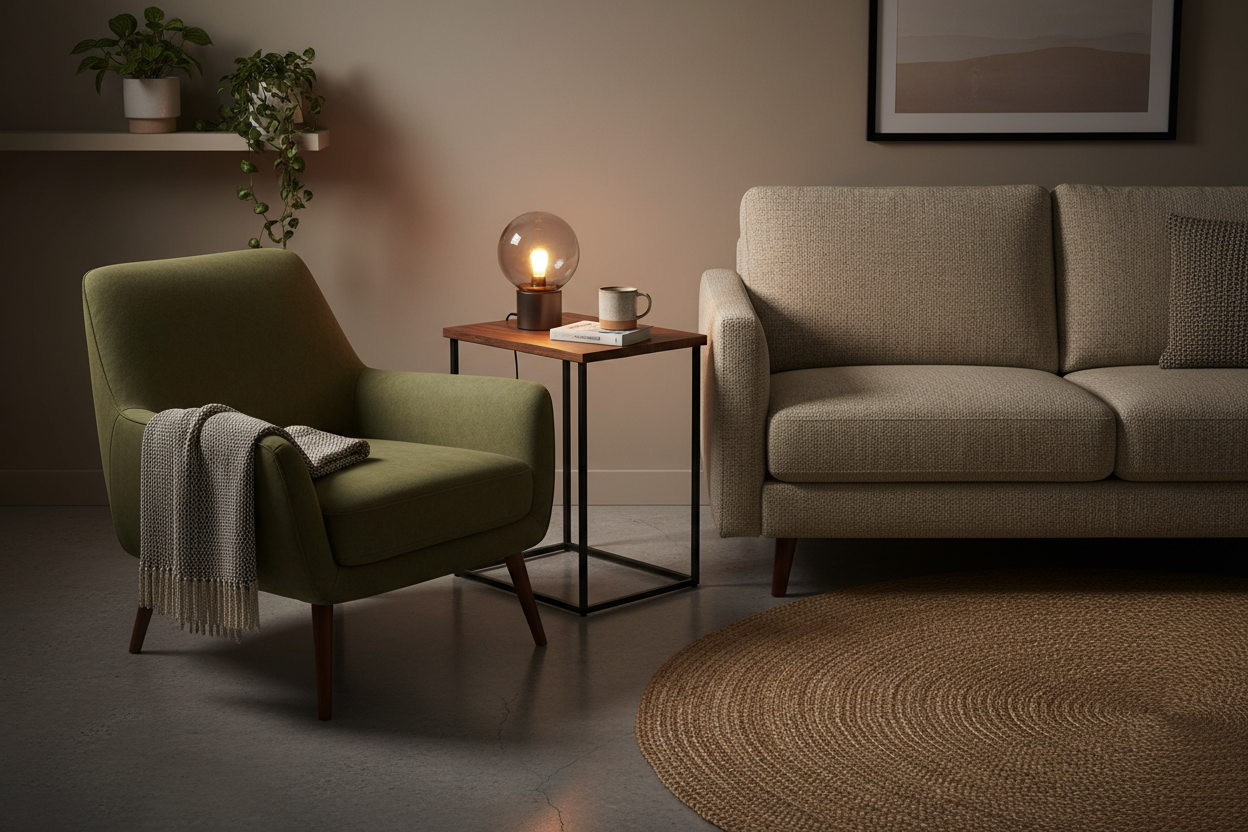
Living in a smaller apartment taught me something valuable: you don't need to sacrifice style or functionality just because you're short on square footage. The right furniture can transform a cramped living room into a comfortable, organized space. Narrow end tables have become my secret weapon for making the most of every inch without cluttering the room.
These slim furniture pieces typically measure between 10 to 15 inches in depth, compared to standard end tables that can be 18 to 24 inches deep. That difference might seem small on paper, but in a tight living room, those saved inches mean you can actually walk around your sofa without doing a sideways shuffle.
What Makes a Narrow End Table Different
The beauty of end tables skinny enough to fit in challenging spaces is that they're designed with intention. Every element serves a purpose. Unlike bulky traditional tables that waste space with unnecessary depth, these streamlined pieces focus on vertical storage and smart design.
A narrow end table with storage often includes shelves, drawers, or cubbies built into a compact footprint. I've seen designs that pack in a drawer, a lower shelf, and even a magazine rack—all within a 12-inch depth. The key is looking for pieces that build up rather than out.
Storage Solutions That Actually Work
Storage becomes crucial when you're working with limited space. Narrow end tables for living room with storage serve double duty: they provide a surface for your lamp and coffee cup while hiding remotes, chargers, books, and all those small items that usually create clutter.
The most practical designs include at least one drawer for concealing items you want out of sight. A thin end table with storage might feature a single deep drawer paired with an open shelf below. This combination lets you hide the messy stuff while keeping frequently used items within easy reach.
Open shelving on narrow end tables for small spaces with storage works particularly well for displaying a few decorative objects or storing books you're currently reading. Just remember that open storage requires more discipline to keep tidy—everything on display needs to earn its place.
Modern Design Meets Function
A modern narrow end table typically embraces clean lines, minimal ornamentation, and mixed materials. You'll find combinations like metal frames with wood tops, glass shelves with chrome supports, or sleek all-wood designs with geometric shapes.
These contemporary pieces often incorporate charging stations, USB ports, or cable management systems. I recently helped a friend choose a narrow end side table with a built-in wireless charging pad on top—perfect for keeping her phone powered up without adding more cords to the mix.
The modern aesthetic also means these tables blend seamlessly with various decor styles. A simple rectangular design in walnut or oak can work in a mid-century modern room, while the same basic shape in white lacquer fits a Scandinavian-inspired space.
Choosing the Right Height and Proportions
Height matters more than most people realize. Your narrow accent table with storage should sit level with or slightly below your sofa arm—typically between 22 to 30 inches tall. Too high, and you'll strain reaching for your drink. Too low, and it looks awkward and becomes less functional.
The table's width (measured from side to side when facing the sofa) can vary based on your needs. A width of 14 to 20 inches provides enough surface area for a lamp, a drink, and maybe a small plant or book. Anything narrower might feel too cramped for practical use.
Pay attention to the overall visual weight too. A table that's too tall and narrow might look unstable, even if it's perfectly sturdy. Look for designs with a wider base or lower shelf that grounds the piece visually.
Materials That Make Sense
Wood remains the most popular choice for narrow end tables, offering durability and warmth. Solid wood costs more but lasts longer, while engineered wood with veneer finishes provides good looks at a lower price point.
Metal frames create an industrial or modern look while taking up minimal visual space. The slim profile of metal legs can make a room feel more open compared to chunky wooden legs. Glass shelves add to this airy feeling, though they require more frequent cleaning to look their best.
Consider your lifestyle when choosing materials. Homes with kids or pets might want to avoid glass or delicate finishes. A durable laminate or sealed wood surface will handle daily wear better than a pristine white lacquer that shows every fingerprint.
Placement Strategies for Maximum Impact
The obvious spot for a narrow end side table is next to your sofa, but don't stop there. These versatile pieces work beautifully in hallways, behind a loveseat, beside a reading chair, or even as a nightstand in a small bedroom.
In my own apartment, I use a 10-inch deep table in the entryway for keys and mail. The narrow profile means it doesn't interfere with the front door swing or make the entry feel cramped. A small drawer keeps the clutter hidden, while the top holds a lamp and a small tray for everyday items.
Between two chairs, a slim table creates a functional conversation area without the bulk of a traditional coffee table. This setup works especially well in apartments where a full coffee table would block the walking path.
Budget Considerations and Value
Prices for quality narrow end tables range from around $80 for basic models to $400 or more for designer pieces or solid hardwood construction. The middle range—$150 to $250—typically offers the best balance of quality and value.
Look for solid construction regardless of price. Drawer glides should move smoothly, shelves should feel stable, and the whole piece shouldn't wobble when you set down a glass. Check weight capacity ratings if you plan to place heavy items like large lamps or stacks of books on top.
Sometimes spending a bit more upfront saves money over time. A well-made table will last for years and move with you through multiple homes, while a cheaply constructed piece might need replacing after a year or two.
Styling Your Narrow Table
Less is definitely more when styling a slim table. A single lamp provides both function and visual interest. Add one or two small decorative objects—maybe a small plant, a candle, or a framed photo—but resist the urge to crowd the surface.
Use the vertical space above the table by hanging art or a mirror on the wall behind it. This draws the eye upward and makes the whole arrangement feel more substantial without adding physical bulk.
The lower shelf offers space for books, a decorative basket, or a few carefully chosen items. Keep this area relatively uncluttered too—the goal is organized storage, not a junk collector.
Frequently Asked Questions
How narrow is too narrow for an end table?
Anything less than 10 inches deep starts to become impractical for everyday use. You need enough surface area to safely hold a lamp and a drink without items falling off. The sweet spot for most spaces is 10 to 15 inches deep, which provides adequate function while maintaining a slim profile.
Can I use a narrow end table as a nightstand?
Absolutely. Narrow end tables work beautifully as nightstands in small bedrooms where space is tight. Look for models with at least one drawer for bedside essentials, and make sure the height works with your mattress—the top should be level with or slightly above your mattress surface for easy reach.
What's the difference between a narrow end table and a console table?
Console tables are typically longer and designed to sit against a wall, often in entryways or hallways. Narrow end tables are usually square or rectangular and meant to sit beside furniture like sofas or chairs. Both can be slim in depth, but they serve different purposes and have different proportions.

Leave a comment
This site is protected by hCaptcha and the hCaptcha Privacy Policy and Terms of Service apply.