










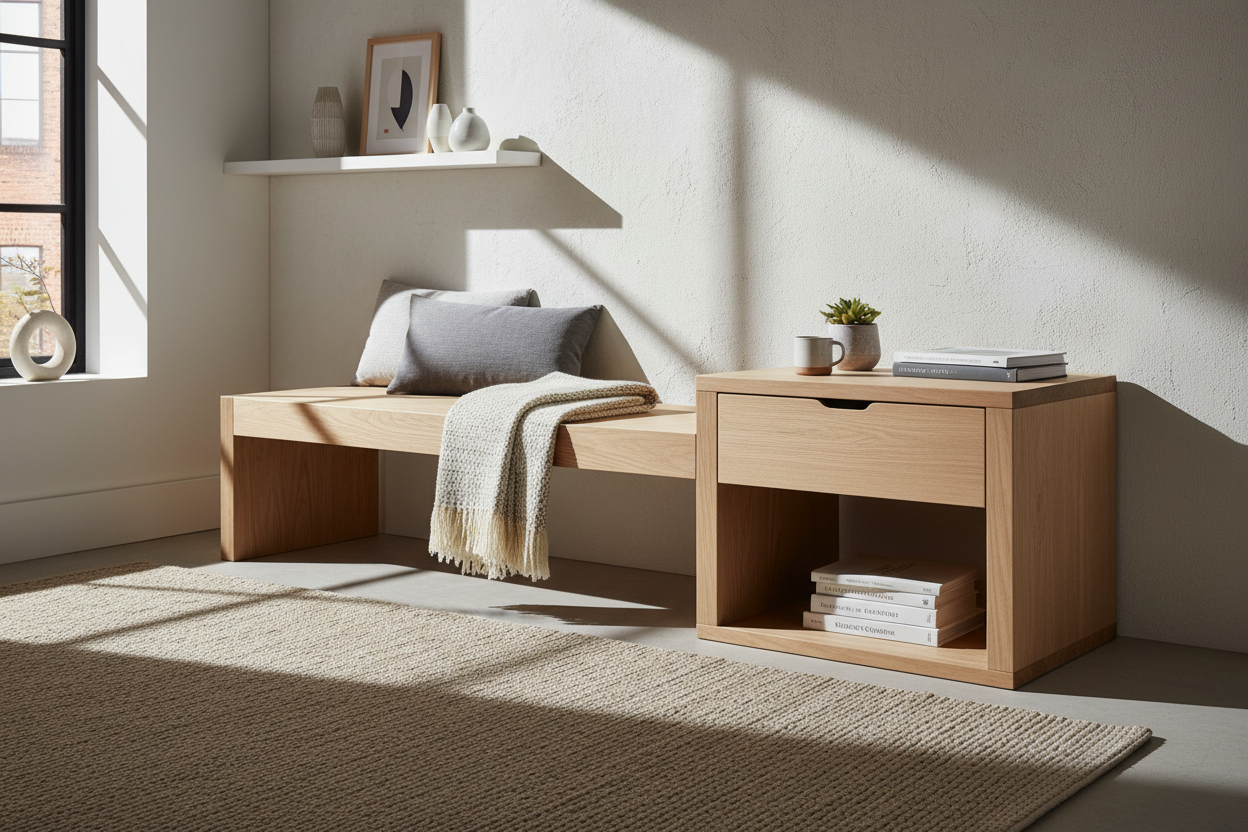
Finding furniture that serves a dual purpose is less of a trend and more of a necessity in modern home design. A bench with side table functionality merges the comfort of seating with the utility of a surface area, creating a hybrid piece that works harder than standard furniture. Whether you are outfitting a cramped apartment entryway, a mudroom, or looking for a unique coffee table alternative, this combination eliminates the need to buy separate pieces that clutter up your floor plan. It provides a designated spot to sit and put on shoes while simultaneously offering a landing pad for keys, mail, or a cup of coffee.
I recall moving into a narrow row house a few years ago where the hallway was barely wide enough for two people to pass. I desperately needed a place to drop my bag and sit to tie my laces, but fitting a chair and a console table was mathematically impossible. I stumbled upon a vintage telephone bench—essentially a bench with side table attached—and it completely changed the flow of the house. Suddenly, the vertical clutter vanished. The mail had a home on the surface, and the seating area remained clear. This experience taught me that hybrid furniture isn't just about saving space; it is about streamlining your daily routine.
The Evolution of the End Table Bench
Historically, this concept isn't new. The "gossip bench" or telephone table of the mid-20th century was a staple in homes when phones were tethered to the wall. Today, the design has evolved. An end table bench now serves as a sophisticated focal point rather than just a utility station for landlines. Designers are creating sleek, integrated units that fit seamlessly into minimalist, industrial, or farmhouse aesthetics.
The beauty of this design lies in its cohesion. When you purchase a bench with side table attached, you don't have to worry about matching wood grains or metal finishes between two separate items. The visual weight is balanced by the manufacturer. This is particularly useful in open-concept living rooms where you might want to delineate a seating area without building a wall. Placing a low-profile bench side table combination behind a floating sofa can anchor the room while providing extra seating for parties.
Styling the Entryway and Mudroom
The entryway is the most logical habitat for this furniture. It is the "drop zone." However, styling it requires a bit of restraint. If the table portion becomes a junk drawer, the elegance of the piece is lost. A small tray for keys and a slender lamp can keep the surface functional yet tidy. For the seating portion, a durable cushion is key, especially if you are sitting down in damp raincoats or dusty hiking gear.
If you have a bit more room, you might consider a separate side table and bench arrangement. This allows for flexibility. You can pull the table away when you need more seating space or move the bench to the dining table during large dinners. However, for tight corners, the integrated unit remains superior because it prevents the furniture from "drifting" and keeps the footprint compact.
Material Matters for Longevity
Since this piece of furniture often sees high traffic, the materials you choose are critical. Solid wood, such as walnut or oak, offers the best durability for the structural elements. If you are looking at a bench with side table for an outdoor patio, look for teak or powder-coated aluminum that can withstand moisture. I have seen too many particle board benches crumble after a wet winter because they weren't sealed properly.
Upholstery is another factor. If the bench is in a high-traffic mudroom, leather or performance fabrics are easier to wipe down than velvet or linen. The attached table section should ideally be resistant to water rings, or you should commit to using coasters. A stone or metal top on the table portion can add a nice contrast to a wooden seat and offers better protection against scratches from keys.
Creative Placement Beyond the Hallway
While the hallway is obvious, the bedroom is an underrated spot for this furniture. Placing an end table bench at the foot of the bed creates a hotel-like atmosphere. It gives you a place to stack books, lay out tomorrow's clothes, or sit while putting on socks. It bridges the gap between the bed and the rest of the room, filling that awkward empty space that often exists in larger master suites.
In a living room setting, these benches can replace a traditional coffee table. This is a bold move, but it works well in narrow rooms. The soft seating area is safer for shins than hard edges, and the attached table provides the necessary hard surface for drinks. It creates a relaxed, lounge-like vibe that encourages conversation.
DIY Potential vs. Buying Retail
For those handy with tools, creating a custom setup is a rewarding project. You can repurpose an existing long coffee table by adding a cushion to one half and leaving the other half exposed wood. This effectively creates a bench side table without the need for complex joinery. It allows for complete customization of the fabric and finish to match your existing decor.
However, retail options have become incredibly sophisticated. From mid-century modern reproductions to rustic industrial pieces with iron piping, the market is flooded with options. When shopping, pay close attention to the weight limit. Because of the cantilevered nature of some designs—where the table hangs off the side—structural integrity is paramount. A well-built unit should feel solid the moment you sit on it, with no wobbling or creaking.
Ultimately, investing in a bench with side table attached is an investment in order. It forces a level of organization that separate pieces do not, and it adds an architectural element to a room that a simple chair cannot achieve. It is a smart, stylish solution for the modern home where every square inch counts.
Frequently Asked Questions
Can I use an integrated bench table in an outdoor setting?
Yes, but material choice is vital. Look for benches made from weather-resistant woods like teak, acacia, or eucalyptus, or choose powder-coated metal. Ensure any cushions are made from outdoor-rated fabric like Sunbrella to prevent mold and fading.
What is the standard height for a bench with an attached table?
The seating portion is typically 18 to 20 inches off the ground, similar to a dining chair. The table portion is usually slightly higher, around 22 to 24 inches, or flush with the seat depending on the design style. Always measure your existing furniture to ensure the scale fits your room.
Is it better to buy an attached unit or a separate side table and bench?
If you are extremely short on space or want a streamlined, cohesive look, the attached unit is superior. If you value flexibility and think you might want to use the table or bench in different rooms in the future, buying separate matching pieces is the smarter long-term choice.


Leave a comment
This site is protected by hCaptcha and the hCaptcha Privacy Policy and Terms of Service apply.