










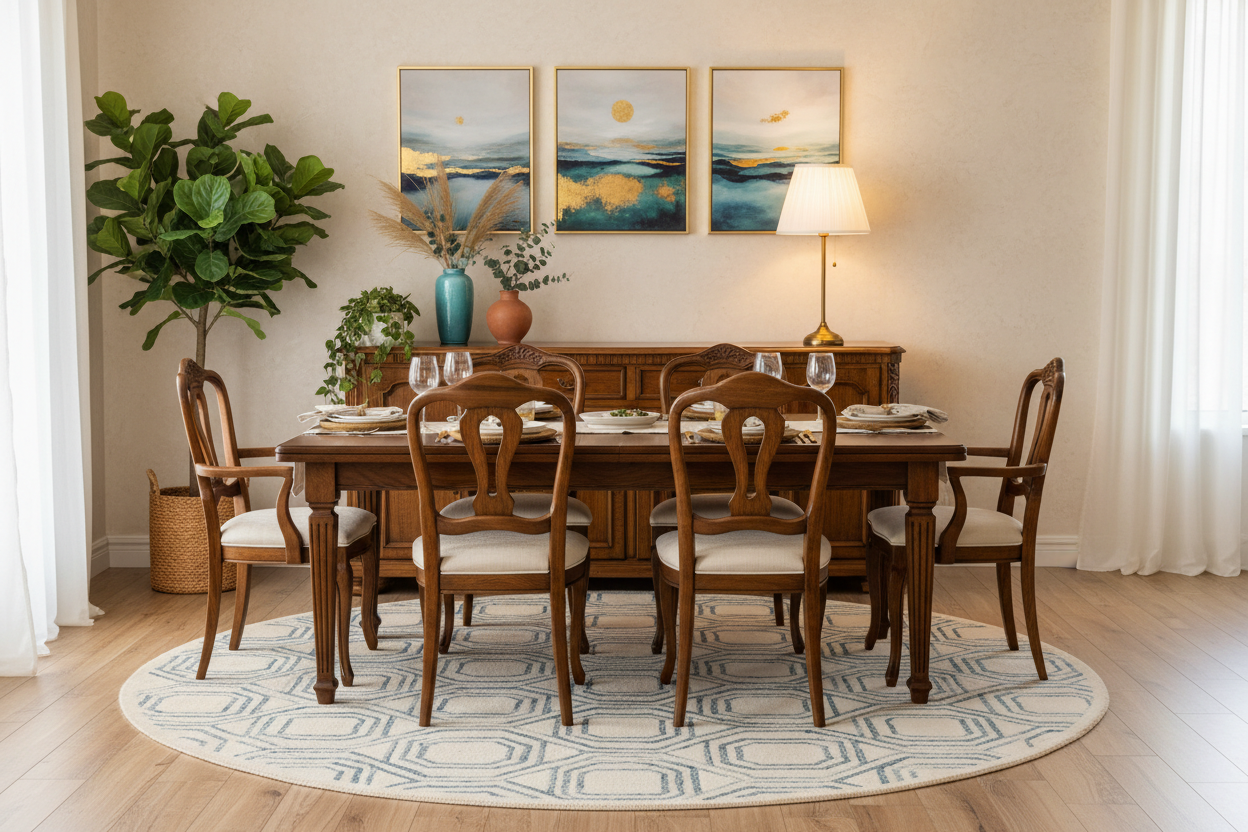
A dining room buffet table serves as both practical storage and a stunning focal point that can transform how you use your dining space. These versatile pieces provide essential storage for dishes, linens, and serving ware while offering a surface for displaying decorative items or setting up food during gatherings. If you're wondering whether you need one, the answer depends on how you use your dining area and what storage challenges you're currently facing.
The terms can get confusing quickly. Buffets, sideboards, credenzas, and servers all fall under the umbrella of dining room furniture buffet pieces, but they have subtle differences. A buffet typically stands shorter (around 34-36 inches) and focuses on food service, while sideboards tend to be taller and were historically used for serving drinks. Today, most manufacturers use these terms interchangeably, so you'll find that buffets tables and sideboards dressers often share similar dimensions and functions.
I learned this the hard way when I bought my first home and assumed the dining table was all I needed. After hosting just one Thanksgiving dinner, I realized I had nowhere to set serving dishes, no storage for my nice china, and guests were awkwardly holding their plates while trying to serve themselves from a crowded table. That's when I started seriously looking at cabinets and buffets.
Matching Your Buffet to Your Dining Table
The relationship between your buffet and dining table matters more than you might think. While they don't need to match exactly, they should complement each other in style, finish, and proportion. A massive buffet will overwhelm a small bistro table, just as a delicate sideboard will look lost next to a substantial farmhouse table.
Consider the finish carefully. If your dining table has a dark walnut finish, you might choose a buffet in the same wood tone for a cohesive look, or opt for a contrasting lighter wood or painted finish to create visual interest. Many people successfully mix dining tables and sideboards from different collections as long as they share a common design language—whether that's modern minimalism, rustic charm, or traditional elegance.
Proportion plays a crucial role too. Your buffet should be roughly 50-75% the length of your dining table. A 60-inch buffet pairs beautifully with an 84-inch table, for example. This creates balance without the pieces competing for attention.
Storage Solutions That Actually Work
The interior layout of furniture sideboards and buffets varies dramatically between pieces, and this is where you need to think about your actual needs rather than just aesthetics. Some buffets feature adjustable shelving perfect for storing serving platters and large bowls. Others include wine racks, silverware dividers, or felt-lined drawers designed specifically for protecting delicate items.
Deep drawers work wonderfully for table linens, placemats, and napkins. I prefer at least one deep drawer in my buffet because it prevents the frustrating situation of having to refold everything every time I grab a tablecloth. Cabinets with doors hide clutter effectively, which is essential if your dining room is visible from your main living areas.
Think about what you'll actually store. If you collect serving dishes, you need adjustable shelves. If you entertain frequently with wine, a buffet with a built-in wine rack makes sense. For families with young children, lower cabinets with childproof latches might be necessary to protect breakable items.
Styling Your Buffet Beyond Storage
A dining room buffet table shouldn't just sit there looking functional. The top surface offers prime real estate for creating a styled vignette that reflects your personality and enhances your dining room's ambiance. The key is balancing decorative elements with keeping the surface practical for serving food when needed.
Start with a large anchor piece—perhaps a mirror, piece of artwork, or even a flat-screen TV if your dining room doubles as a media space. Then layer in items of varying heights. A tall vase or candlesticks provide vertical interest, while a decorative bowl or tray grounds the arrangement. Leave at least one-third of the surface clear so you can actually use it when entertaining.
Lighting makes a significant difference. A pair of table lamps on either end of a long buffet creates symmetry and adds ambient lighting to your dining room. Alternatively, hang a statement light fixture or a series of small pendants above the buffet to draw the eye upward and make the piece feel more intentional.
Materials and Construction Quality
Not all sideboards dressers are built equally. Solid wood construction costs more but lasts generations. Look for dovetail joints in drawers—they're a hallmark of quality construction. Soft-close hinges and drawer glides might seem like minor details, but they prevent the constant slamming that can loosen joints over time.
Veneer isn't necessarily bad, despite its reputation. High-quality veneer over engineered wood can be more stable than solid wood in fluctuating humidity. The problem comes with cheap veneer that chips or peels. Ask about the warranty and construction details before purchasing.
Hardware matters too. Metal handles and knobs should feel substantial, not flimsy. They take constant use, and cheap hardware will literally fall apart. Some cabinets and buffets come with understated hardware that you can easily replace if you want to customize the look.
Sizing Your Space Correctly
Before falling in love with a particular piece, measure your space carefully. You need at least 36 inches of clearance between your dining room furniture buffet and the dining table to allow people to walk comfortably and pull out chairs. In a tight space, consider a narrower buffet (around 16-18 inches deep instead of the standard 20-24 inches).
Ceiling height influences how tall your buffet should appear. In a room with 8-foot ceilings, a very tall buffet can make the space feel cramped. Conversely, in a room with 10-foot ceilings, a low buffet might look insignificant. Hanging a mirror or artwork above the buffet helps fill vertical space in rooms with high ceilings.
Consider traffic flow too. If your dining room serves as a passageway to other rooms, make sure the buffet doesn't create a bottleneck. Sometimes placing the buffet on a different wall than you initially imagined works better for the room's function.
Modern Alternatives and Trends
Contemporary homes are seeing creative interpretations of traditional buffets tables. Floating credenzas mounted to the wall create a sleek, modern look while making floor cleaning easier. Modular systems allow you to configure your storage exactly as needed, adding or removing sections as your needs change.
Mixed materials are increasingly popular—think wood combined with metal frames, glass doors on traditional wood cabinets, or stone tops on wooden bases. These combinations add visual interest and can help bridge different design styles in open-concept homes where the dining room flows into other spaces.
Some homeowners are repurposing vintage pieces as dining room buffets. An old dresser, properly refinished, can provide unique character and ample storage. This approach works particularly well in eclectic or bohemian-styled spaces where perfect matching isn't the goal.
Frequently Asked Questions
What's the difference between a buffet and a sideboard?
Traditionally, buffets were shorter and used primarily for serving food, while sideboards were taller and designed for serving drinks. Today, manufacturers use these terms interchangeably, and most pieces serve both functions equally well. Focus on the dimensions and storage features rather than the name when shopping.
How much should I expect to spend on a quality buffet?
Quality buffets range from $500 for well-made pieces from major retailers to $3,000+ for solid wood, handcrafted furniture. Mid-range options around $800-$1,500 typically offer good construction with solid wood frames and veneer surfaces. The investment pays off in durability and timeless style that won't need replacing in a few years.
Can I use a buffet in rooms other than the dining room?
Absolutely. Buffets work beautifully in entryways for storing shoes and mail, in living rooms as media consoles, or in bedrooms as dressers. Their versatile storage and surface space make them functional in virtually any room. Just ensure the style matches your space and the dimensions fit properly.


Leave a comment
This site is protected by hCaptcha and the hCaptcha Privacy Policy and Terms of Service apply.