










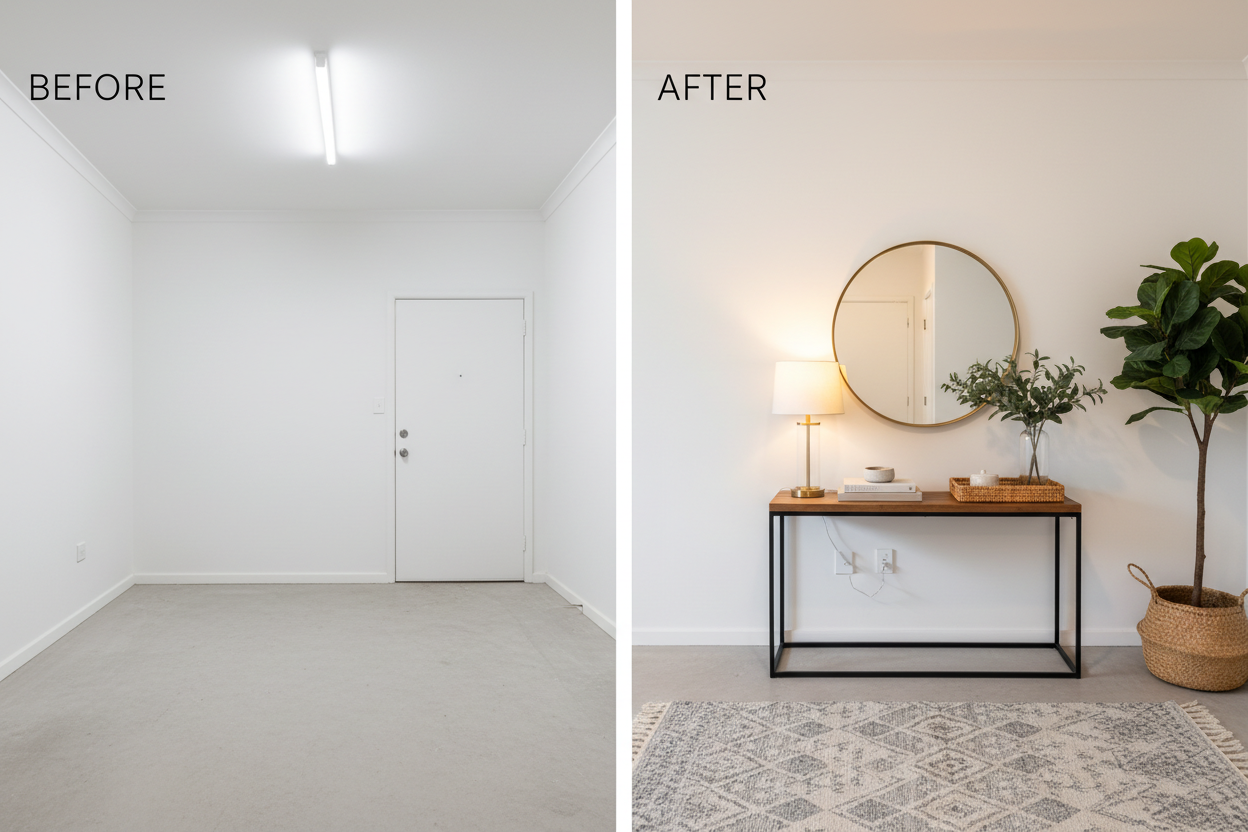
Your entryway sets the emotional tone for your entire home. It is the decompression zone where the outside world falls away, but all too often, it becomes a chaotic dumping ground for keys, mail, and stray shoes. The solution isn't just about cleaning; it is about anchoring the space. An accent hallway table serves as the pivotal piece of furniture that bridges the gap between pure utility and welcoming aesthetics. It provides a designated surface for life's daily debris while offering a canvas to showcase your personal style immediately upon walking through the door.
Finding the Balance Between Size and Circulation
Most hallways suffer from a lack of square footage. This makes the dimensions of your furniture the single most critical factor in your decision-making process. You cannot simply guess the measurements. A table that protrudes too far into the walking path transforms a welcoming foyer into an obstacle course.
I learned this lesson the hard way in my first apartment. I fell in love with a gorgeous, bulky vintage desk that I was convinced would work as an entry piece. It looked stunning against the wall, but it was twenty inches deep in a hallway that was only three feet wide. For two years, I walked into that apartment sideways to avoid bruising my hip. It was a beautiful mistake, but a mistake nonetheless. Since then, I stick to a strict rule: always leave at least 36 inches of clearance for walking. If your hall is tight, look for an accent hall table with a depth of 10 to 14 inches. These slim profiles exist specifically for this architectural challenge.
Length is equally important, though you have more flexibility here. A tiny table on a long, expansive wall looks like a postage stamp on an envelope—lost and awkward. Conversely, a table that crowds the doorframe feels claustrophobic. Aim for a piece that covers roughly two-thirds of the wall length available to it. This ratio tends to feel grounded and intentional without overwhelming the architecture.
Selecting Materials for Visual Weight
The material you choose dictates how much "visual space" the furniture occupies. This is different from physical size. A solid oak cabinet with doors feels heavy and substantial. This works beautifully in large, airy foyers that need grounding, but it can make a narrow corridor feel like a tunnel.
If you are battling a dark or cramped space, consider glass or acrylic. An accent hallway table made of transparent materials or featuring a slender metal frame allows light to pass through it. The eye travels past the legs to the wall behind, tricking the brain into perceiving the room as larger than it actually is. On the other hand, if your entryway opens directly into a large living space, a solid wood or painted console can help visually separate the "entry" zone from the "living" zone, acting as a subtle room divider.
Functionality: Drawers vs. Open Shelves
Be honest with yourself about your clutter habits. If you are the type of person who drops mail and forgets about it for a week, do not buy a table with a glass top and no storage. You need drawers. A table with shallow drawers provides a hiding spot for sunglasses, dog leashes, and envelopes, keeping the surface pristine for decor.
Open shelving near the bottom of the table offers a different kind of utility. It is the perfect spot for decorative baskets. These baskets can hold shoes (if you have a no-shoes house) or scarves and gloves in the winter. This keeps the floor clear and prevents that tripping hazard common in busy family homes.
The Art of Styling Your Surface
Once you have the furniture in place, the real work begins. Styling an accent hall table is about creating a vignette that tells a story. You want to avoid the "landing strip" look where items are just lined up in a row. Instead, think in terms of layers and heights.
Start with a focal point on the wall. A large mirror is the classic choice for a reason; it reflects light and allows for a last-minute outfit check before you leave. Alternatively, a large piece of art can inject immediate color. This anchor piece should be centered over the table but connected to it visually—don't hang it so high that it feels like it's floating away.
Lighting is non-negotiable. Hallways often lack natural light, and overhead fixtures can be harsh. A table lamp adds a soft, welcoming glow. If your table is long, you might use two matching lamps for symmetry. If it is smaller, a single lamp on one side balanced by a stack of books or a vase on the other creates a pleasing asymmetrical balance.
The Rule of Three
Designers frequently rely on the rule of three because the human eye finds odd numbers more appealing. On your table, you might group a tall lamp, a medium-sized framed photo, and a low decorative bowl for keys. This creates a triangle of height that keeps the eye moving. Speaking of that bowl—never skip it. Having a designated vessel for keys and loose change is the secret to keeping the rest of the table clutter-free. If the keys have a home, they won't migrate across the entire surface.
Adapting to Seasonal Changes
One of the joys of having a dedicated surface in the entryway is the ability to rotate decor with the seasons. You don't need to buy new furniture to change the look. In the spring, a vase of fresh tulips transforms the space. In autumn, a bowl of pinecones or a heavier ceramic vase brings in warmth. The table remains the constant foundation, while the accessories keep the energy of the home fresh.
Your entryway is a high-traffic zone, but it shouldn't feel like a highway. It requires a pause point. Whether you choose a sleek, modern console or a rustic farmhouse piece, the right table anchors the space, organizes your essentials, and welcomes you home every single day.
Frequently Asked Questions
How high should a hallway table be?
Standard console table height typically ranges between 30 and 36 inches. This is roughly waist height for most people, making it comfortable to drop keys or check mail without bending over. Ideally, the table should sit slightly lower than the back of a sofa if you ever decide to move it to the living room.
What should I put in the space underneath an open console table?
To prevent the area from looking bare or top-heavy, place one or two large woven baskets, a pair of ottomans, or a large ceramic planter underneath. This adds texture and weight to the bottom of the arrangement while offering practical storage for items like throw blankets or shoes.
Can I put a table in a hallway that is only 3 feet wide?
Yes, but you must prioritize depth. Look for an ultra-slim console that is no more than 10 to 12 inches deep to ensure you maintain a comfortable walking path. Mounting a floating shelf instead of a traditional table is also a great alternative for extremely narrow corridors to keep the floor visible.


Leave a comment
This site is protected by hCaptcha and the hCaptcha Privacy Policy and Terms of Service apply.