










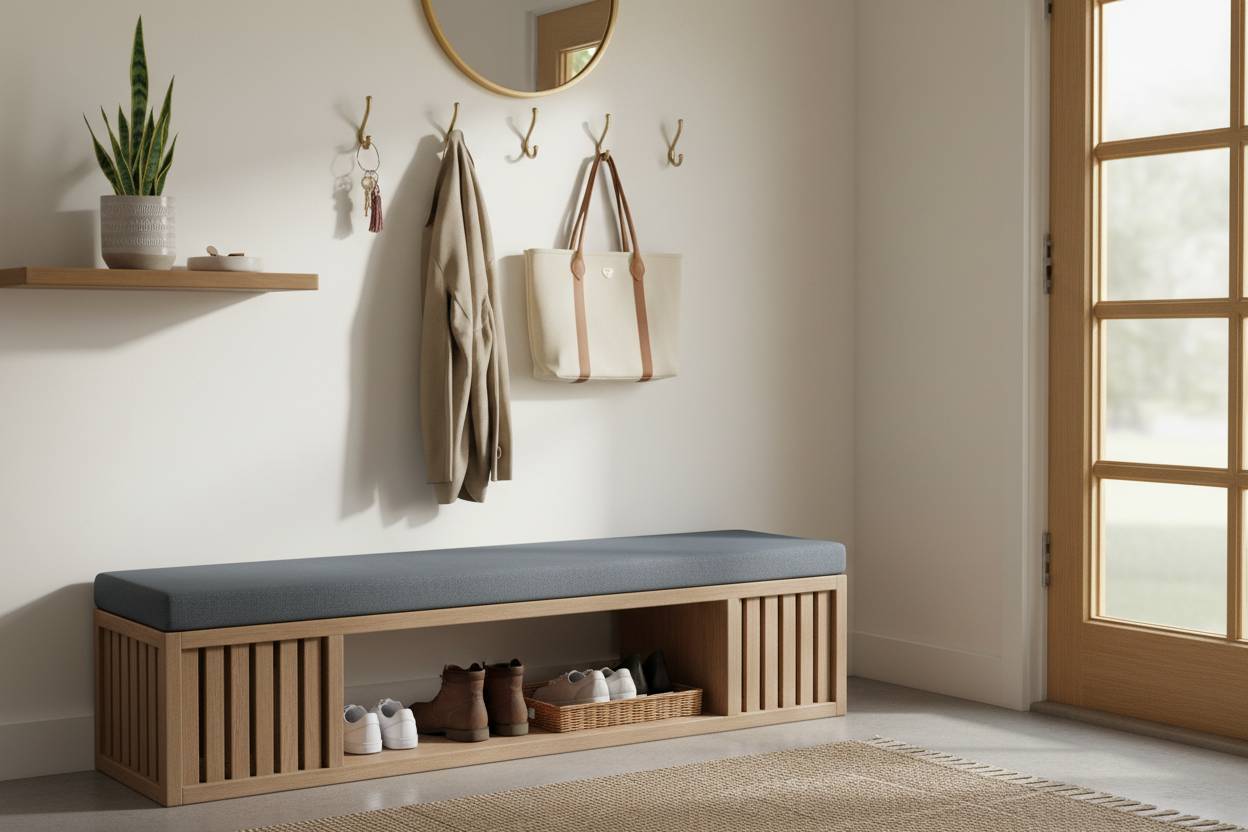
Walking through the front door should feel like a sigh of relief, not an obstacle course. Yet, for many of us, the entryway becomes a chaotic dumping ground for shoes, bags, and mail. The solution often isn't a massive renovation or a custom closet system, but a simple, strategic piece of furniture. A well-placed bench for entrance way areas anchors the space, providing a dedicated spot to pause, take off your shoes, and transition from the outside world into the comfort of home. It transforms a pass-through area into a functional room of its own.
The One-Legged Hop: A Lesson in Necessity
I didn't realize how vital a seating area was until I moved into a house with a long, narrow foyer and absolutely nowhere to sit. For months, my family performed the "one-legged hop" dance every evening. We would lean against the wall, trying to pry off wet rain boots without toppling over, usually resulting in muddy handprints on the paint or a pile of shoes scattered haphazardly across the floor. It wasn't until I dragged an old dining chair near the door that the chaos subsided. That mismatched chair eventually got replaced by a proper bench for entrance use, but the lesson stuck. You need a dedicated surface to handle the physical act of arriving and leaving. It saves your balance, your walls, and your sanity.
Defining the Function of Your Foyer
Before falling in love with a specific aesthetic, you have to decide what job this furniture needs to do. Entryway benches furniture falls into two main camps: the purely decorative and the heavily functional. If you have a separate mudroom or a large coat closet nearby, you might only need a sleek, minimal bench to drop a handbag on. However, if your front door opens directly into the living room, that bench needs to work harder.
Storage is usually the deciding factor. Flip-top benches offer deep storage for seasonal items like scarves or blankets, but they can be annoying if you use them daily because you have to clear the top to open them. Cubby-style benches are often better for high-traffic homes. They allow family members to kick their shoes directly into a designated slot without using their hands. When looking for a hallway entry bench, consider who lives in the house. Kids generally won't open a lid or a drawer, but they might aim for a basket or an open shelf.
Navigating Tight Quarters
Space constraints are the biggest hurdle when shopping for this category. A standard bench depth is around 15 to 18 inches, but in a narrow corridor, those three inches make a massive difference. You never want to block the flow of traffic. If you have to turn sideways to walk past your furniture, it is too big.
For tight apartments or older homes with slim corridors, look for "shallow depth" options. Some manufacturers design a specific entrance way bench that is only 12 inches deep. While this might feel a bit short for long-term sitting, it is perfectly adequate for a quick perch to tie a lace. Visual weight matters here too. A solid wood box bench can make a small hall feel claustrophobic. Instead, opt for a bench with tall, slender legs and open space underneath. Being able to see the floor extending under the furniture tricks the eye into thinking the room is larger than it is.
The All-in-One Drop Zone
Sometimes a standalone seat isn't enough. If you lack a hall closet entirely, you might be better off looking for an entryway bench set or a hall tree. These are vertical units that combine the bench with a back panel featuring hooks, shelves, or a mirror. This creates a vertical storage solution that utilizes the wall height rather than eating up floor space.
The advantage of a set is cohesion. You don't have to worry if the wood stain of your coat rack matches the seat. However, these units are tall and can dominate a room. If you choose a large set, place it on the longest uninterrupted wall you have to prevent it from looming over the door frame. Ensure you measure the height of your ceilings before ordering; you want at least a foot of clearance between the top of the unit and the ceiling to avoid a cramped look.
Material Selection for High Traffic
Your entryway sees more abuse than almost any other part of your home. Wet umbrellas, muddy paws, and grit from the sidewalk all end up here. While a velvet-upholstered bench looks luxurious in a catalog, it is a risky choice for a main entrance. If you love the look of fabric, look for performance weaves treated to resist stains, or darker leather which can be wiped down easily.
Solid wood or metal are generally the safest bets for longevity. A distressed wood finish is particularly forgiving because new scratches or dents just blend in with the existing character. If you choose a painted finish, be prepared for scuffs around the base where heels will inevitably kick the furniture. A metal industrial-style bench for entrance use is virtually indestructible, though it can feel cold; you can soften it with a washable throw cushion or a sheepskin pad that can be removed for cleaning.
Styling Your Entryway
Once you have the mechanics sorted, you can focus on the atmosphere. The entryway sets the tone for the rest of the house. A bare bench can look a bit lonely, so style it to feel welcoming. Flanking the bench with a tall potted plant adds life and height variance. Above the bench, a large mirror is a classic choice not just for checking your appearance before leaving, but for bouncing light around what is often a dark part of the home.
Textiles are your friend here. If your bench has open storage underneath, use uniform baskets to hide the clutter of shoes and dog leashes. Woven textures like seagrass or wicker add warmth to the space. Throw pillows can introduce color, but don't overdo it—you don't want to have to move a mountain of pillows just to sit down. The goal is an approachable, organized space that invites you in and makes leaving just a little bit easier.
Frequently Asked Questions
What is the standard height for an entryway bench?
Most benches sit between 18 and 20 inches high. This is similar to a dining chair height, which is optimal for sitting comfortably to put on shoes. If the bench is significantly lower, it can be difficult for taller adults or guests with mobility issues to stand up from.
How much clearance do I need for a walkway in front of the bench?
You should aim for at least 30 to 36 inches of clear walking path in front of your bench. If your hallway is too narrow to accommodate this clearance, consider a wall-mounted fold-down seat or a very shallow console table instead of a traditional bench.
Can I use a bedroom bench in the foyer?
Yes, you can, but check the durability of the fabric first. Bedroom benches are often designed for light use and delicate fabrics, whereas an entryway piece needs to withstand dirt, moisture, and heavy daily traffic.

Leave a comment
This site is protected by hCaptcha and the hCaptcha Privacy Policy and Terms of Service apply.