










I remember the day I finally hauled my authentic 1964 teak sideboard into the living room. It was gorgeous, thin-legged, and exactly 58 inches wide. Then I mounted my 65-inch TV above it and felt a physical pang of regret. My mid century living room tv setup looked like a bodybuilder trying to balance on a barstool.
We’ve all been there: staring at 47 browser tabs of vintage credenzas at 1 AM, hoping a piece of furniture designed for record players can handle a 4K behemoth. It doesn't. The scale is off, the wires are a nightmare, and the room feels like it's tipping over. If your screen is wider than the furniture beneath it, you aren't decorating; you're just storing electronics.
- Scale is everything; your furniture should be significantly wider than your screen to ground the room.
- Wall units create a visual frame that makes a large TV look like an intentional design choice.
- Walnut finishes and tapered legs keep the look light despite the furniture's actual size.
- Slatted doors are the ultimate hack for hiding tech while maintaining remote functionality.
The Credenza Delusion: Why I Finally Gave Up
I spent years trying to make a 65-inch television look 'authentic' on a low-profile vintage piece. The reality is that mid-century designers never planned for a black glass rectangle that takes up four feet of wall space. When the TV is almost as wide as the stand, the whole room feels top-heavy. It’s a visual anchor that’s dragging your decor into the mud.
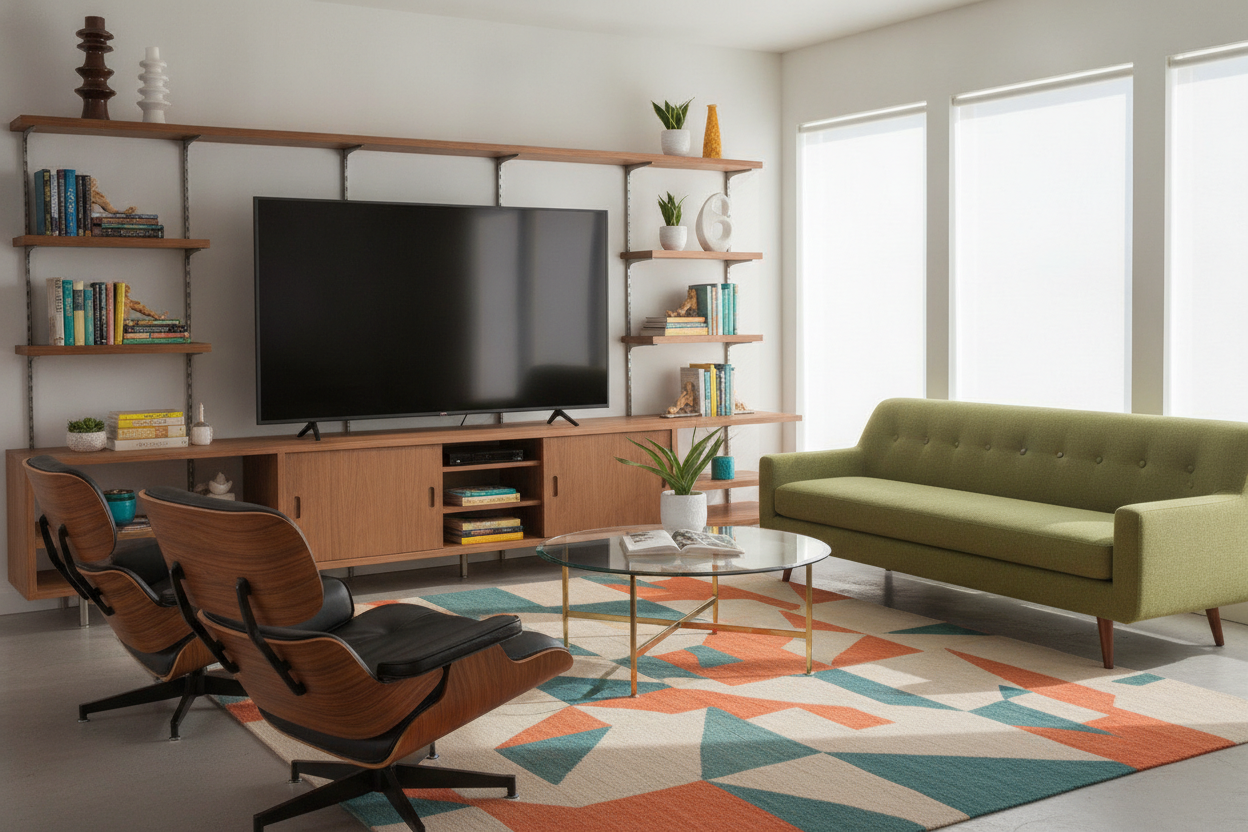
I finally realized that a single, isolated sideboard wasn't enough to ground the space. I needed a mid century tv wall. By expanding the footprint of the furniture horizontally and vertically, the TV stops being a giant intruder and starts being a component of a larger design. If you're struggling with a setup that looks 'temporary,' it's probably because your furniture is being bullied by your tech.
Why You Actually Need a Mid Century Modern Entertainment Wall
Design is all about the 'weight' of objects. A 65-inch screen has massive visual weight. To balance it, you need a mid century modern media wall that offers enough surface area to compete. When you use a mid century modern built-in entertainment center, you aren't just buying a shelf; you're creating a dedicated architecture for your electronics.
This is why a larger entertainment center is necessary for modern homes. It provides a backdrop. Instead of a TV floating on a blank wall above a tiny chest, a full-scale mid century modern entertainment wall frames the screen with books, ceramics, or plants. It turns the 'black hole' of the TV into a curated gallery moment. I switched to an 80-inch wide configuration and suddenly the room felt balanced for the first time since I moved in.
How to Build a Mid Century TV Wall Without It Looking Bulky
The biggest fear with a mid century modern tv wall unit is that it will look like a heavy, 1990s oak monster. The trick is to look for 'airy' features. Tapered legs—the classic 'stiletto' look—lift the piece off the ground, showing more floor and tricking the eye into thinking the room is bigger than it is. Floating shelves also help maintain that 1960s lightness.
When you browse modern TV stands, look for pieces made from kiln-dried walnut or acorn-finished wood. Avoid the cheap 0.5-inch particle board that bows under the weight of a soundbar. A high-quality mid century tv wall unit should feel substantial but look lean. I prefer units that use modular components so you can adjust the height based on your specific ceiling height.
The Slatted Wood Cheat Code for Hiding Ugly Tech
Nothing kills the vibe faster than a tangled mess of HDMI cables and a blinking plastic router. This is where slatted doors become your best friend. They provide a continuous wood-grain look that hides the clutter, but the gaps between the slats allow infrared signals from your remote to pass through. You can keep your consoles and streaming boxes tucked away without having to leave the doors open while you watch a movie.
I specifically recommend a tv stand with slatted doors if you have a messy gaming setup. It’s the ultimate secret for maintaining a clean, minimalist aesthetic while housing a mountain of modern hardware. No more drilling holes in the back of a vintage cabinet just to get a power strip through.
The Verdict on Mixing Massive Tech with Retro Furniture
Stop trying to force 21st-century technology into 1950s dimensions. It’s okay to go big. In fact, embracing a mid century wall unit tv setup is more authentic to the spirit of the era—which was all about optimism and new technology—than trying to hide your TV in a corner. By choosing a unit that matches the scale of your screen, you honor the clean lines and functional beauty of the style without sacrificing your viewing experience. Scale up, ground your room, and let your furniture do the heavy lifting.
FAQ
How much wider should my TV stand be than my TV?
Ideally, your stand should be at least 6 to 10 inches wider than the TV on both sides. This prevents that 'pinched' look and gives you room for a lamp or a couple of books to soften the edges of the screen.
Is walnut or teak better for an MCM media wall?
Walnut is generally easier to find in modern manufacturing and offers a rich, warm tone that hides scratches well. Authentic teak is beautiful but requires more maintenance and can be harder to match with new pieces.
How do I hide the wires if I don't want to cut into my walls?
Look for units with built-in cable management ports and use cable raceways that can be painted to match your wall color. It's a 15-minute fix that makes a world of difference in a clean MCM setup.

Leave a comment
This site is protected by hCaptcha and the hCaptcha Privacy Policy and Terms of Service apply.