










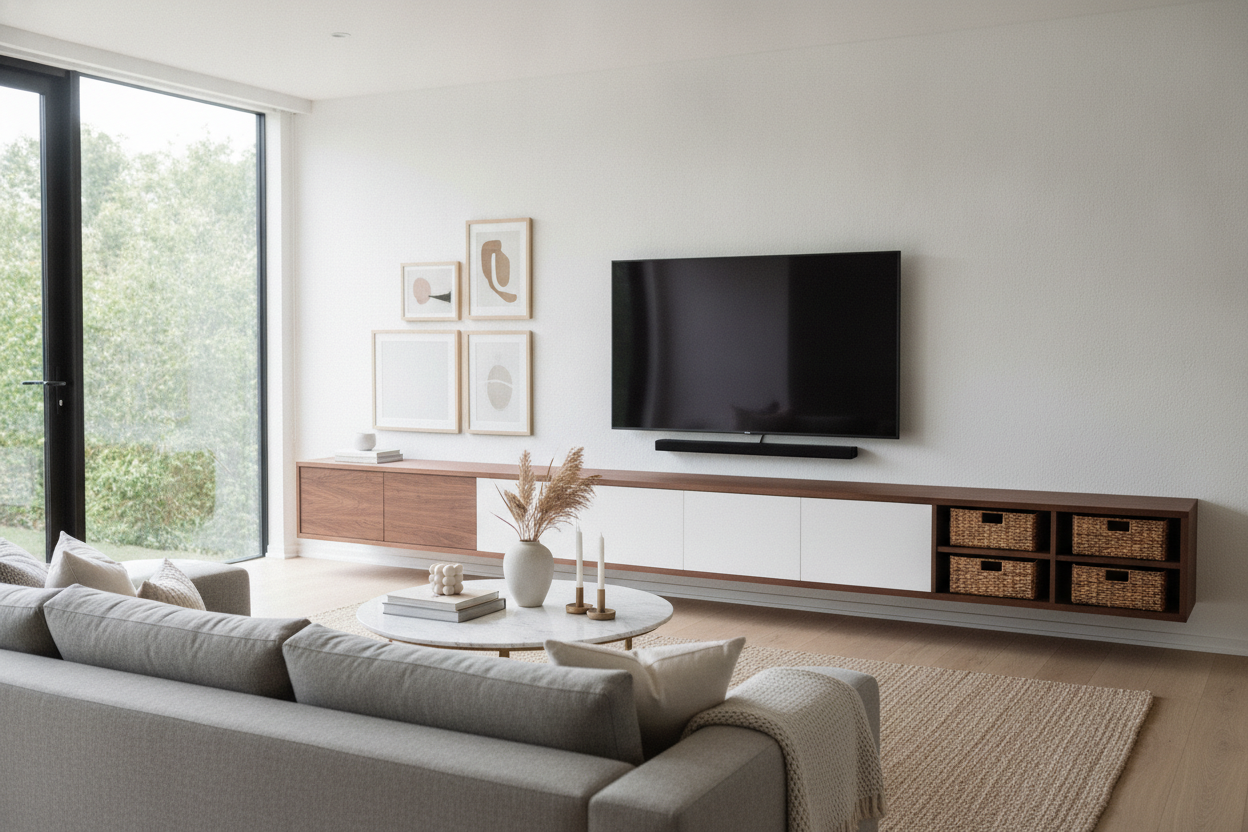
I spent three years pretending I lived in a museum. I bought a walnut floating shelf that was two inches thick and exactly wide enough for a 55-inch OLED. It looked incredible for exactly ten minutes—until I plugged in the router, the gaming console, and the soundbar. Suddenly, my zen corner looked like a back-alley server room with a tech-octopus exploding from the wall.
We have to stop lying to ourselves about 'minimalist' setups. If you actually live in your home, you have stuff. You have controllers that need charging, remotes that get lost in sofa cushions, and a tangled mess of HDMI cables that collect dust bunnies like it is their job. Upgrading to a proper tv unit with storage isn't an admission of defeat; it is a sanity-saving tactical maneuver.
Quick Takeaways
- Open shelves are for people who don't actually own electronics.
- Deep cabinets are the only way to hide the blinking lights of a router.
- Low-profile units prevent your living room from looking like a 90s dens.
- Slatted doors are the secret to using remotes through closed wood.
The Minimalist Dream vs. The Cable Nightmare
The photos you see on Pinterest are a lie. Those TVs are usually 'staged' without a single power cord in sight, or the wires are professionally fished through the drywall. For the rest of us living in rentals or homes with solid plaster, those black plastic snakes are a permanent fixture. I tried the open console look for a year, thinking I could 'manage' the mess with Velcro ties. I failed.
The reality is that a modern living room needs to be a hub for a dozen different devices. Between the mesh Wi-Fi nodes and the three different remotes, you need a dedicated living room storage furniture piece that does more than just hold up a screen. You need a tv unit and storage solution that swallows the chaos whole. If you can see your power strip, your furniture is working against you.
Why I Finally Caved and Bought Doors
The breaking point for me wasn't just the visual noise; it was my cat. He decided the dangling nest of wires behind my 'airy' metal stand was a toy. After one $80 replacement power brick and a very expensive trip to the vet to check for singed whiskers, I realized the open-back life was over. Visual clutter causes a low-level stress that most people don't notice until it is gone. When I finally switched to a unit with solid doors, the room felt five degrees cooler and ten times calmer.
Finding a Heavy-Duty Stand That Doesn't Look Heavy
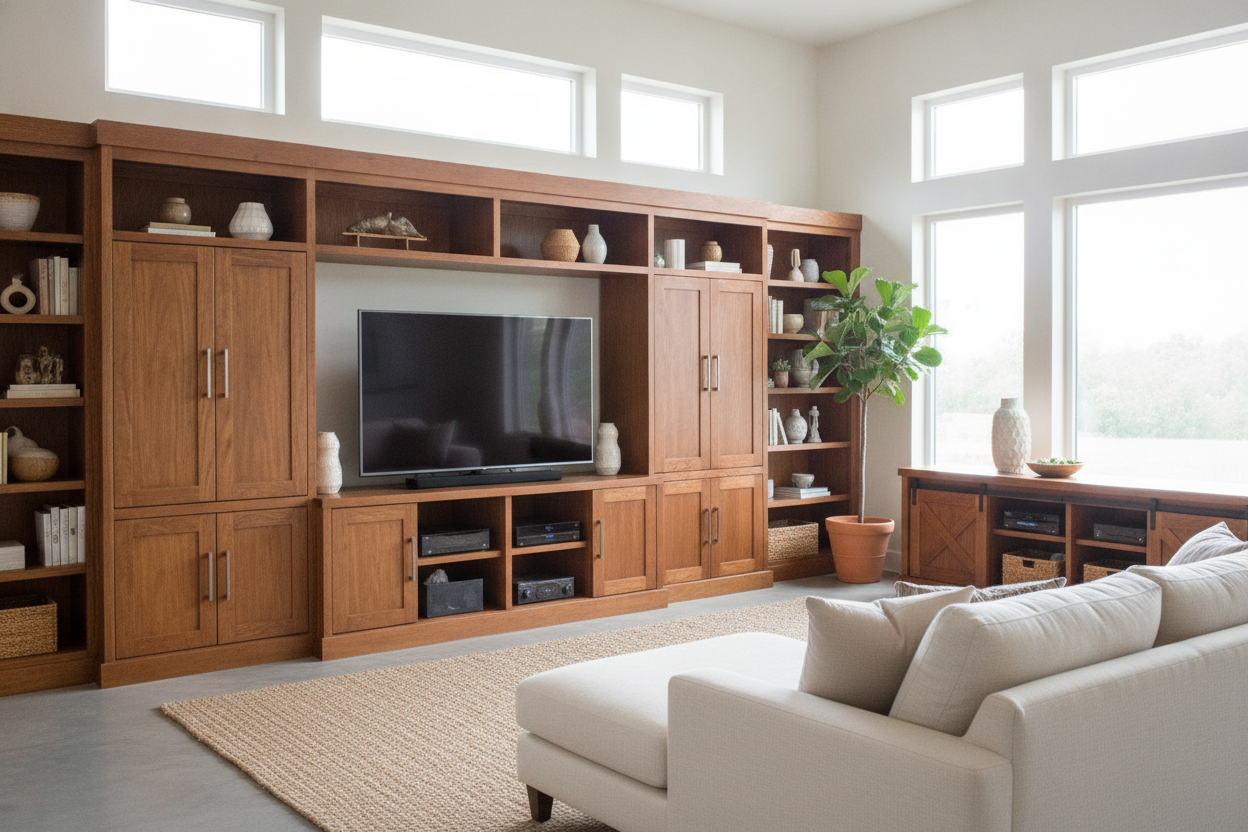
The fear of the TV unit is that it will look like a bulky monolith from a 1994 Sears catalog. It doesn't have to. You can find a modern minimalist tv stand with hidden storage that keeps a slim profile while offering massive internal volume. Look for pieces with 'push-to-open' hardware to avoid clunky handles that break up the clean lines of the wood.
If you are worried about a large piece of furniture swallowing your floor space, go low. Choosing a low tv stand with storage keeps the sightlines open. When the top of the unit sits 18 to 22 inches off the ground, your ceilings feel taller and the room feels less crowded. These long, lean tv benches with storage are perfect for hiding your physical media and controllers while leaving plenty of wall space for art above the TV.
The Slatted Door Hack (For Your Remotes)
One of the biggest gripes with closed storage is that infrared remotes don't work through solid wood. You end up leaving the door cracked open all night anyway, which defeats the purpose. Look for units with slatted fronts or rattan weaving. These designs allow the signal from your remote to pass through the gaps, and more importantly, they allow your electronics to breathe. Overheating a console in a sealed box is a fast way to kill a $500 investment.
How to Style It So It Looks Intentional
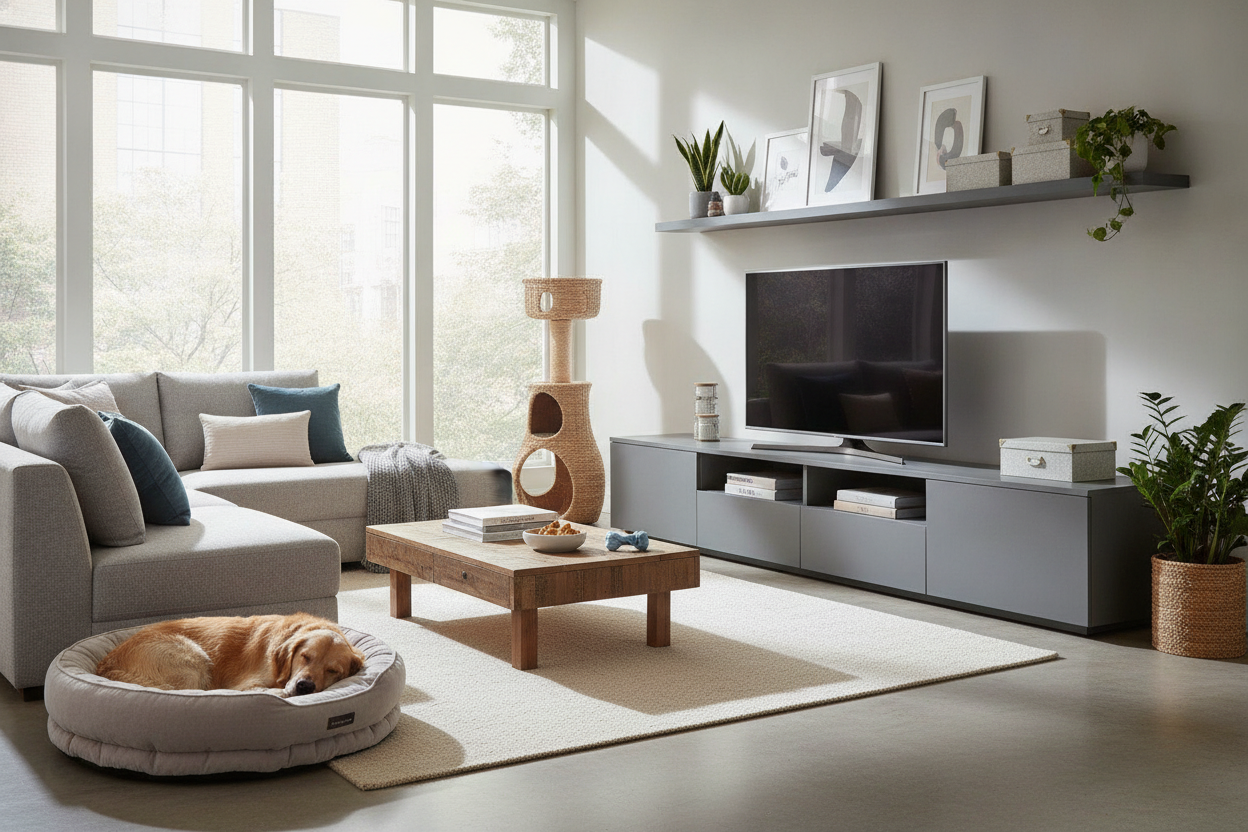
Once you have the storage, don't just leave a blank top. Balance the weight of the unit by styling it asymmetrically. I like to put a tall, leafy plant on one side—something like a Bird of Paradise—to soften the hard edges of the cabinetry. On the other side, lean a piece of framed art against the wall. This distracts the eye from the big black rectangle of the TV when it is turned off.
The goal is to make the unit look like a curated piece of furniture rather than a tech-docking station. By hiding clutter with high end style, you turn a functional necessity into a design focal point. I personally use my bottom drawers for extra throw blankets and the top shelves for the unsightly stuff like the PlayStation and the soundbar sub-woofer.
FAQ
Will my router signal work through wood doors?
Yes, but it might take a slight hit on range. If you have a high-end mesh system, you won't notice a difference. If your signal is already weak, stick to slatted doors or a unit with a thin back panel.
How wide should my TV unit be?
Always go wider than the TV. Aim for at least 6 to 10 inches of 'overhang' on each side. If the TV is wider than the stand, the whole room will feel top-heavy and precarious.
Is MDF okay for a TV stand?
For small units, sure. But if you have a 65-inch-plus TV and a heavy soundbar, look for kiln-dried hardwood or high-quality plywood. Cheap 1.5-density MDF will eventually bow in the middle, and your doors will stop aligning correctly.

Leave a comment
This site is protected by hCaptcha and the hCaptcha Privacy Policy and Terms of Service apply.