










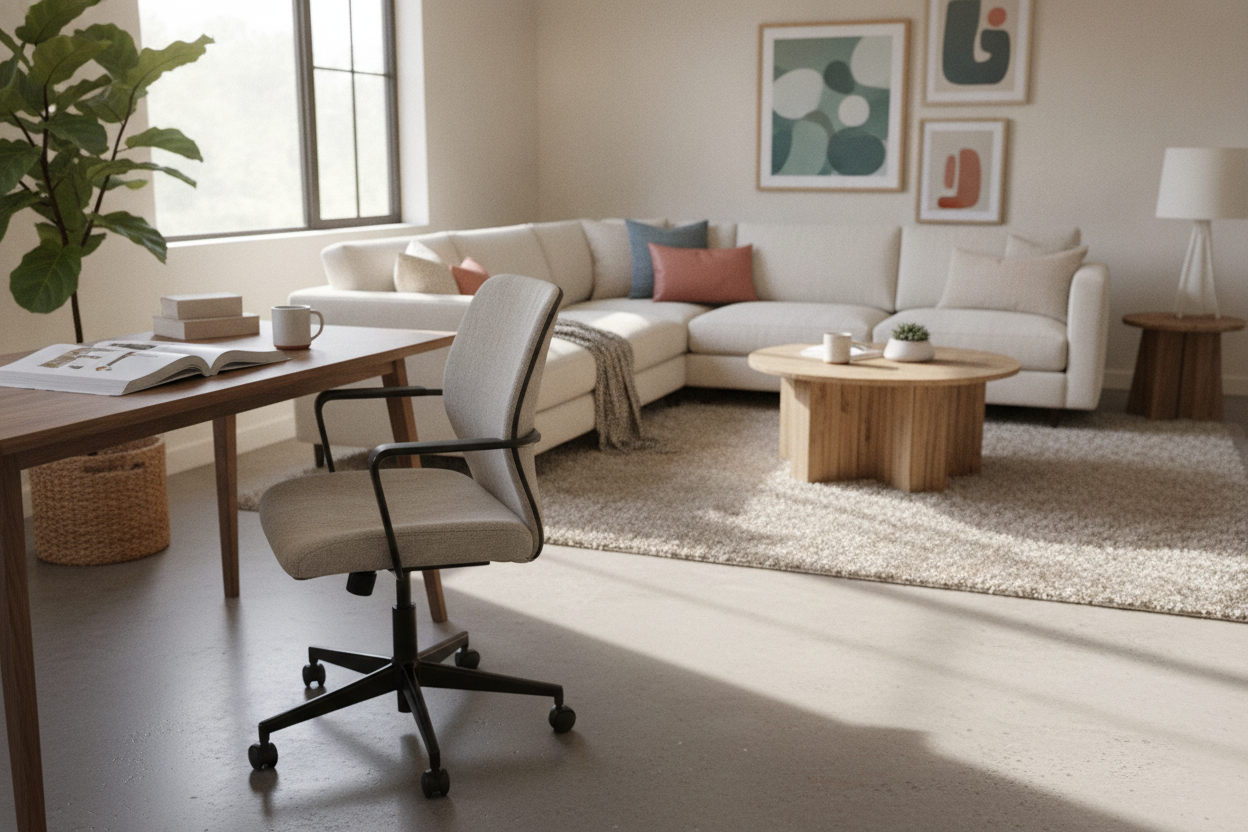
Why Workstation Movement Matters During the Workday
Spending extended hours seated in front of a computer screen often leads to physical stiffness and sluggishness. When your body remains in a static posture for long stretches, minor tension accumulates in the neck, shoulders, lower back, and hips. Incorporating intentional desk exercises for work provides a practical way to break up continuous sitting without requiring a dedicated gym visit or disrupting your project timeline.
Micro-movements and gentle stretches encourage physical comfort while helping you maintain focus across demanding work sprints. By pairing brief physical resets with a well-configured desk environment, you create an active work zone that supports both posture and productivity throughout the workday.
Preparing Your Workspace for Desk Exercises
Before beginning any physical movement routine at your desk, it is essential to assess your physical workspace. Safety and ease of movement depend heavily on surface stability, leg clearance, and organized surroundings.
- Check Under-Desk Clearance: Ensure there is sufficient open space beneath your desk so your knees and shins do not bump into crossbars, modesty panels, or under-desk filing pedestals when extending your legs. If you are reviewing your furniture configuration, our remote work workstation guide offers practical advice on desk proportions and legroom planning.
- Verify Workstation Stability: If you plan to use your desk edge for supportive standing stretches, confirm that the frame sits firmly on level flooring without shifting or wobbling.
- Clear Loose Desktop Items: Secure open beverage cups, reposition loose cables, and slide notebooks away from edges to avoid accidental knockdowns during movement routines. For layout ideas that maximize usable space, consider thoughtful techniques for organizing your desk at work.
- Manage Chair Casters: If your office chair features smooth-rolling caster wheels, position it securely on a flat mat or lock the mechanism when performing seated stretches.
Seated Upper-Body Stretches and Posture Resets
You can perform these seated upper-body movements directly from your office chair without leaving your workstation. They focus on relieving tension around the neck, upper back, chest, and wrists.
1. Seated Neck Tilts
Sit upright with your shoulders relaxed. Slowly lower your right ear toward your right shoulder until you feel a gentle stretch along the left side of your neck. Hold for several seconds, return to center, and repeat on the opposite side.
2. Shoulder Blade Squeezes and Rolls
Draw your shoulders up toward your ears, roll them backward in a smooth circular motion, and squeeze your shoulder blades gently toward each other. Complete several backward rotations to reset rounded shoulders caused by typing.
3. Overhead Reach and Lat Stretch
Interlace your fingers, turn your palms upward, and extend your arms straight overhead. Lengthen your spine upward, hold for a few breaths, and gently lean slightly to each side to stretch your upper torso.
4. Seated Chest Opener
Place your hands behind your lower back or clasp the back uprights of your chair. Gently pull your elbows back and broaden across your collarbones, opening up the front of your chest.
5. Seated Spinal Twist
Plant your feet flat on the floor. Place your right hand on the outside of your left knee or chair armrest, and place your left hand on the back of your seat. Gently rotate your torso to the left, keeping your spine tall. Hold, return to center, and switch sides.
6. Wrist Flexor and Extensor Stretch
Extend one arm in front of you with your palm facing outward and fingers pointing upward. Use your other hand to apply gentle backward pressure on your fingers. Then flip your hand so fingers point downward and apply light pressure across the back of the hand.
Lower-Body and Core Work Exercises at Your Desk
Targeting the lower body and midsection while seated helps maintain circulation and mobility during long project blocks. These work exercises at your desk require minimal room and can be performed discreetly.
7. Seated Leg Extensions
Sit back in your chair with a straight spine. Extend your right leg straight out in front of you parallel to the floor, engage your thigh muscles for a brief hold, and slowly lower it back down. Alternate between both legs for a balanced set.
8. Seated Ankle Rotations and Pumps
Lift your feet slightly off the floor and trace smooth circles with your toes in both clockwise and counterclockwise directions. Follow with ankle pumps by alternating between pointing your toes forward and flexing them back toward your shins.
9. Seated Marching
While maintaining an upright posture, lift your right knee several inches off your chair seat, pause briefly, and lower it down. Alternate in a rhythmic marching motion to encourage hip mobility.
10. Seated Calf Raises
Keep the balls of your feet pressed into the floor while lifting your heels as high as comfortable. Squeeze your calf muscles at the top before slowly lowering your heels. For extra engagement, rest your hands lightly on your knees.
11. Seated Toe Lifts
With heels firmly planted on the floor, lift your toes and the balls of your feet upward toward your shins. This simple motion works the anterior lower leg muscles and helps balance repetitive foot positioning.
12. Core Bracing and Seated Pelvic Tilts
Sit slightly away from the backrest. Engage your abdominal muscles as if bracing for support, gently tilt your pelvis slightly backward, and then return to a neutral, tall sitting posture. This movement promotes active core engagement and lumbar awareness.
Standing and Desk-Supported Movements
Taking advantage of a stable desk frame allows for low-impact standing movements that shift weight-bearing load away from your chair.
13. Desk-Supported Calf Stretch
Stand facing your desk and place both palms flat on the surface for balance. Step your right leg straight back, pressing the heel flat against the floor while slightly bending your front knee. Hold the position to stretch the rear calf, then switch legs.
14. Counter-Height Desktop Push-Ups
Ensure your desk is heavy and firmly planted against the wall or floor. Place your hands slightly wider than shoulder-width along the front desk edge. Step your feet back into an inclined plank posture, slowly bend your elbows to lower your chest toward the desk edge, and press back up with control.
15. Standing Hip Hinge and Hamstring Reach
Stand about an arm's length away from your workstation. Place your hands on the edge of your desk, keep a soft bend in your knees, and hinge at your hips, pushing your glutes backward until your torso is parallel to the floor. Lengthen through your back and hamstrings before returning to standing.
Adapting Movement to Compact and Shared Workspaces
Working in tight corners or shared corporate settings requires a thoughtful balance between movement routines and room boundaries. Finding room for workplace exercises at your desk is entirely possible with smart space organization.
- Shared and Open Offices: Prioritize quiet, compact seated movements like wrist stretches, ankle pumps, and subtle seated leg extensions that stay contained within your personal chair footprint.
- Compact Rooms and Studio Apartments: If your work area is situated within a multi-use room, explore functional small apartment desk setups to ensure pathways remain clear around your seat.
- Corner and Bedroom Workspaces: When arranging furniture in restricted room corners, implementing smart ideas for tight bedroom workspace layouts keeps storage cabinets and bed frames from blocking your standing exercise zone.
- Broader Workspace Planning: Integrating movement zones with smart storage units and monitor mounts helps maintain open surface area. Reviewing fresh workplace desk design ideas can help you design a layout that balances storage needs with physical freedom.
Creating a Sustainable Daily Movement Routine
Building physical movement into your workday works best when it becomes an automated habit rather than an afterthought. Use everyday work milestones to trigger brief activity intervals:
- Link Movement to Task Transitions: Perform two or three quick stretches whenever you finish a video call, send off a major document, or step away for a water refill.
- Set Gentle Visual Cues: Place an ergonomic reminder or brief movement checklist near your monitor to prompt posture checks throughout the morning and afternoon.
- Tidy as You Move: Use standing intervals to neatly stow pens, return files to side drawers, or organize cables, keeping your functional work zone clear and ready for the next focus session.
By combining simple seated and standing desk exercises with an uncluttered, stable workspace layout, you can maintain physical comfort and focus throughout every workday.

Dejar un comentario
Este sitio está protegido por hCaptcha y se aplican la Política de privacidad de hCaptcha y los Términos del servicio.