










Working from the sofa sounds great in theory, but after a few weeks, your back aches and your coffee table is buried under a mountain of paperwork. Fitting a dedicated workspace into a tight floor plan is a massive headache for most renters. You want a functional office, but you don't want your living room to suddenly look like a corporate cubicle.
If you are struggling with spatial planning, finding the right desk ideas for small apartments comes down to rethinking negative space and choosing furniture with the correct visual weight. In this guide, we will walk through exactly how to squeeze a productive, stylish workspace into your home without sacrificing your living area.
Quick Decision Guide
- Float it behind the sofa: Use a narrow console table as a desk directly behind your couch to create a clear physical boundary between work and relaxation.
- Prioritize visual lightness: Avoid bulky, solid-wood executive desks. Opt for glass, acrylic, or thin metal legs to keep the room feeling open.
- Utilize vertical real estate: Ladder desks or wall-mounted shelving units with a built-in desktop draw the eye upward and save precious square footage.
- Mind the clearance: Always leave at least 36 inches between the edge of your desk and the nearest wall or furniture piece so you can comfortably slide your chair out.
Finding the Right Spot
Where to Put a Desk in a Small Apartment
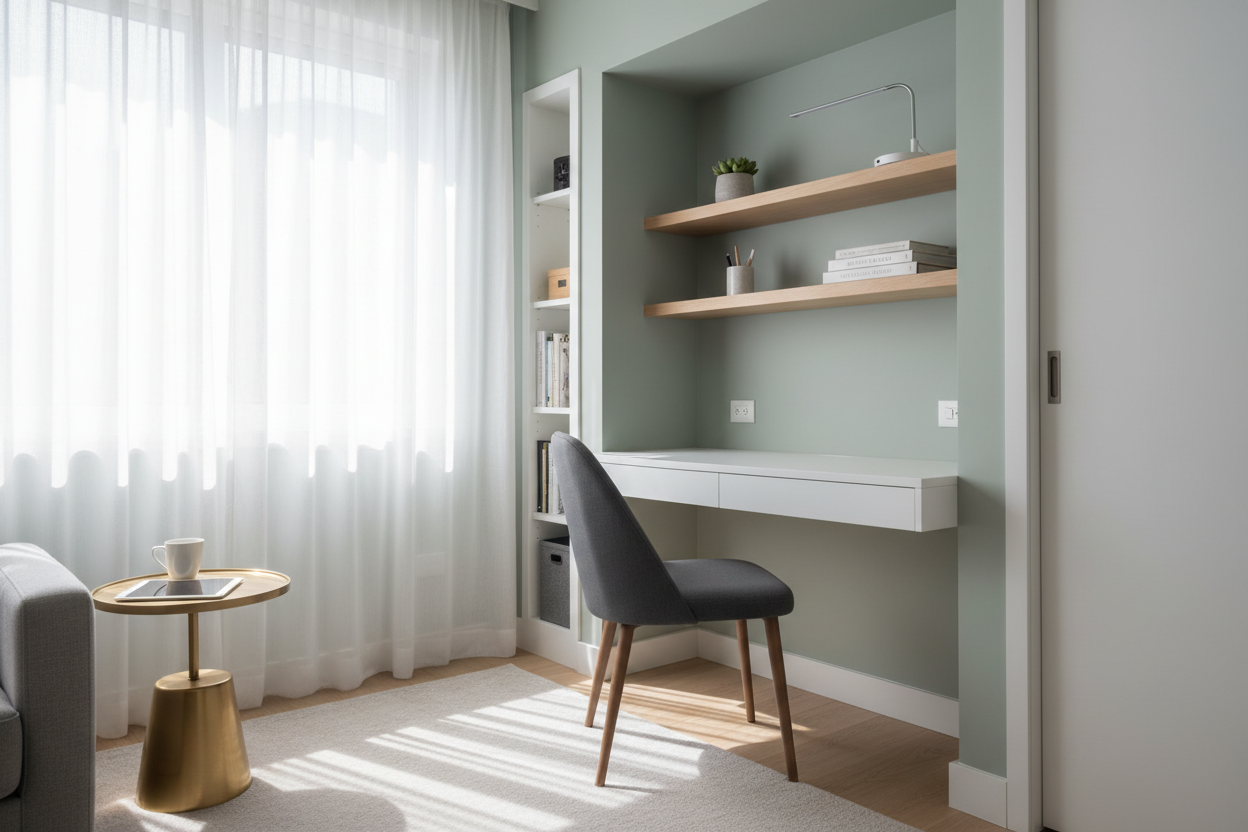
The most common question clients ask is exactly where to put a desk in a small apartment when every wall is already spoken for. The trick is to look for transitional zones. A wide hallway, the dead space underneath a staircase, or an unused alcove are prime targets. If your bedroom is large enough, replacing a traditional nightstand with a small writing desk serves a dual purpose.
Another excellent option is the 'cloffice'—converting a shallow reach-in closet into a workspace. By removing the doors and installing a deep shelf as the desktop, you create a dedicated nook that doesn't encroach on your main floor plan. Just remember to account for lighting, as closets rarely have adequate overhead fixtures.
Choosing the Right Silhouette
Keeping Visual Weight Light
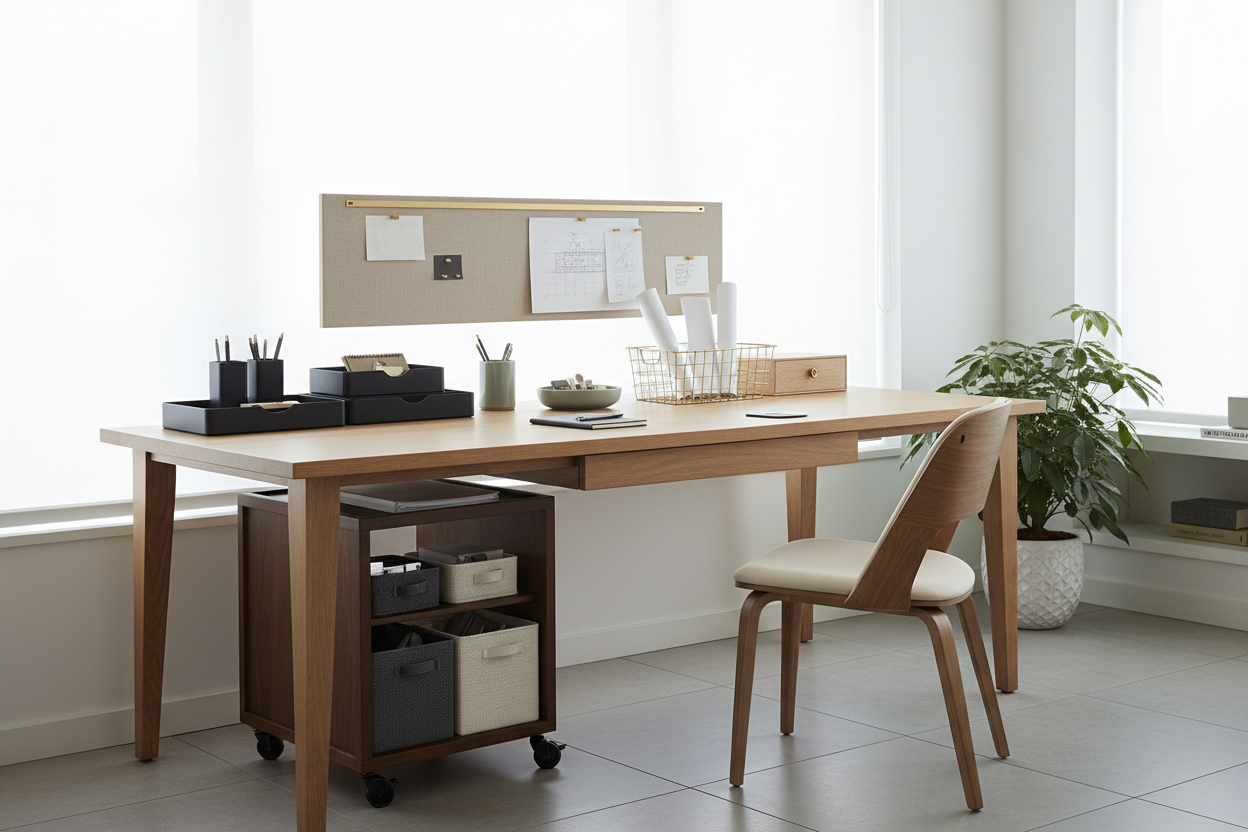
When curating apartment desk ideas, the physical footprint is only half the battle; the visual weight is just as critical. A heavy, dark mahogany desk will anchor a room and make a tight space feel incredibly cramped. Instead, look for pieces with a delicate silhouette. Hairpin legs, open-frame bases, and light-toned woods like ash or white oak blend seamlessly into contemporary and transitional spaces.
Multi-Functional Pieces
If you genuinely do not have room for a standalone desk, look for drop-leaf dining tables or secretary desks. A modern secretary desk hides your monitors and clutter behind a fold-up door at the end of the day, immediately returning the room's aesthetic to a cozy living space. It is a brilliant way to maintain boundaries when your office and your living room are the exact same place.
Functionality Over Aesthetics
Ergonomics in Tight Quarters
It is easy to buy a tiny, adorable desk that looks perfect on social media, only to realize it is entirely impractical for an eight-hour workday. Standard desk height is typically 29 to 30 inches. If you are buying a compact vintage table to use as a desk, measure the clearance underneath. Many antique tables have deep aprons that will aggressively scrape your thighs or prevent a standard office chair from sliding underneath.
Lessons from My Own Projects
A few years ago, I was designing a 600-square-foot condo in Toronto and decided to build a custom floating desk in an awkward living room niche. To save the client money and keep the profile ultra-thin, I used a modified hollow-core door as the desktop, secured with standard drywall anchors.
It looked incredibly sleek for about three weeks. Then, the client added a dual-monitor mount. The hollow core couldn't handle the concentrated clamp pressure, and the drywall anchors slowly began to pull away from the wall under the weight. I learned the hard way that aesthetics can never override structural integrity. We had to rip it out, find the studs, and install heavy-duty steel brackets with a solid walnut slab. The honest downside? The walnut slab cost three times as much and was significantly thicker, but it was the only way to make a floating desk actually functional for heavy daily use.
Frequently Asked Questions
What is the minimum depth for an apartment desk?
If you strictly use a laptop, you can get away with a desk depth of 18 to 20 inches. However, if you use an external monitor and a keyboard, you need an absolute minimum of 24 inches of depth to prevent severe eye strain and allow your wrists to rest comfortably.
How do I hide my computer monitors in a living room?
The easiest method is to use an armoire desk, which allows you to literally close the doors on your workday. If that is too bulky, consider placing a decorative folding screen beside the desk, or simply invest in an attractive monitor dust cover that blends with your wall color.
Are wall-mounted floating desks sturdy?
They are incredibly sturdy, provided they are installed correctly. You must anchor the mounting brackets directly into the wooden wall studs. Never rely on plastic drywall toggles for a desk, as the repeated downward pressure of leaning on the surface will eventually pull them out of the wall.

Dejar un comentario
Este sitio está protegido por hCaptcha y se aplican la Política de privacidad de hCaptcha y los Términos del servicio.