










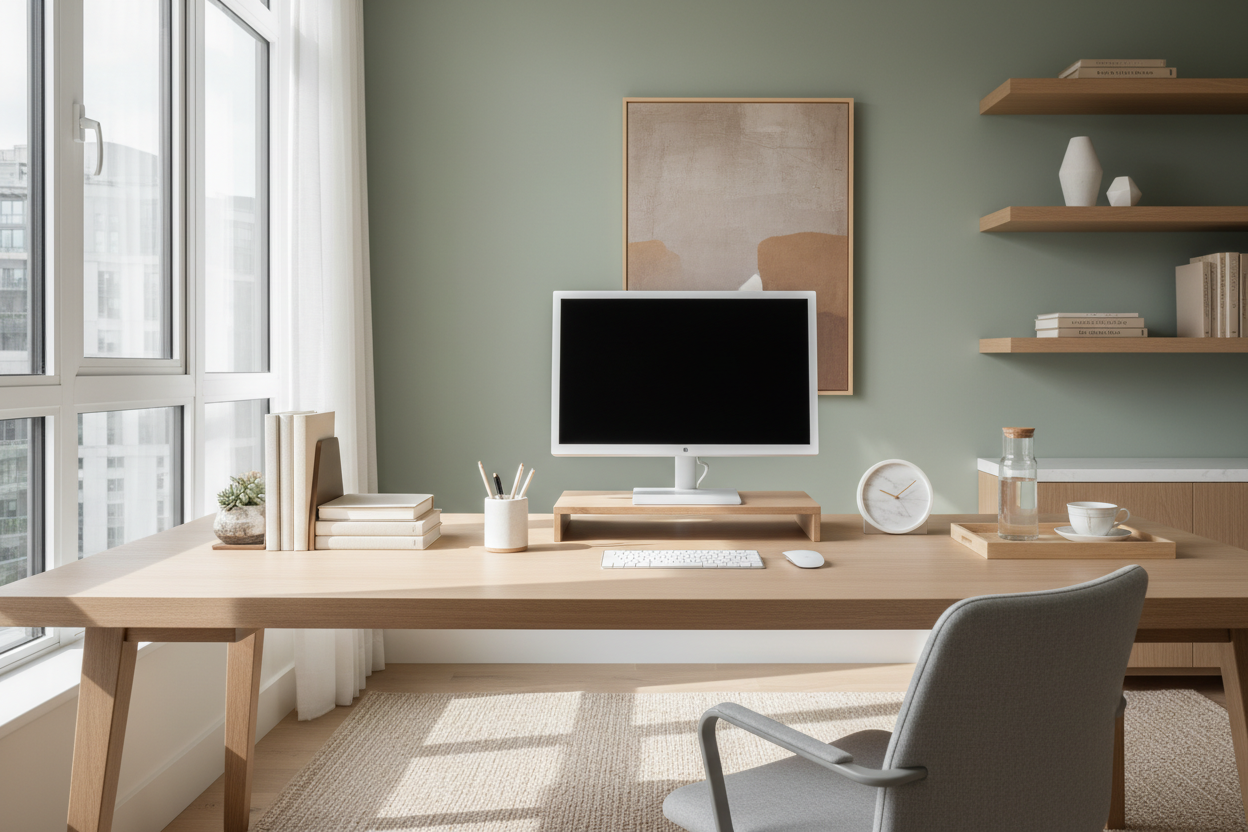
Visual noise is often the silent killer of productivity. When I walk into a client's office, I don't just see a messy surface; I see a disrupted workflow. The pile of unfiled papers isn't just clutter—it is a constant, low-level stressor competing for your mental bandwidth. The goal isn't just to tidy up; it is to curate a space that actively supports your cognitive function. Whether you are in a corporate high-rise or a home study, learning how to organize desk at work is about establishing a hierarchy of necessity and aesthetics.
Key Principles for a Functional Workspace
- The Reach Radius: Keep daily essentials within an arm's arc; move occasional items to the periphery.
- Visual Quiet: Utilize opaque storage for miscellaneous items to reduce visual vibration.
- Vertical Utilization: Use risers and wall shelves to reclaim valuable surface area.
- Material Continuity: Match organizer materials (wood, leather, metal) to your desk finish for a cohesive look.
- Cable Discipline: Route wires out of sight immediately to maintain clean lines.
The Art of Zoning: Desk Management Ideas
In interior design, we talk about "zones" in floor plans; the same logic applies to your desktop. To create an organized workstation, you must delineate space based on function rather than habit.
The Active Zone
This is the prime real estate directly in front of you. It should be reserved strictly for the task at hand—usually your keyboard, mouse, and a single notebook. If you are wondering how to organize desk space effectively, start by ruthlessly clearing this center stage. Nothing else belongs here.
The Passive Zone
This area sits just beyond your immediate reach. Here is where you place reference materials, your hydration, and perhaps a task lamp. The best way to organize your desk is to ensure these items are accessible without requiring you to stand up, yet far enough away that they don't crowd your typing posture.
Materiality and Texture in Storage
When clients ask how to keep your desk organized without it looking sterile, I point them toward texture. Avoid the temptation of cheap, wire-mesh organizers. They create visual clutter because you can see everything inside them.
Instead, opt for linen-wrapped boxes, leather trays, or solid wood caddies. These hide the "ugly" essentials (staplers, tape, USB drives) and introduce warmth. If you are deciding what should i put on my desk at home, choose accessories that complement your interior decor. A marble tray for paperclips or a walnut monitor riser adds a layer of sophistication that plastic bins simply cannot achieve.
Handling Specific Desk Configurations
Not all furniture footprints are created equal. The strategy changes depending on the silhouette of your piece.
How to Organize a Corner Desk
Corner desks offer depth but can become "dead zones" in the back corner. Use this deep triangle for bulky items like a large monitor or a printer. Flank the user side with low-profile trays so you don't feel hemmed in by towers of paper.
How to Organize a Secretary Desk
These are charming but spatially challenging. Because the workspace folds up, you cannot have tall items fixed to the surface. Utilizing the internal cubbies is vital. Use small, labeled pouches for tech accessories rather than loose items, ensuring the lid can close without obstruction.
How to Organize Computer Desk with Heavy Tech
For a tech-heavy setup, cable management is your priority. Use under-mount trays to lift power strips off the floor. Visually, balance the "cold" look of monitors and towers with a large felt desk pad. This anchors the setup and provides acoustic dampening.
The Paper Paradox: How to Organize Notebooks on Desk
Notebooks and loose papers are the enemies of an organized desk. Avoid stacking them; stacks are where ideas go to die. Instead, use a vertical sorter. If you must keep notebooks on the surface, limit it to two: one for active drafting and one for reference. Align them with the edge of the desk or the monitor stand to maintain geometric harmony.
Lessons from My Own Projects: The "Click-Clack" Factor
I once designed a high-end home office for a finance executive who wanted a sleek, glass-top desk with acrylic organizers. It looked stunning in the photos—pure, transparent minimalism. However, two weeks later, he called me complaining that the space felt "loud" and irritating.
The issue wasn't the layout; it was the acoustics and tactile experience. Every time he set down his pen or dropped his keys into the acrylic tray, it made a sharp "clack" against the glass. It was a sensory annoyance that disrupted his focus. We swapped the acrylic for leather-lined trays and added a wool felt desk blotter. The visual clutter remained low, but the tactile softness completely changed the atmosphere. When organizing your desk at work, remember that touch and sound are just as important as the visual arrangement. If an organizer feels cheap or sounds loud, you won't use it.
Conclusion
Ultimately, to organize my office desk is to organize my mind. By clearing the periphery, choosing materials that soothe rather than stimulate, and respecting the geometry of your furniture, you create a vessel for good work. Do not just tidy; design a space that demands your best performance.
Frequently Asked Questions
How do I maintain an organized desk area long-term?
Adopt the "end-of-day reset" ritual. Spend the last three minutes of your workday returning items to their designated homes. This ensures that when you arrive the next morning, you are greeted by possibility rather than yesterday's chaotic residue.
How to have an organized desk in a very small space?
When surface area is limited, you must expand vertically. Wall-mounted pegboards or floating shelves above the desk can hold 80% of your supplies, leaving the small desk surface free for your laptop and coffee.
Is it okay to have personal items on a professional desk?
Absolutely, but curate them. Instead of five scattered photo frames, choose one high-quality frame or a small, sculptural plant. Personal items should serve as a focal point for inspiration, not visual noise.

Dejar un comentario
Este sitio está protegido por hCaptcha y se aplican la Política de privacidad de hCaptcha y los Términos del servicio.