










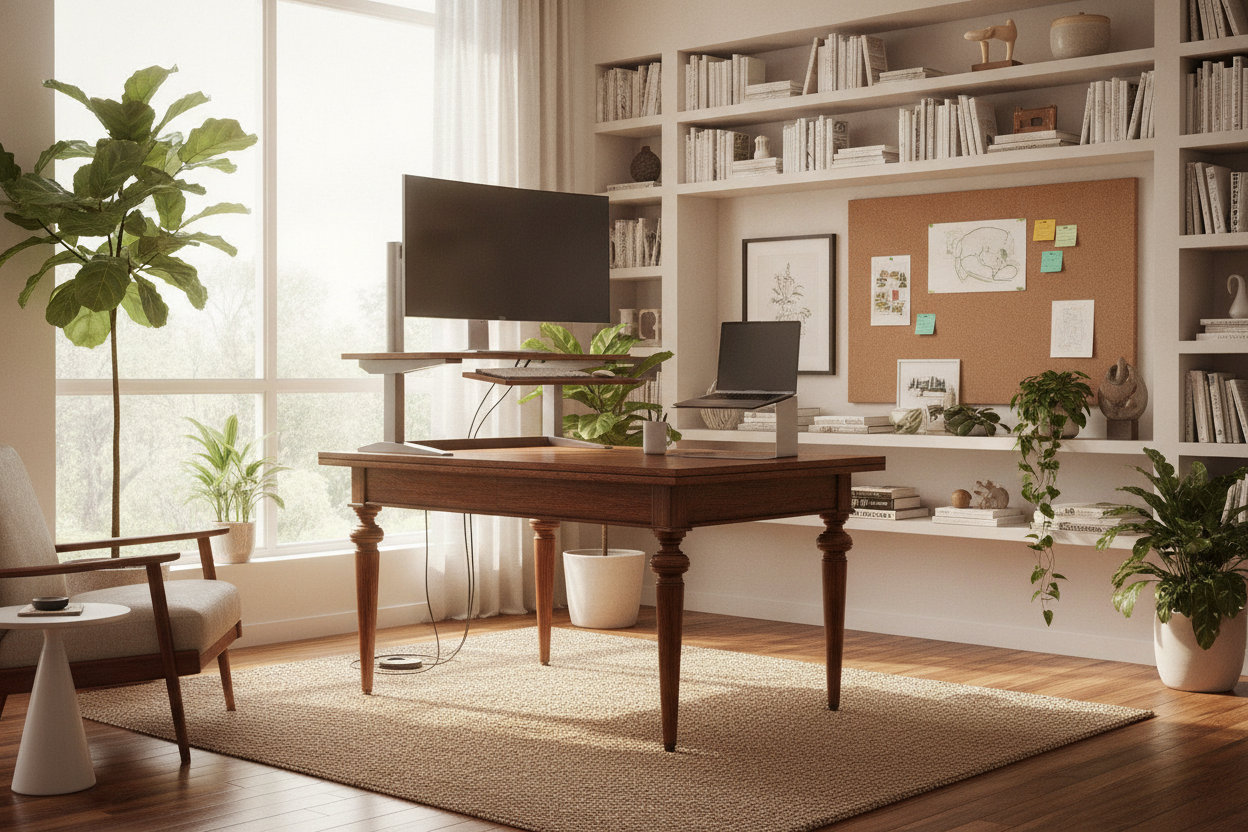
I spent three nights staring at forty-seven open browser tabs of office furniture, and every single one looked like it belonged in a cubicle farm from 1998. My home office is right in my living room, and I refused to let a laminate-topped eyesore ruin the vibe next to my vintage sideboard. I had a gorgeous, solid walnut table that I loved, but my lower back was screaming for a standing option.
The realization hit me: I didn't need a new desk. I needed the best desk stand—just the legs, the motor, and the brains—to bolt onto the wood I already owned. It turns out that the secret to having a workspace that doesn't look like a corporate punishment is separating the 'tech' from the 'timber.'
- Dual motors are non-negotiable for heavy wood tops.
- Check the 'stroke' length to ensure it goes low enough for your chair.
- Threaded inserts are your best friend; don't just wing it with wood screws.
- Cable management trays should be bought at the same time as the frame.
Why I Refused to Buy Another Generic White Rectangle
Standard standing desks are almost always sold as a kit: a thin, particle-board top and a set of legs that look like they were salvaged from a hospital. If you care about your interior design, those white rectangles are an aesthetic nightmare. You want a writing computer desk that actually has soul, grain, and character.
By sourcing a standalone frame, you can turn literally any flat surface into one of the best looking standing desks on the market. I've seen people use reclaimed barn wood, old dining tables, and even heavy butcher blocks. The frame provides the ergonomics; the wood provides the personality. You get to keep your heirloom quality without the sedentary lifestyle.
The Mechanics: What Actually Makes a Frame Worth Buying?
When you're hunting for the best adjustable desk stand, ignore the flashy touchscreens for a second and look at the weight rating. Cheap frames use a single motor hidden in a crossbar. They are loud, they struggle under load, and they move at the speed of a tectonic plate. If your frame costs less than two hundred dollars, it probably has the lifting power of a caffeinated toddler.
Look for a dual-motor system. One motor in each leg means the lift is synchronized and smooth. Stability is the other big factor. Most frames are fine at sitting height, but once you raise them to 45 inches, they start to wobble like a jelly mold. Look for frames made from heavy-gauge steel with wide foot-plates. If the frame itself weighs less than 60 pounds, it's going to shake every time you type an email.
Wait, Exactly How Heavy Is Your Tabletop?
This is where most DIYers mess up. A standard 60-inch solid oak top can easily weigh 75 pounds. Add two monitors, a laptop, a heavy keyboard, and maybe a desktop tower, and you're pushing 150 pounds. The best electric adjustable desks come with standalone frames rated for at least 250 to 300 pounds.
Overloading a weak motor will burn it out in six months. I learned this the hard way with a cheap 'budget' frame that started smelling like an electrical fire every time I tried to stand up. Spend the extra money on a high-capacity frame if you're using real wood; it's the only way to ensure the best stand up desk for home use actually lasts a decade.
The 3 Rookie Mistakes of Mounting Your Own Desktop
First: don't just drive wood screws directly into your table. Wood expands and contracts with the seasons. If you screw it down tight to a steel frame, the wood might crack. Use threaded inserts and bolts. It takes an extra hour, but it allows the wood to 'breathe' and makes it easy to take the desk apart if you move.
Second: mind your depth. I once drilled straight through a beautiful cherry wood top because I didn't use a drill stop. Measure three times, drill once. Third: don't ignore the crossbar. Some frames have a fixed width, while others are telescopic. Make sure the frame can expand wide enough so your legs don't hit the supports while you're sitting.
When to Give Up and Just Buy a Complete Desk
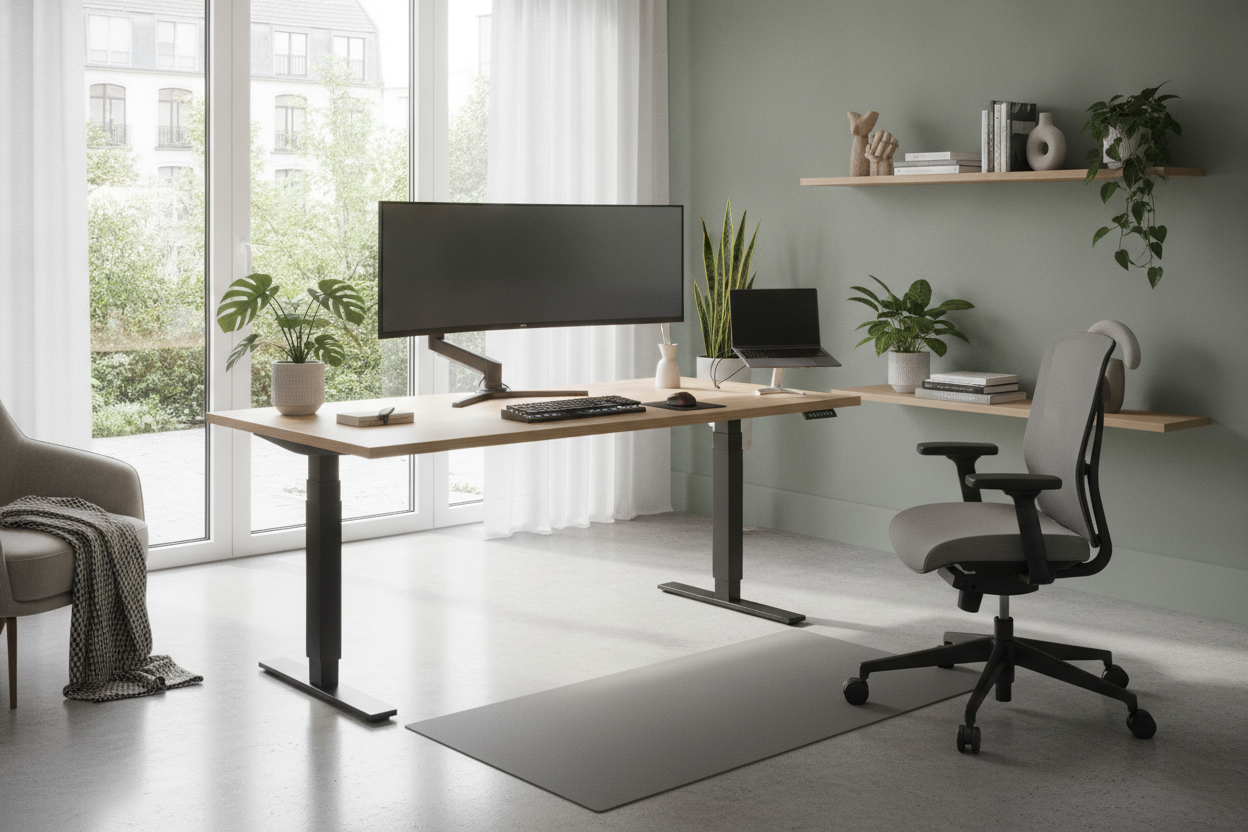
Look, I get it. Not everyone wants to spend a Saturday afternoon with a power drill and a level. If the idea of drilling into your grandmother's dining table gives you hives, there are better ways. Some of the best sit stand workstations now come as complete units that actually look decent.
If you want the tech without the DIY headache, a sit stand up desk with memory preset is the smartest move. It saves your heights so you don't have to fiddle with the buttons every time you switch positions. If you're still feeling lost, check out our best desk for home office guide to see which setups passed our stability and style tests this year.
FAQ
Can I use an IKEA tabletop with a standing desk frame?
You can, but be careful. Many IKEA tops (like the Linnmon) are hollow or filled with paper honeycomb. They won't hold a screw securely under the stress of a motorized frame. Stick to their solid wood or thick veneer options like the Gerton or Karlby.
How do I manage cables if I only buy the frame?
Most standalone frames don't come with great cable management. Buy a separate J-channel or a mesh 'hammock' that screws into the underside of your desk. It keeps the power bricks and wires from dangling and looking messy when the desk is raised.
Is a manual crank stand worth it?
Honestly? No. You think you'll use it, but after three days of cranking a handle thirty times to change heights, you'll just leave it in one position forever. If you're going to invest in a standing setup, go electric or don't bother.

Dejar un comentario
Este sitio está protegido por hCaptcha y se aplican la Política de privacidad de hCaptcha y los Términos del servicio.