










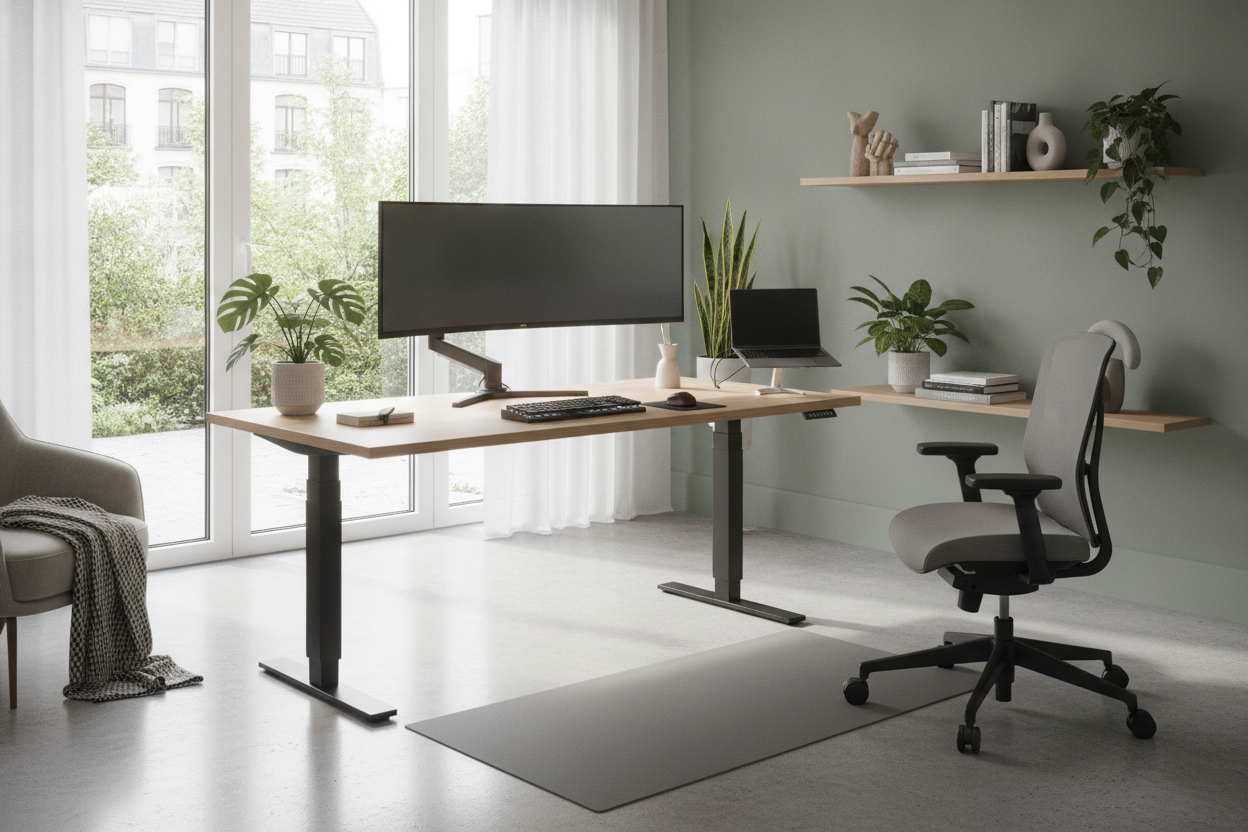
I spent two years staring at a manual crank handle like it was a piece of gym equipment I promised myself I'd use but never did. Every afternoon, I'd feel that familiar twinge in my lower back, look at the little plastic lever tucked under my desktop, and decide that my spine was better off suffering than I was spinning a handle 60 times. I was wrong.
Buying an electric height-adjustable desk wasn't about being lazy; it was about removing the friction that kept me from actually using the standing feature I paid for. If you're still on the fence about the motorized upgrade, here is the reality of what happens when you ditch the crank.
- Manual cranks are friction points that stop you from actually standing.
- Dual-motor systems are quieter and more stable than cheap single-motor units.
- Memory presets are mandatory, not a luxury, for consistent ergonomics.
- Modern designs finally ditch the 'corporate cubicle' aesthetic for home-friendly materials.
The Sweaty Reality of Manual Crank Desks
I thought I was being smart by saving $100 on a manual model. I told myself the 'exercise' of cranking the desk up would be a nice little break in my day. In reality, it was just a chore. Trying to spin a handle while keeping your coffee from sloshing and your webcam from falling over is a specialized skill I never wanted to master.
It takes a solid two minutes of vigorous arm-circling to get a manual desk from sitting to standing height. By the time I reached the top, I was slightly out of breath and my workflow was completely shattered. Eventually, the crank just stayed tucked away, and I ended up with a very expensive, very heavy fixed-height desk that I hated.
Why I Finally Went With an Electric Frame
The switch to an electric frame changed everything because it removed the choice. When I feel like standing, I hit a button. The desk moves while I'm grabbing a glass of water or stretching my legs. By the time I turn back around, it's ready. There's no 'negotiating' with myself about whether the physical effort is worth the ergonomic payoff.
One thing people don't tell you about manual desks is that they are almost always set to the wrong height. You get tired of cranking, so you stop half an inch too low or too high. That small gap leads to rounded shoulders and wrist fatigue. With a motor, you don't settle for 'close enough' because the machine does the heavy lifting for you.
Memory Presets Are the Real MVP
If you are buying a motorized desk, do not skip the memory presets. Having a simple digital display where you can save your exact sitting and standing heights is a requirement for a functional workspace. You want an electric height adjustable office desk that remembers where you belong so you don't have to fiddle with the 'up' and 'down' buttons for thirty seconds every single time you move.
I have my presets dialed in to the millimeter. That level of precision is impossible with a manual crank or a cheap gas-spring model. It makes the transition seamless and keeps my ergonomics consistent day after day, which is the whole point of owning one of these things in the first place.
But Does It Look Like Sterile Corporate Furniture?
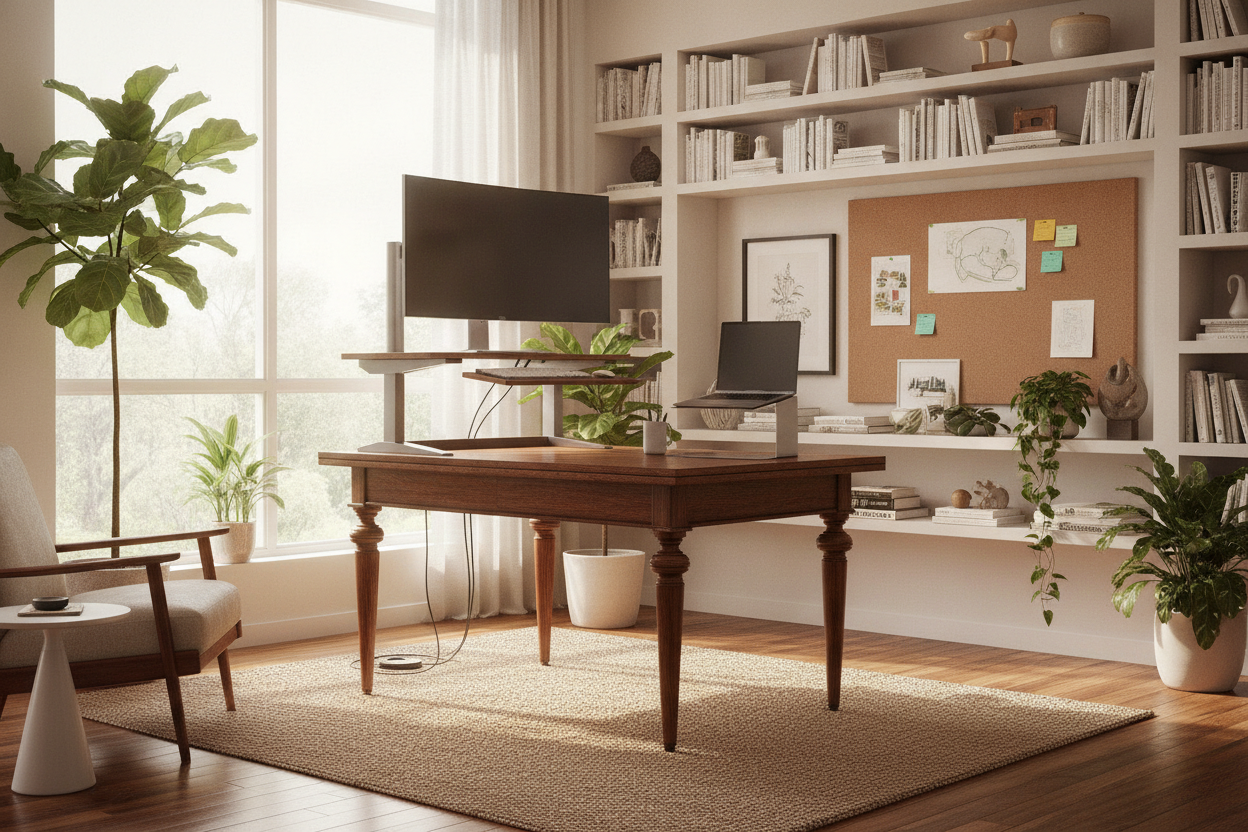
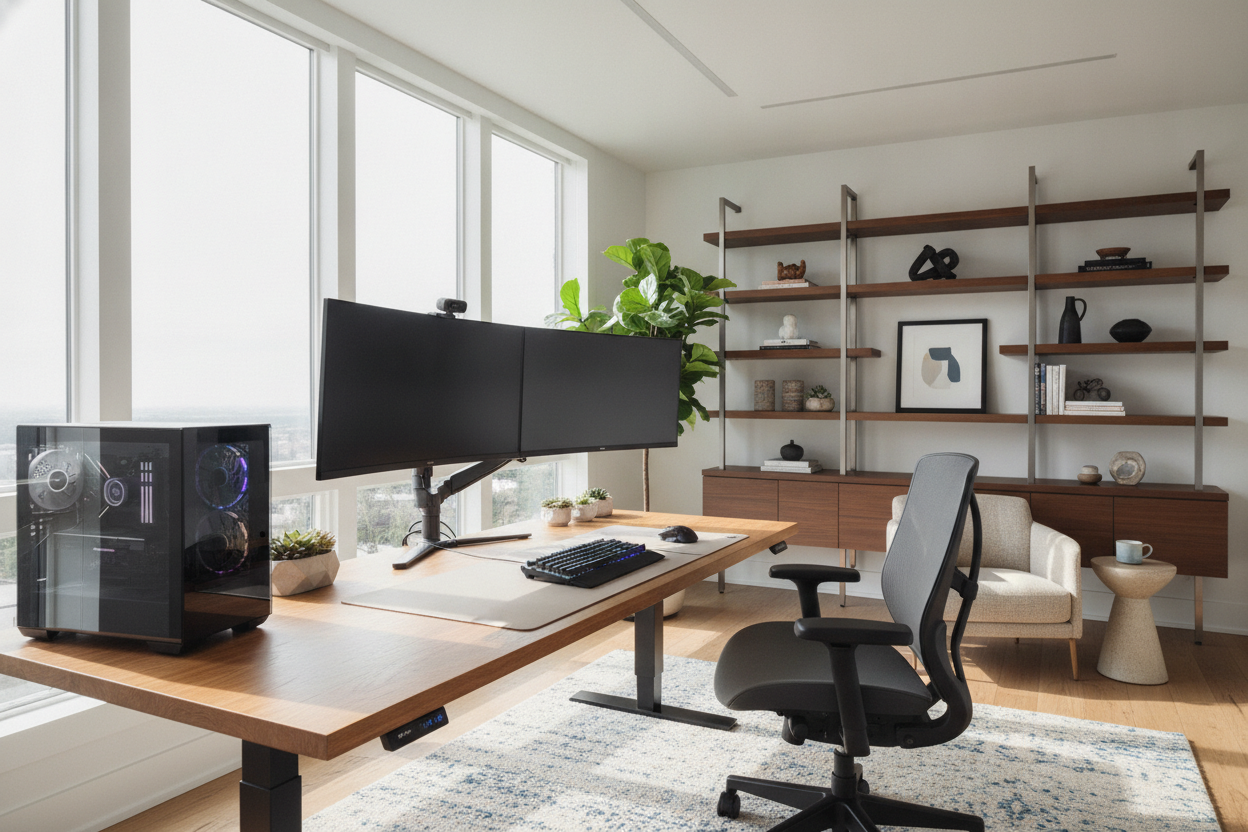
A lot of people stick with traditional wood desks because they don't want their home office to look like a call center. I get it. I used to think all electric frames were ugly gray T-legs. But the market has shifted. You can now find an electric height adjustable computer desk that incorporates warm textures, felt privacy panels, and even built-in pegboard organizers.
The tech is getting smaller and more discreet. You can pair a high-quality motorized frame with a solid wood top or a stylish laminate that actually matches your decor. It doesn't have to look industrial; it just has to work well and fit your personal style without making your guest room look like an HR department.
The Honest Verdict on the Price Difference
Yes, you're going to pay more for the motor. Usually, it's a jump of about $150 to $200 over a standard writing computer desk. But if you work from home full-time, that's pennies per day for the sake of your posture. I've spent more on ergonomic chairs that didn't do half as much for my back as simply being able to stand up for 20 minutes every hour.
My only regret is that I wasted two years and several hundred dollars on a manual desk that I eventually had to sell for a loss just to get it out of my house. Buy the motor first. Your wrists, your spine, and your productivity will thank you for not making them work so hard just to change positions.
FAQ
Are electric desks loud?
Most modern dual-motor desks make a low hum, similar to a quiet microwave. It won't wake up a sleeping baby in the next room, and it definitely won't be heard over a Zoom call or your noise-canceling headphones.
What happens if the power goes out?
The desk stays exactly where it is. You won't be able to move it until the power comes back, but it won't collapse or lose its height. Most controllers also have non-volatile memory, so they won't forget your specific presets.
Do they wobble at standing height?
Cheap ones do. Look for a desk with a heavy steel frame and a high weight capacity. A good dual-motor desk should remain stable even when extended to 45 inches or more, provided you've tightened the bolts correctly during assembly.

Dejar un comentario
Este sitio está protegido por hCaptcha y se aplican la Política de privacidad de hCaptcha y los Términos del servicio.