










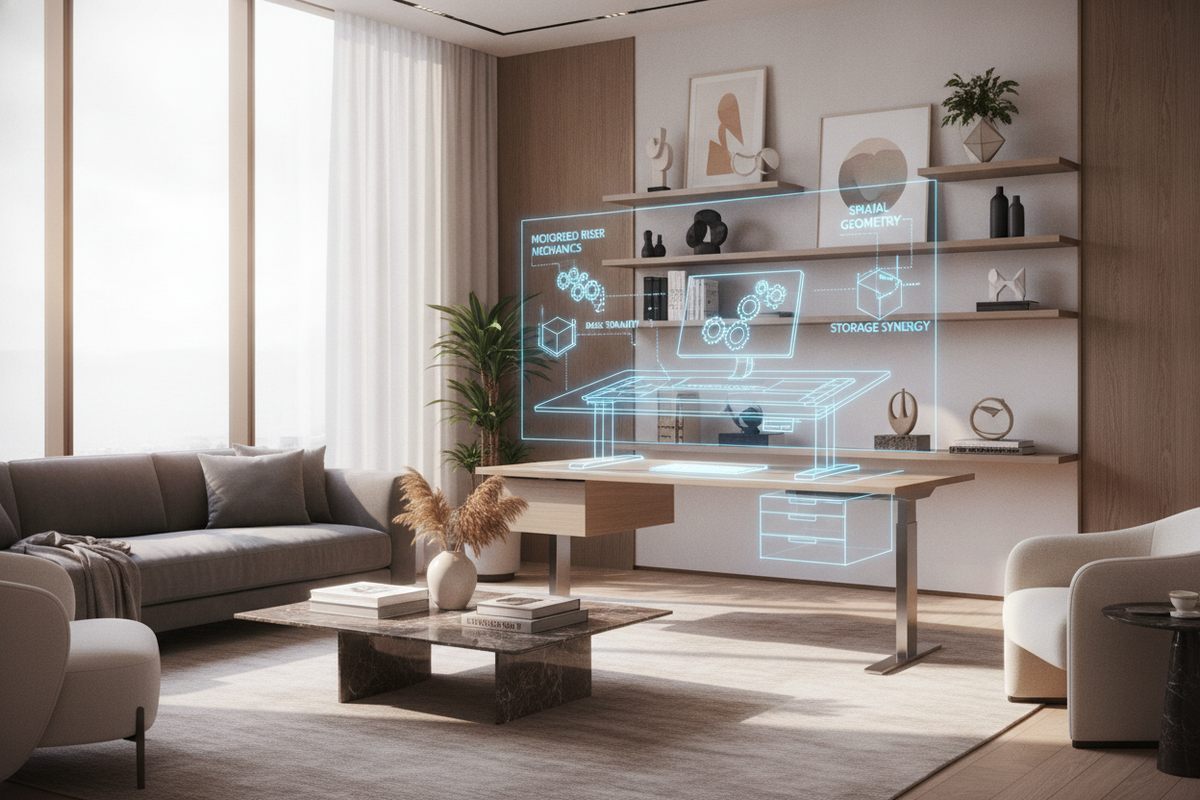
Motorized Riser Architecture: Evaluating the Electric Standing Desk Converter Archetype
Transforming a traditional workspace into an active workstation often starts with evaluating conversion hardware. The electric desktop riser format, exemplified by the e7 electric standing desk converter by uplift desk design archetype, introduces push-button height transitions to existing furniture surfaces. Unlike manual counterbalanced risers that rely on spring-loaded or gas-strut levers requiring physical exertion to lift, motorized converters utilize an integrated electric motor drive to raise and lower tiered work platforms smoothly.
This smooth motorized motion provides micro-adjustable elevation control across various tasks. Users can make fine-grained height adjustments without disrupting delicate accessories, desktop peripherals, or beverages resting on the tiered tiers. For deeper context on balancing styling and mechanical form factors, consulting a dedicated standing desk converter guide helps clarify how varied riser footprints integrate with residential desk styles.
Host Desk Structural Audits: Surface Depth, Weight Distribution, and Deflection Control
Before installing a motorized converter, evaluating the structural foundation of your host desk is essential. An electric riser places a concentrated load directly onto the core of the tabletop. The combined weight of the motorized unit, monitors, keyboard tray, and computing peripherals focuses downward pressure through the converter baseplate.
- Surface Thickness and Density: Inspect the host desktop for core material rigidity. Solid woods and dense composite boards resist central sagging, whereas thin, hollow-core surfaces may experience deflection over time under concentrated point loading.
- Frame Reinforcement: Verify that the host desk frame includes adequate under-top crossbars or sturdy apron framing to transfer the load evenly to the legs.
- Surface Depth and Clearances: Ensure your desk provides sufficient front-to-back depth to house the riser baseplate while retaining comfortable perimeter clearance for daily forearm support.
If an existing desk lacks the structural capacity to safely support heavy desktop risers, transitioning to a dedicated standing desk product can provide an expansive, unencumbered sit-to-stand surface with full structural reinforcement.
Spatial Ergonomics and Tiered Surface Layouts: Display Cockpits and Keyboard Mechanics
A dual-tier motorized converter divides tasks into distinct spatial planes, optimizing both optical positioning and tactile interaction. The elevated upper deck is designed primarily for visual display equipment, supporting single or multi-monitor configurations at natural eye level. Placing screens at this height encourages a balanced, upright posture without requiring awkward neck flexion.
Meanwhile, the lowered keyboard tray rests closer to the host desk surface. This dropped platform supports a comfortable wrist position and relaxed shoulder placement during intensive typing and mousing sessions. Incorporating deliberate desk arrangement concepts, as detailed in our standing desk guide, helps maintain a cohesive layout where computing gear, task lighting, and input devices operate without visual or physical clutter.
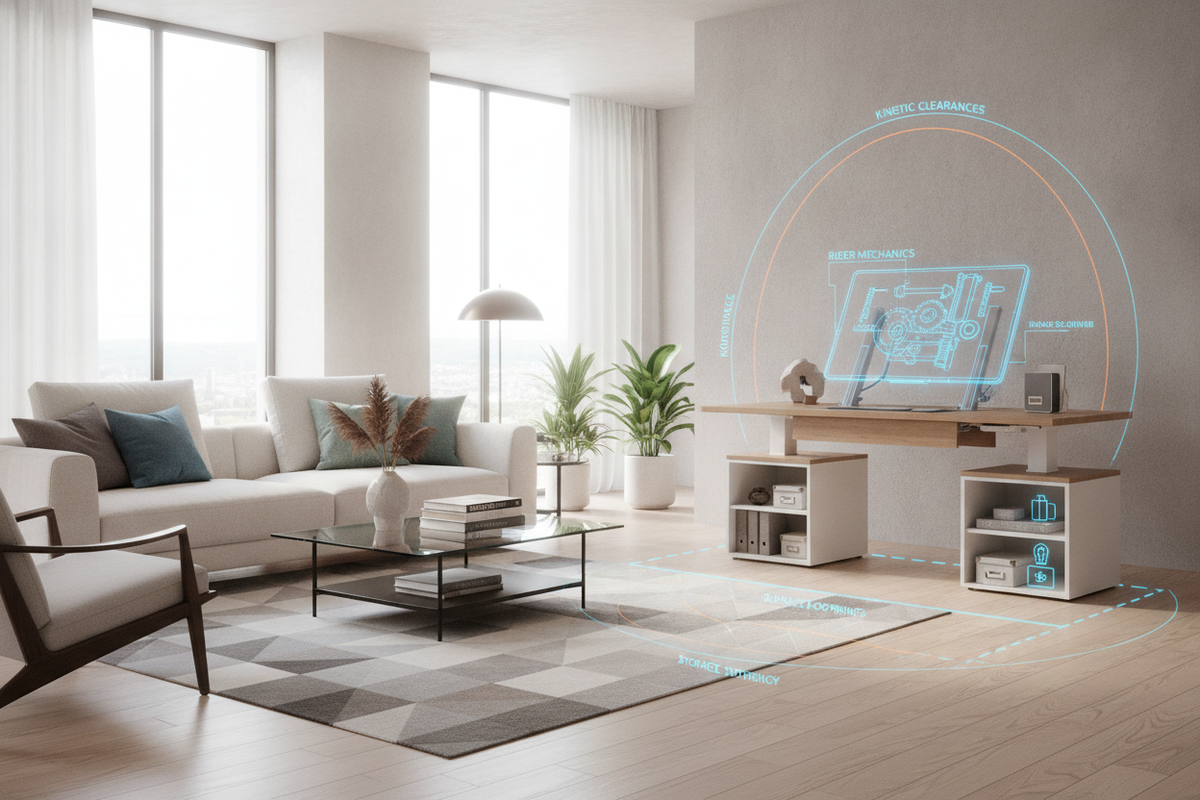
Kinetic Clearances and Cable Management: Vertical Pathing and Perimeter Buffer Zones
Motorized risers introduce dynamic vertical movement, which requires thoughtful cable management and clearance planning. Because the upper platforms travel continuously along a vertical axis, fixed cords can become taut, dislodged, or pinched if not routed correctly.
Key steps for kinetic cable routing include:
- Calculating Articulation Slack: Measure power, video, and data cables at full upward extension. Provide enough slack loop along the central riser column so cables remain unstrained at maximum height.
- Managing the Rear Spine: Group cables using flexible spiral wraps or mesh cable sleeves, securing them along the rear spine of the converter to isolate moving mechanical joints from sensitive wiring.
- Auditing Vertical Buffers: Check the entire vertical path above and behind the desk to ensure monitors and display arms do not collide with overhead cabinetry, wall-mounted artwork, or floating shelves during height adjustments.
For complex workstation layouts requiring extensive hardware setups, integrated cable trays found on full-frame models like a standing desk electric product can provide a streamlined alternative for broad power distribution.
Workspace Harmony: Coordinating Electric Risers with Complementary Office Storage
Because an e7 electric standing desk converter occupies a notable portion of desktop surface area, secondary organization systems are vital for maintaining an orderly office. Shifting non-essential stationery, external hard drives, paper files, and charging stations off the primary work surface preserves an uncluttered functional zone.
Pairing the workstation with mobile file pedestals, low lateral credenzas, or adjoining modular bookcases restores balance across the room. Matching metallic hardware, frame finishes, and desktop tones between your converter assembly and surrounding storage units creates a unified, professional environment. For users who prefer a completely continuous, unobstructed surface alongside their storage pieces, a wide-format alternative like a spacious standing desk electric product delivers full-surface motorized height adjustment with abundant layout versatility.

Dejar un comentario
Este sitio está protegido por hCaptcha y se aplican la Política de privacidad de hCaptcha y los Términos del servicio.