










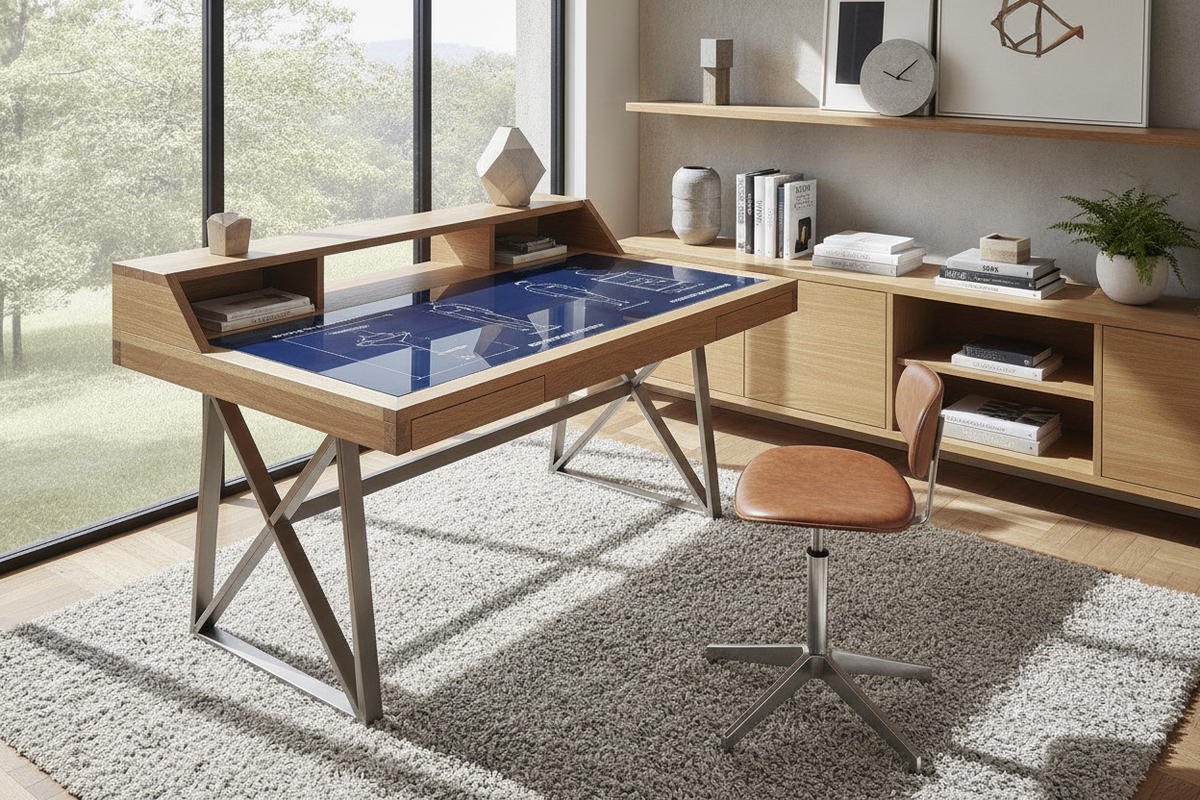
The Stationary Upright Architecture: Understanding Fixed-Height Standing Desks
Choosing a dedicated workstation requires balancing mechanical convenience with architectural stability. While dynamic sit-stand mechanisms enjoy widespread visibility, the fixed-height standing desk offers an uncompromising, solid foundation for dedicated upright tasks. By eliminating motorized columns, electrical wiring, and telescoping joints, a stationary platform provides absolute structural rigidity that does not degrade over years of daily typing, drafting, or studio work.
A fixed standing desk brings visual calm to an office or studio. Without exposed motor housings or power cables descending from the frame, the workstation integrates seamlessly alongside classic wooden credenzas, tall open shelving, and architectural room dividers. In rooms dedicated to focused upright work—such as creative studios, packing hubs, architectural drafting corners, and active home offices—the stationary frame creates an intentional, distraction-free environment.
Proportion and Dimensional Strategy: Aligning Surface Heights to Natural Posture
Because a stationary workstation does not adjust at the press of a button, establishing proper physical alignment is essential prior to selecting your furniture. The ideal surface elevation allows the user to rest their forearms naturally parallel to the floor, forming a relaxed angle at the elbows without hunching the shoulders or straining the wrists. Reviewing thoughtful standing desk design principles helps clarify how vertical proportions interact with both monitor positioning and peripheral equipment.
When evaluating a fixed height desk, account for footwear thickness or anti-fatigue matting, as these elevate your standing height. Positioning your primary display so that the top third of the screen aligns with eye level reduces neck fatigue, which can be accomplished using tabletop risers or articulated monitor arms clamped securely to the rigid edge of a standing desk fixed height frame.
Hybrid Posture Dynamics: Integrating Drafting Stools, High Perches, and Footrests
Committing to an elevated surface does not mean standing without relief. A versatile upright workspace incorporates hybrid seating solutions that match the elevated horizon of the desk. Pairing a fixed standing desk with a tall drafting chair or an adjustable-height perch stool allows you to transition between active standing, lean-perching, and seated tasks without altering the desktop surface.
- Drafting Stools with Foot Rings: Provide full back support while keeping the lower body elevated at the appropriate height for drafting or extended typing sessions.
- Active Tilting Perches: Encourage continuous micro-movements, engaging core muscles while taking pressure off the heels and lower back.
- Integrated Footrails and Wedges: Elevated footrests allow alternating weight between feet, promoting healthy weight distribution across long working hours.
Desktop Surface Zoning and Vertical Clearances
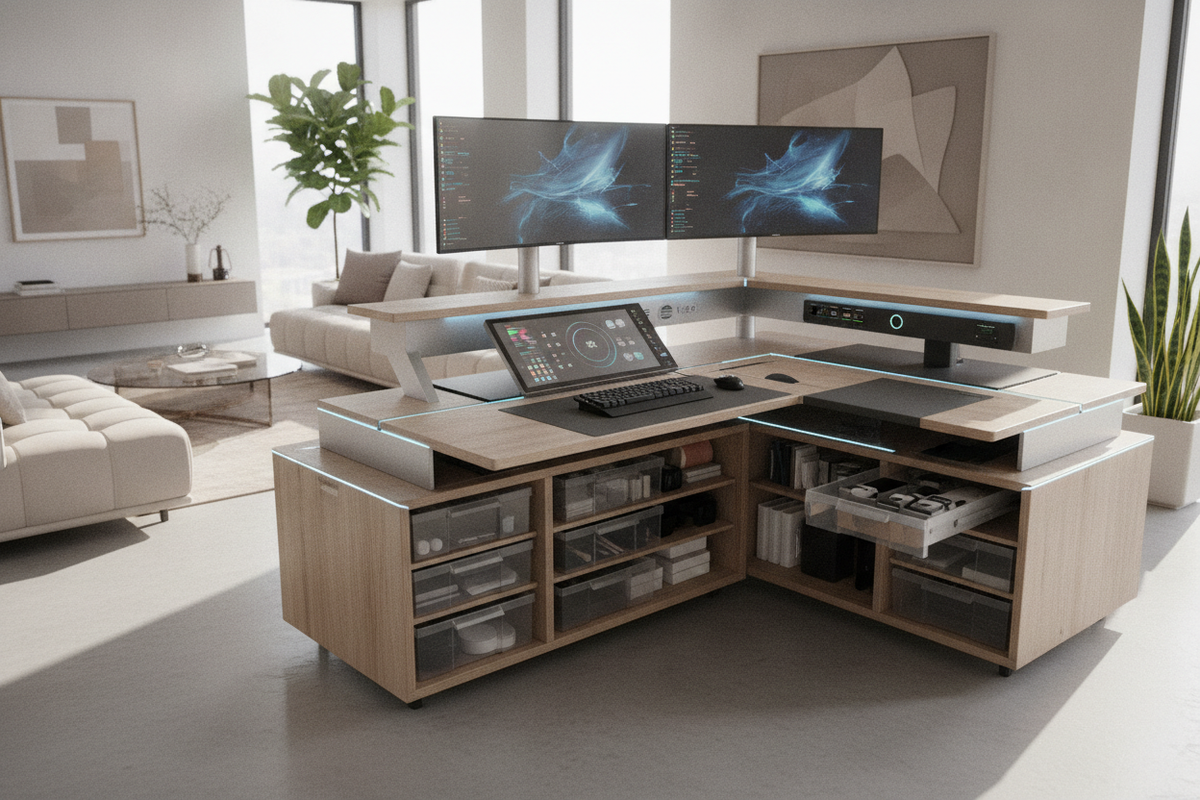
A well-organized desktop surface divides tasks into dedicated zones, maintaining order and operational ease. For professionals managing multiple displays, expansive documentation, or physical tools, selecting spacious standing workstation surfaces ensures sufficient clearance between primary input devices and secondary reference materials.
Organizing your fixed-height standing desk into primary, secondary, and tertiary zones keeps your most frequent movements within comfortable reach. The primary zone holds keyboards and pointing devices directly ahead. The secondary zone houses displays and note pads, while the tertiary periphery accommodates table lamps, organizing trays, and audio equipment, keeping central sightlines clear.
Cabinetry Synergy and Perimeter Storage Integration
One of the distinct structural advantages of a stationary upright workstation is the expansive vertical envelope beneath the main worktop. Because the frame remains at a constant elevation, you can utilize the under-desk volume for structured organization without risking collision with moving parts. Incorporating integrated standing desk layout strategies enables seamless pairing with surrounding cabinetry.
Under-desk space easily accommodates vertical drawer pedestals, lateral file organizers, CPU cradles, and rolling utility carts. Surrounding your fixed height desk with tall bookcases or low sideboards creates a cohesive architectural workstation, ensuring frequently referenced binders, reference books, and hardware components remain organized and within arm's reach.
Structural Materials, Cross-Bracing, and Wobble Prevention
Taller desks naturally experience greater leverage forces, making structural engineering paramount. A high-quality standing desk fixed height model counters lateral movement through robust construction techniques:
- Triangulated Cross-Bracing: Diagonal steel reinforcement or substantial rear modesty panels eliminate horizontal sway during vigorous typing or drawing.
- Heavy-Gauge Welded Steel or Solid Timber: Dense leg assemblies lower the desk's center of gravity, anchoring the workstation firmly to the floor.
- Leveling Glides: High-load adjustable feet compensate for uneven flooring surfaces, preventing wobbles before they start.
- Wall Anchoring: In shared or compact studios, securing the desk frame to structural wall studs provides total stability for vibration-sensitive work.
Comparing Fixed Workstations with Kinetic Alternatives
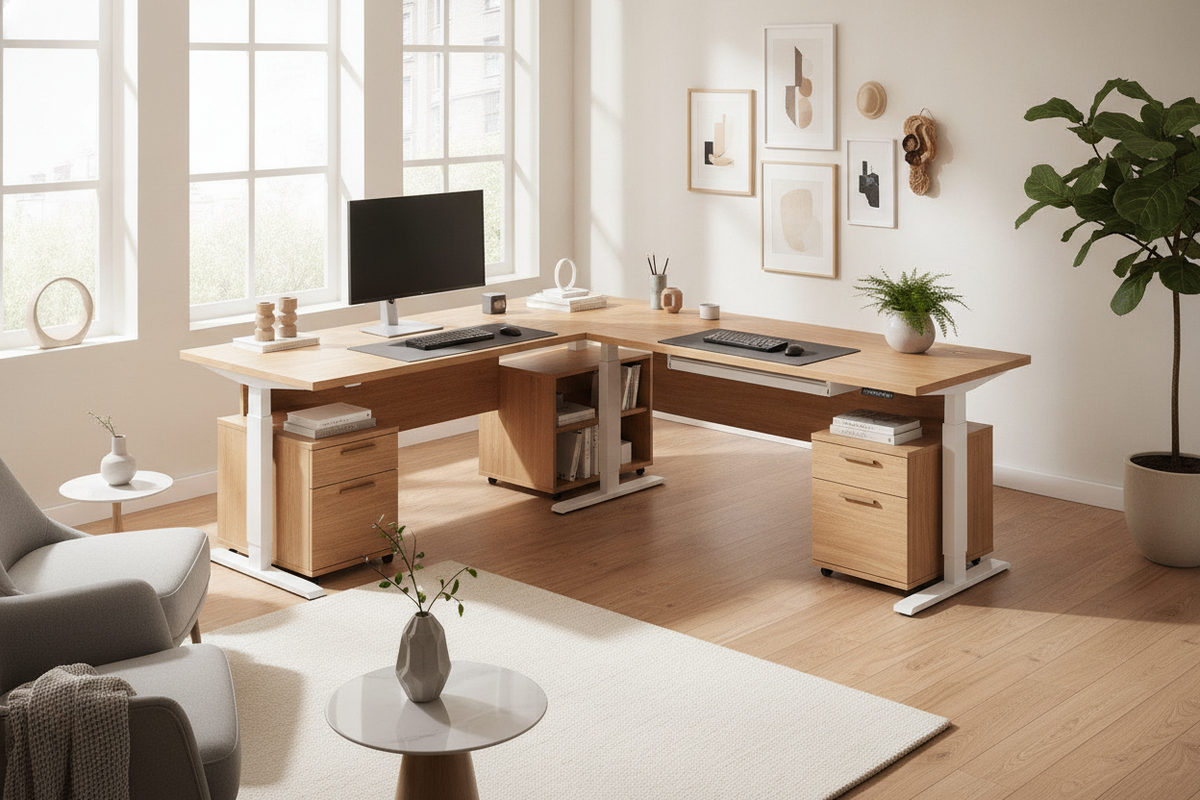
Deciding between a permanent upright frame and kinetic alternatives depends on workflow routines, mechanical preferences, and long-term durability priorities. While some users prefer electric standing desk options for push-button elevation changes across standard chair heights, stationary desks excel in simplicity, load capacity, and continuous rigidity.
For dedicated active work zones, crafting counters, and multi-user studio stations where users rotate dynamically on foot, a fixed-height standing desk offers a dependable, zero-maintenance centerpiece that supports rigorous daily productivity.

Dejar un comentario
Este sitio está protegido por hCaptcha y se aplican la Política de privacidad de hCaptcha y los Términos del servicio.