










I spent three years staring at a tangle of black plastic cables that looked like a nest of snakes behind my TV. Every time I sat down to relax, my eyes drifted from the screen to the blinking orange light on my modem. It was visual noise I couldn't mute, no matter how many zip ties I used.
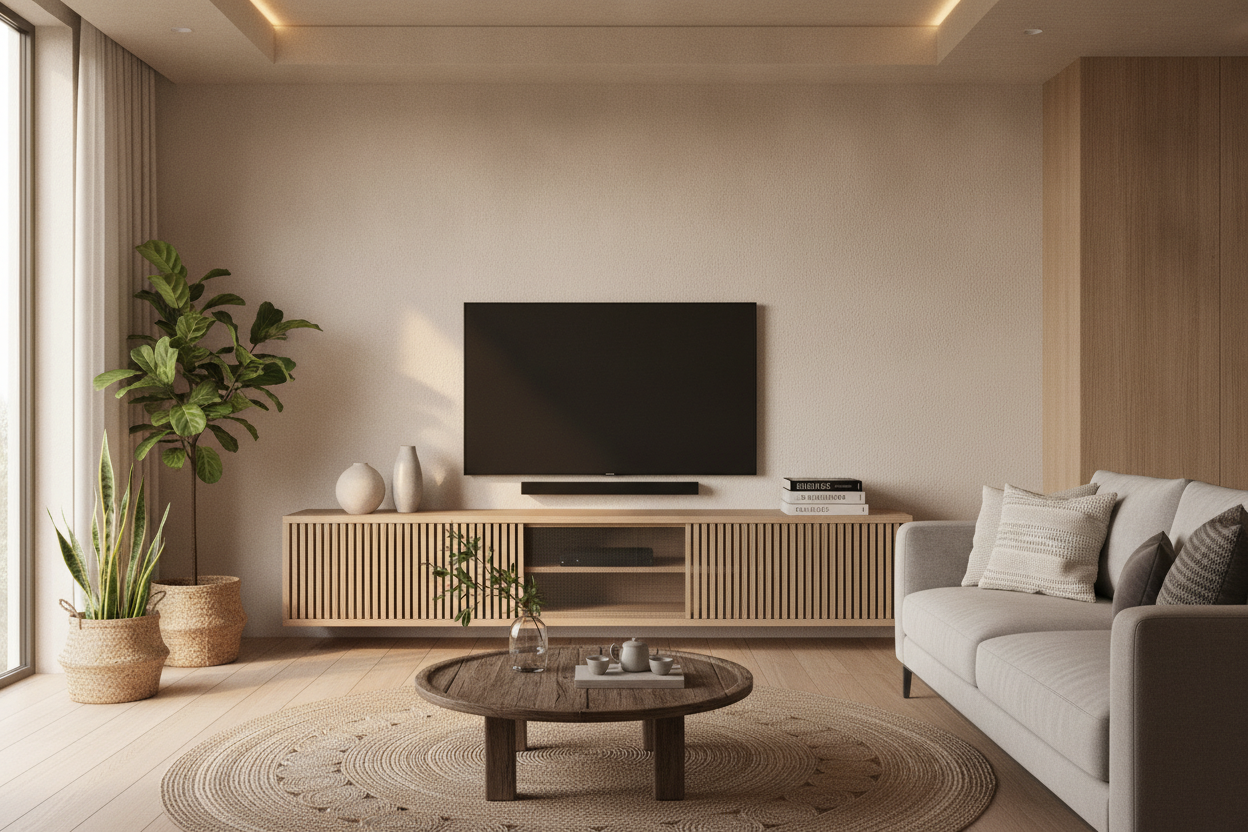
I finally hit my breaking point and went on a hunt for a japandi tv stand that could actually hide the chaos without looking like a heavy, windowless box. I needed something that felt light but worked hard. After testing a few units that were basically glorified cardboard, I found the sweet spot between Japanese minimalism and Scandinavian warmth.
Quick Takeaways
- Slatted doors are the ultimate hack for hiding tech while keeping remotes functional.
- Solid wood or high-quality veneers beat particle board for long-term durability.
- Ventilation is non-negotiable for gaming consoles and routers.
- Height matters—aim for eye level when seated to avoid neck strain.
The Problem With Most Modern Media Consoles
Open shelving is a scam. It is designed for people who live in catalogs and only own one perfectly round ceramic bowl. In reality, an open-shelf unit is just a stage for your dusty PlayStation, a messy stack of HDMI cables, and that router you have to reset twice a week. It creates a cluttered focal point that makes the whole room feel frantic.
Most modern units I looked at were either too industrial or too bulky. They lacked the 'breathability' a small living room needs. When you have a 55-inch screen dominating a wall, the last thing you want is a heavy piece of furniture competing for attention. You need something that recedes into the background while doing the heavy lifting of organization.
Why I Finally Chose the Japandi Aesthetic
Japandi isn't just a buzzword; it's the middle ground between the clinical coldness of ultra-modernism and the cluttered 'lived-in' feel of boho. By choosing a japandi media console, I got the organic texture of light oak and the clean, straight lines of Japanese joinery. It’s an antidote to the tech-heavy lives we lead.
The shift in my living room was immediate. We’ve seen a move away from the traditional media console vs. credenza debate toward furniture that is specifically engineered for electronics. A japandi tv console table doesn't try to be a dining sideboard; it’s designed to house high-heat tech while looking like a piece of art. It’s intentional rather than an afterthought.
The Secret Weapon: Why Slatted Wood Doors Are Brilliant
If you take one thing away from my trial and error, let it be this: buy a japandi style tv console with slatted doors. Solid doors are a nightmare because they block infrared (IR) signals from your remote. You end up having to leave the doors hanging open just to change the volume, which defeats the entire purpose of hiding the gear.
Slats allow those signals to pass through effortlessly. More importantly, they provide natural ventilation. I’ve seen cheap, enclosed cabinets turn into ovens for gaming consoles, shortening their lifespan significantly. With a japanese tv stand featuring vertical slats, the air flows freely, and the heat dissipates, keeping your expensive tech from frying while keeping it 100% invisible to the eye.
Floor-Bound vs. Floating: Keeping Things Airy
In a small japandi tv room, floor space is gold. I originally bought a low-profile stand with legs, but it still felt like it was ‘eating’ the rug. If you want to maximize the feeling of flow, try a hanging TV stand. Lifting the unit even six inches off the ground changes the entire perspective of the room.
A wall mounted media console creates a continuous line of flooring that makes the room look twice as large. However, if you are a renter and can't drill into the studs, look for a japanese style media console with tapered, spindly legs. The goal is to see as much of the floor as possible under the unit to keep that 'Zen' airy vibe intact.
How to Style the Top Without Ruining the Zen
Once you have your japandi entertainment unit set up, the temptation is to cover the top with photos and candles. Don't. The secret to a japanese style entertainment center is restraint. You already have a giant black rectangle (the TV) sitting there; you don't need to surround it with tiny trinkets that create more visual 'static.'
I follow a simple rule: one organic element and one functional element. I put a single tall, dried branch in a textured ceramic vase on one side to balance the height of the screen. On the other side, maybe a small wooden tray for the one remote I actually use. That’s it. It allows the wood grain of the japandi style tv stand to be the star of the show.
My Honest Experience
I’ll be real: assembling these things can be a test of patience. The slatted doors on my japandi tv console required about 45 minutes of micro-adjustments to get them perfectly level. If they are off by even a millimeter, the vertical lines look crooked and it will drive you crazy. But once it was dialed in? The relief of closing those doors and seeing zero wires was worth every second of frustration.
Frequently Asked Questions
Will my remote work through the wood slats?
Yes, as long as the slats have at least a 1/4 inch gap. Most japandi media consoles are designed specifically for this, allowing IR signals to pass through without you having to point the remote at weird angles.
Do I need to worry about my PS5 or Xbox overheating?
Slatted designs are excellent for airflow, but don't cram the console against the back panel. Give it an inch or two of breathing room inside the cabinet to ensure the hot air can escape through the slats.
Is light oak or dark walnut better for Japandi?
Traditionally, Japandi leans toward light oaks, ash, or natural cedar. However, a darker walnut can work if you have a lot of natural light, but keep the lines simple to maintain that Japanese tv console aesthetic.

Dejar un comentario
Este sitio está protegido por hCaptcha y se aplican la Política de privacidad de hCaptcha y los Términos del servicio.