










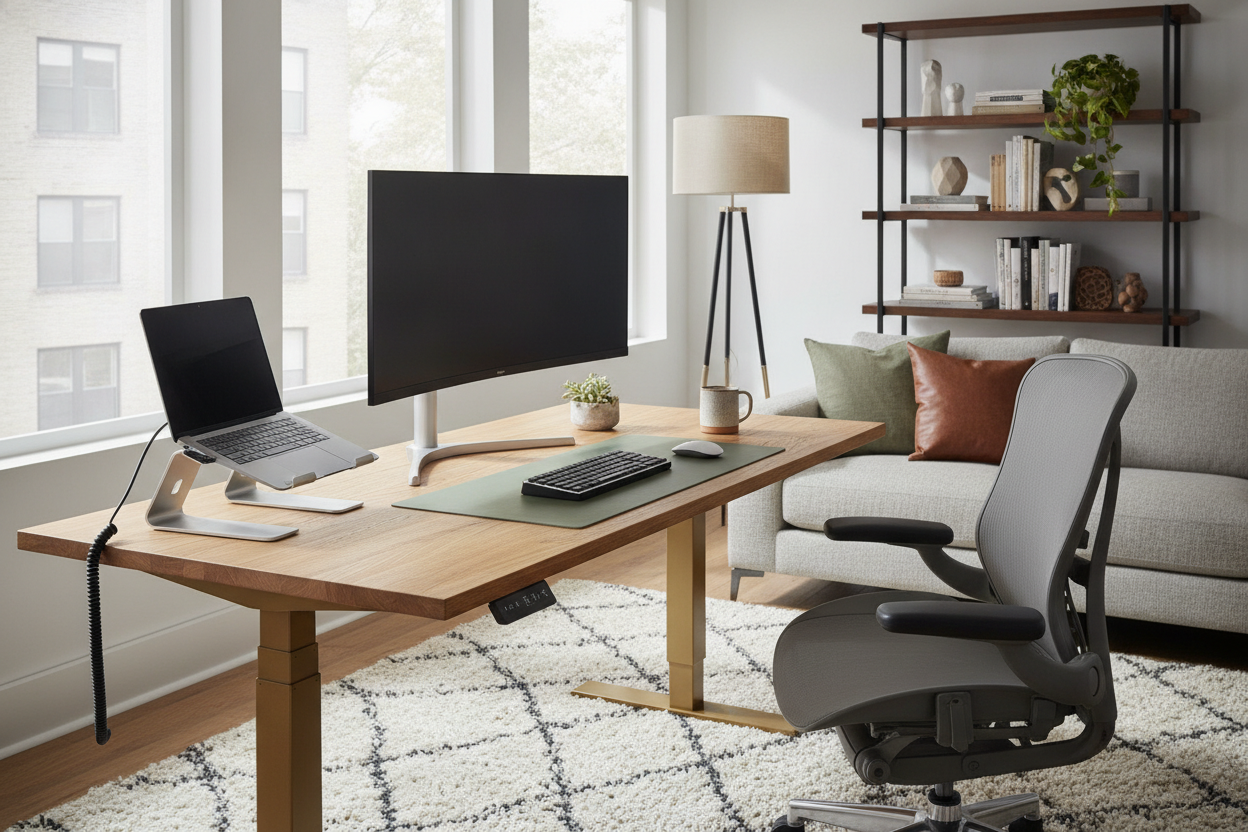
I spent three years working from a vintage teak writing desk that was arguably too small for a laptop, let alone a second monitor. It looked incredible in my living room, but my spine was paying a heavy price. Every time I looked at ergonomic alternatives, I recoiled. Most standing desks look like they were designed by someone who exclusively eats Soylent and dreams in spreadsheets—all industrial gray metal and cheap, plastic-feeling surfaces.
The hesitation to switch wasn't about the price; it was about the vibe. I didn't want my home office to look like a corporate cubicle. Eventually, I discovered the designer adjustable desk category, and it changed my entire perspective on what a workspace could be. It turns out you don't have to choose between a healthy back and a beautiful room.
- Solid wood tops beat laminate for durability and heat resistance every time.
- Premium motors are virtually silent, unlike the coffee-grinder noise of cheap models.
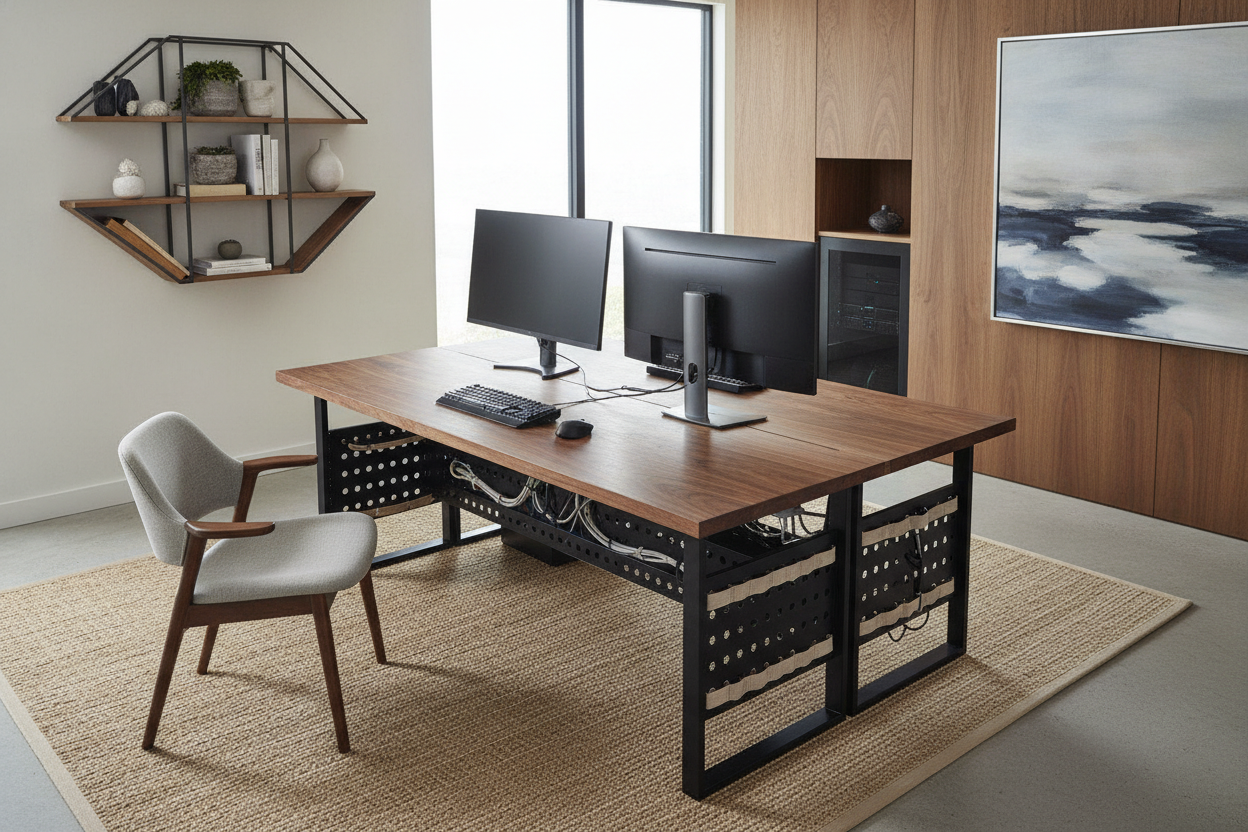
- Hidden wire management is the difference between a clean aesthetic and a 'cable-spaghetti' nightmare.
- Beveled edges and custom finishes allow the desk to actually match your existing furniture.
The Aesthetic Problem with Standard Standing Desks
The biggest hurdle for design-conscious people is the 'tech-bro' aesthetic. Most entry-level standing desks rely on bulky T-legs and exposed motors that scream 'office park.' They lack the soul of standard writing computer desks, which usually offer tapered legs, rich wood grains, and a sense of permanence.
When you put a basic motorized desk next to a velvet armchair or a Persian rug, it sticks out like a sore thumb. The frames are often made of thin, stamped steel that rattles when you type. If you've spent years curating a home that feels warm and personal, an ugly desk feels like a betrayal of your style. You want a piece of furniture, not a piece of equipment.
What Actually Makes It a 'Designer' Sit Stand Desk?
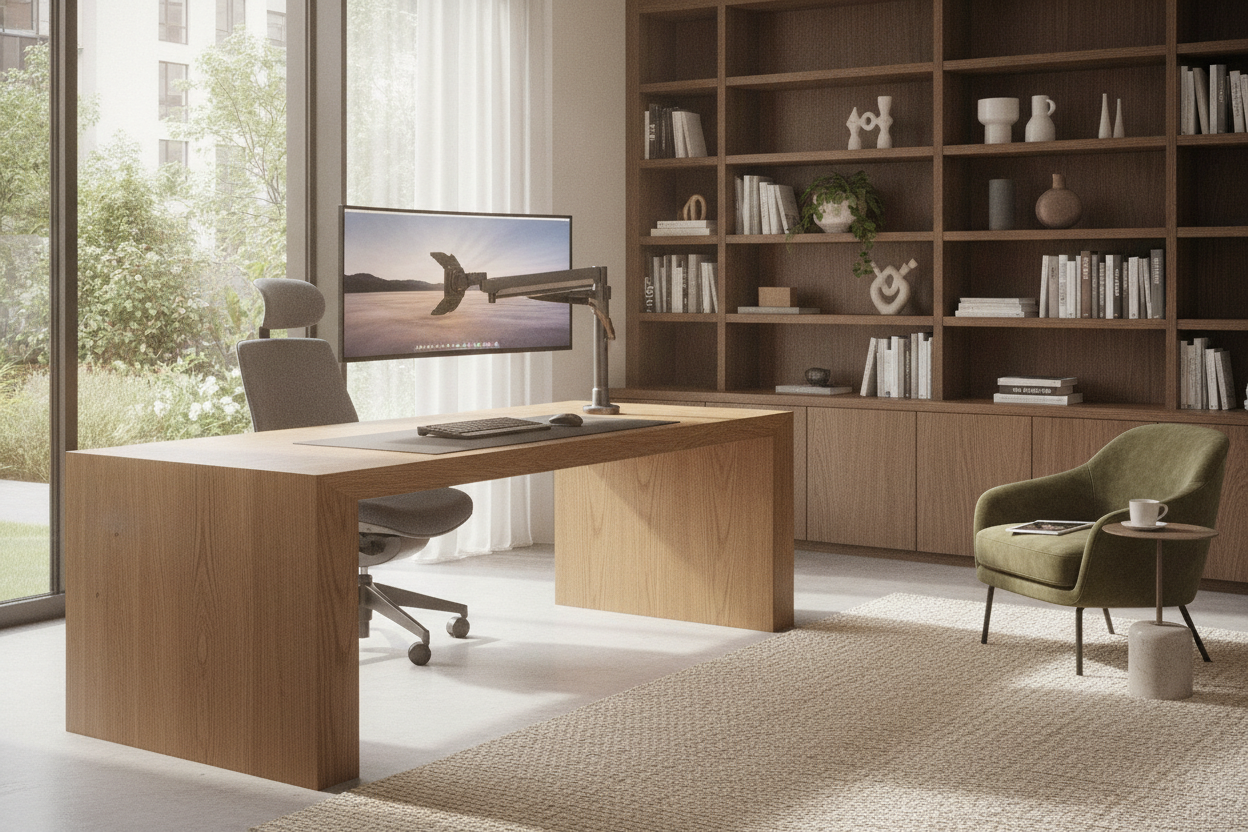
A true designer sit stand desk isn't just a basic frame with a fancy price tag. It’s about the materials. We’re talking 1.25-inch thick solid walnut, white oak, or sustainably sourced bamboo rather than the flimsy particleboard you find on a budget standing motorized desk. These premium tops have character—knots, grain patterns, and a weight that feels substantial under your elbows.
Beyond the wood, look at the edges. Cheap desks have sharp, 90-degree edges that dig into your forearms. Designer models often feature 'knife' edges or soft bevels that make the desk look thinner and more elegant from a distance. The legs are usually powder-coated in matte textures or custom colors like sage or sand, helping the metal blend into your wall color rather than fighting it.
The Silent Difference in the Lifting Mechanism
Performance is the other half of the equation. Cheap desks usually have a single motor that struggles to lift more than 150 pounds. They groan, they stutter, and they make enough noise to wake a sleeping toddler in the next room. High-end models utilize dual-motor systems hidden entirely inside the leg columns. They glide upward with a whisper-quiet hum that feels expensive.
Then there’s the interface. I hate those bulky, plastic control boxes that hang off the front of a desk like an afterthought. A premium sit stand up desk with memory preset will often have a flush-mounted controller or even a touch-sensitive strip integrated into the wood itself. It’s there when you need to change heights, but it doesn't ruin the silhouette of the piece.
Storage Solutions That Don't Look Like a Corporate Mailroom
One of the biggest 'gotchas' with standing desks is the lack of drawers. Most people end up buying a metal rolling cart that looks like it belongs in a hospital. Designer brands solve this by offering integrated slim drawers or matching pedestals finished in the same wood as the desktop. It keeps your pens, notebooks, and chargers hidden without breaking the visual flow.
If you need more significant space, you have to be careful about buying a sit stand desk with file cabinet attachments. If the cabinet doesn't match the wood grain perfectly, the whole setup looks disjointed. Designer lines usually offer modular systems where the storage feels like a natural extension of the desk, maintaining that minimalist home vibe rather than a cluttered office catalog look.
The Final Verdict: Is the Upgrade Worth It?
I’ll be honest: my first designer desk cost three times more than the one I saw at a big-box hardware store. But I spend 40 to 50 hours a week at this surface. When I touch the wood, it feels warm. When I raise it to stand, it doesn't wobble my coffee mug. It’s a piece of furniture I actually want to keep for a decade, not something I’ll be trying to give away on Craigslist in two years.
If you value your home's aesthetic as much as your physical health, the upgrade is a no-brainer. You're paying for the engineering that keeps it stable at 45 inches high and the craftsmanship that makes it look like it belongs in a magazine. It’s an investment in your sanity and your space.
Is a designer desk more stable than a cheap one?
Yes. Premium desks use heavier steel for the frame and thicker mounting plates. This prevents the 'monitor shake' that happens on cheap desks when you type quickly at standing height.
Can I just buy a designer top for a cheap frame?
You can, but be careful. Solid wood is heavy. Cheap motors aren't rated for the weight of a 60-inch solid oak slab plus your gear, and you might burn out the motor in six months.
How do I hide the cables on a designer desk?
Most high-end models have a built-in 'cable tray' or a magnetic channel that runs down the leg. It keeps the power strips and cords completely out of sight, which is essential for that clean designer look.

Dejar un comentario
Este sitio está protegido por hCaptcha y se aplican la Política de privacidad de hCaptcha y los Términos del servicio.