










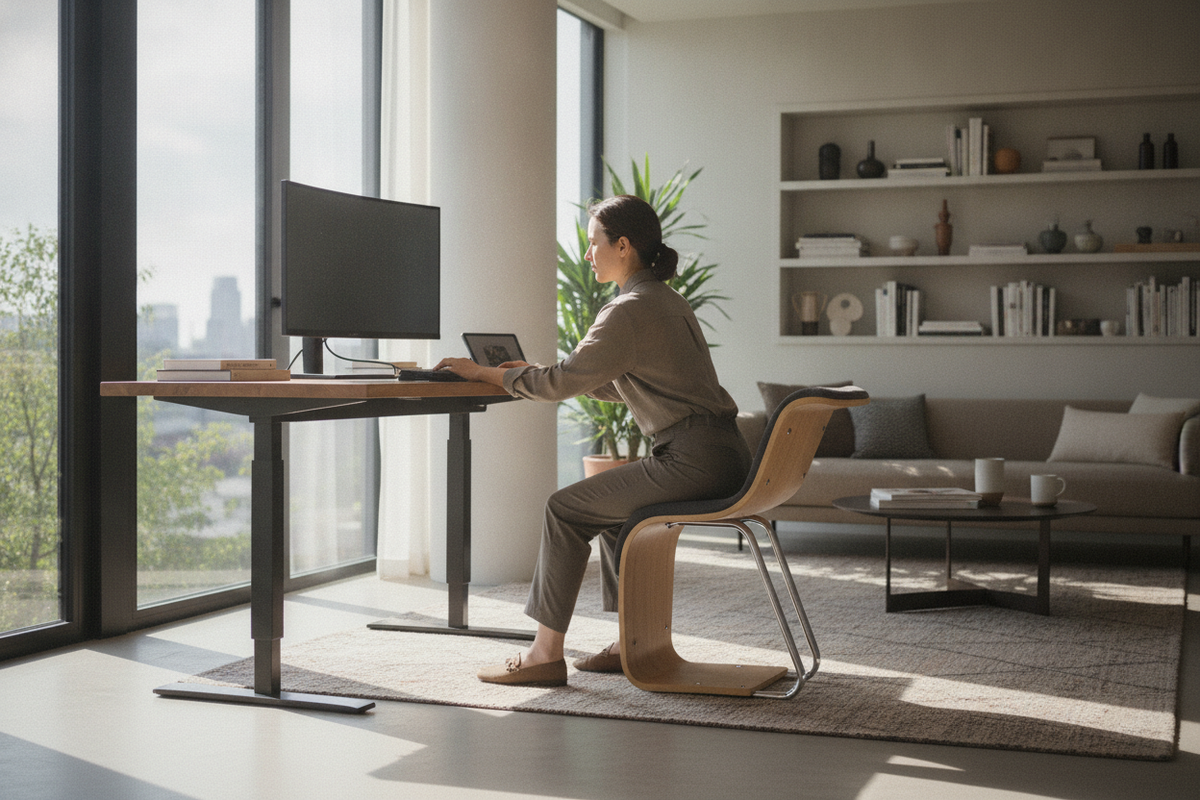
Understanding the Lean Chair Concept: The Spectrum from Sitting to Standing
The modern workspace thrives on movement. Rather than locking the body into a single static posture throughout the day, active workstations encourage continuous micro-adjustments. A lean chair for standing desk environments serves as an intermediate posture bridge, bridging the gap between conventional seated seating and fully unsupported standing.
Traditional office chairs position the hips and knees in a deep bend, which can encourage slouching against a fixed backrest over prolonged working sessions. Conversely, standing completely unsupported for an entire workday can lead to lower-body fatigue. A standing perch or leaning chair introduces a semi-standing posture known as perching. In this intermediate position, an elevated seat pan bears a portion of body weight while the feet remain firmly planted on the floor or an integrated base plate. When planning an ergonomic chair and desk selection, introducing a hybrid leaning chair allows you to cycle through multiple positions: standard sitting, elevated perching, forward leaning support, and full standing.
Key Mechanical Features of Leaning and Perching Chairs
Leaning chairs and standing perches differ noticeably from standard task chairs in their physical geometry and structural mechanics. Understanding these engineering elements helps in choosing a model that accommodates your preferred working posture.
- Articulating Seat Pans and Pelvic Wedges: Unlike flat, horizontal cushions, leaning seats often feature contoured saddles, forward-tilting wedges, or small lumbar resting pads. These shapes support the pelvis at an open hip angle, allowing the spine to maintain a neutral vertical alignment while resting against the support.
- Extended Pneumatic Lift Columns: Standing chairs require a significantly higher vertical adjustment range than traditional task seating. Quality pneumatic cylinders provide smooth travel between low perching elevations and tall leaning heights aligned with standing desktop levels.
- Multi-Position Back and Lean Rests: Hybrid models—such as dynamic sit-stand perches—utilize repositionable pads that adjust from an upright lumbar backrest to an angled leaning bolster or upper-body support rest.
- Specialized Base Architectures: Base designs generally fall into three categories: weighted flat platforms with integrated anti-fatigue footplates, rounded rocker bases that facilitate continuous micro-movement, and self-stabilizing weighted domes that follow natural torso shifts.
Pairing a Lean Chair with Height-Adjustable Standing Desks
Successfully integrating a standing chair into your daily routine depends directly on desktop geometry. Because leaning chairs position your body higher than standard office chairs, static desks cannot accommodate the varied vertical travel required. Pairing your perch with an adjustable height standing desk with electric lift system ensures seamless height alignment across every posture phase.
When designing a standing desk setup, programmable memory presets are particularly useful. You can dedicate distinct height presets to traditional seated tasks, mid-height leaning support, and full standing sessions. Under-desk clearance is equally important. Ensure the underside of the desk frame, including crossbars and cable trays, provides ample knee and thigh room when the seat is tilted forward into a perching angle.
Base Stability, Floor Surfaces, and Positioning
Because leaning chairs rely on an angled posture where body weight is distributed between the seat pad and the floor, base traction and stability are essential spatial considerations.
On hard surfaces such as hardwood, laminate, or tile, choose models with high-friction rubberized base rings or textured non-skid underbellies. These grips keep the base planted securely without sliding backward when you place weight against the leaning bolster. On plush or low-pile carpet, broader weighted bases or wide platform plates provide steady footing and prevent uneven tipping. Positioning an integrated anti-fatigue footplate underfoot also keeps your heels and arches comfortable during prolonged perching intervals.
Materials, Cushioning, and Durability Selection
The contact dynamics of a leaning chair differ from traditional seating because pressure is concentrated on a smaller surface area. Material selection should balance firmness, durability, and easy maintenance.
- High-Density Molded Foam: Leaning seats benefit from firm, resilient foam cores that do not bottom out under sustained body weight. Ultra-soft cushions tend to compress quickly, diminishing the supportive angle needed for upright perching.
- Durable, Breathable Upholstery: High-grade polyurethane vinyl, synthetic leather, or tightly woven performance fabrics resist abrasion from clothing friction while offering easy wipe-down cleaning.
- Heavy-Gauge Frame Materials: Look for steel support columns and reinforced alloy base plates that resist torsional flex when you shift your weight laterally during active work.
Workstation Flow: Storage, Room Fit, and Routine Planning
A functional home office or commercial workspace requires smooth circulation and adaptable floor space. When selecting a lean chair for standing desk layouts, consider how easily the unit stows away when you switch to full standing.
Compact leaning stools easily slide beneath deeper workstations, such as a 71-inch height adjustable standing desk, maintaining open floor area for walking and full standing movement. Establishing a balanced daily routine is best approached gradually. Rotating between seated focus sessions, mid-height perching for dynamic tasks, and standing for collaborative calls creates a versatile, active workday that keeps your home office functional and comfortable.

Dejar un comentario
Este sitio está protegido por hCaptcha y se aplican la Política de privacidad de hCaptcha y los Términos del servicio.