










Understanding Sit-Stand Formats: Converters Versus Full Standing Desks
Creating an adaptable office environment begins with deciding how vertical adjustability should interact with your room layout. When planning around a mount it stand desk concept, homeowners and professionals generally evaluate two primary hardware directions: retrofitting an existing static tabletop using a mount it sit stand desk converter, or replacing the entire workstation with a motorized frame. Both pathways offer distinct advantages depending on whether your priority is preserving existing furniture or establishing an expansive, unified workstation surface.
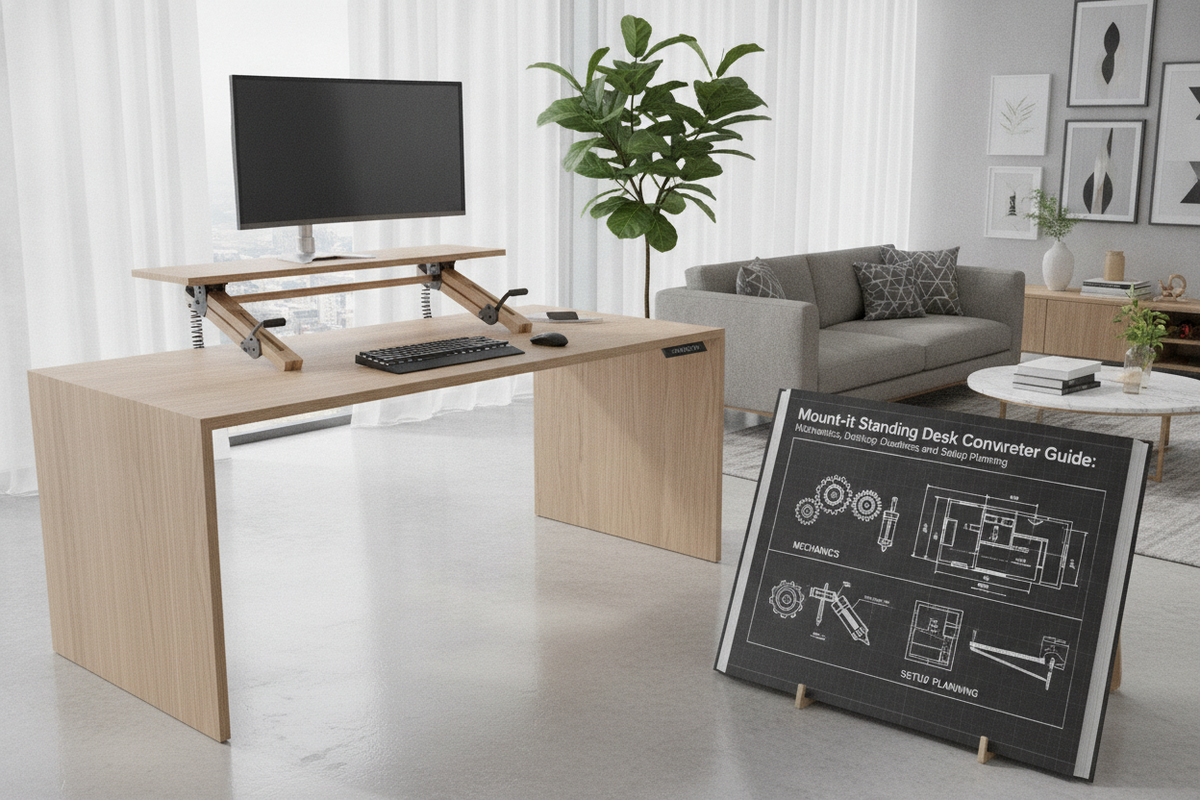
A mount-it desk riser rests directly atop your current work surface. This configuration allows you to retain built-in cabinetry, antique writing tables, or custom counter surfaces without undergoing full room disassembly. The existing base supports the entire mechanical apparatus, which raises displays, input devices, and small accessories on separate elevated tiers. While practical for compact situations, placing a riser on top of an existing table alters the center of gravity as equipment shifts upward. When you prefer an uninterrupted desktop without tiered ledges or perimeter clamps, reviewing a dedicated standing desk resource can clarify how a full-frame system stabilizes heavier multi-screen setups while maintaining completely open leg space beneath the work surface.
A full standing desk frame replaces the traditional four-legged table with heavy-gauge lifting columns anchored directly to wide floor feet. This architecture delivers comprehensive stability across the entire perimeter rather than confining dynamic motion to a central desktop pad. The decision between a desktop riser and a complete desk replacement ultimately depends on your spatial continuity, existing furniture value, and the depth of equipment you need to elevate during daily routines.
Surface Dimensions and Depth Clearance for Desktop Risers
Integrating an mi mount-it standing desk setup with a mechanical riser requires careful consideration of horizontal depth and vertical arcs. Most desktop converters feature a tiered design: an upper platform intended for visual monitors and laptops, accompanied by a lower suspended deck for keyboards and pointer devices. If your base desk possesses a relatively shallow worktop, this stepped arrangement can bring screens closer to your seated viewing position than ergonomic preference dictates.
Mechanical elevation paths represent another vital dimensional factor. Desktop converters generally follow one of two motion paths: a vertical scissor-lift track that rises straight upward, or an arcing swing track that projects forward toward the user as it climbs. When arranging a mount it sit stand desk in a compact room or alcove, an arcing motion can push the keyboard platform directly into your personal seating boundary. Straight vertical scissor pathways, on the other hand, maintain a stable footprint directly over the base desk footprint.
Edge clamp compatibility also demands attention if you plan to install monitor arms directly onto your converter. Many mechanical converters feature specialized back profiles or grommet openings, but thin perimeter lips or under-deck reinforcement bars may complicate standard C-clamps. Consulting a comprehensive standing desk guide assists in balancing display mounting geometry, visual focal depth, and desk perimeter clearances before fastening hardware in place.
Motorized Elevation: Full Electric Desks Versus Powered Converters
The choice between manual and motorized adjustment significantly impacts how effortlessly you transition between working postures. Manual risers utilize counterbalanced gas springs activated by bilateral release levers, requiring manual guidance to raise or lower equipment. While effective for simple laptop or single-screen arrangements, heavier workloads can make manual adjustments feel cumbersome.
A mount-it electric standing desk converter introduces powered lifting mechanisms that eliminate physical strain. With touch-panel controls, motorized converters elevate loaded monitor arrays smoothly and predictably. However, even powered desktop units remain bounded by the dimensions of the host desk beneath them, leaving peripheral items like desktop speakers, task lights, and notebooks resting on the lower, static surface.
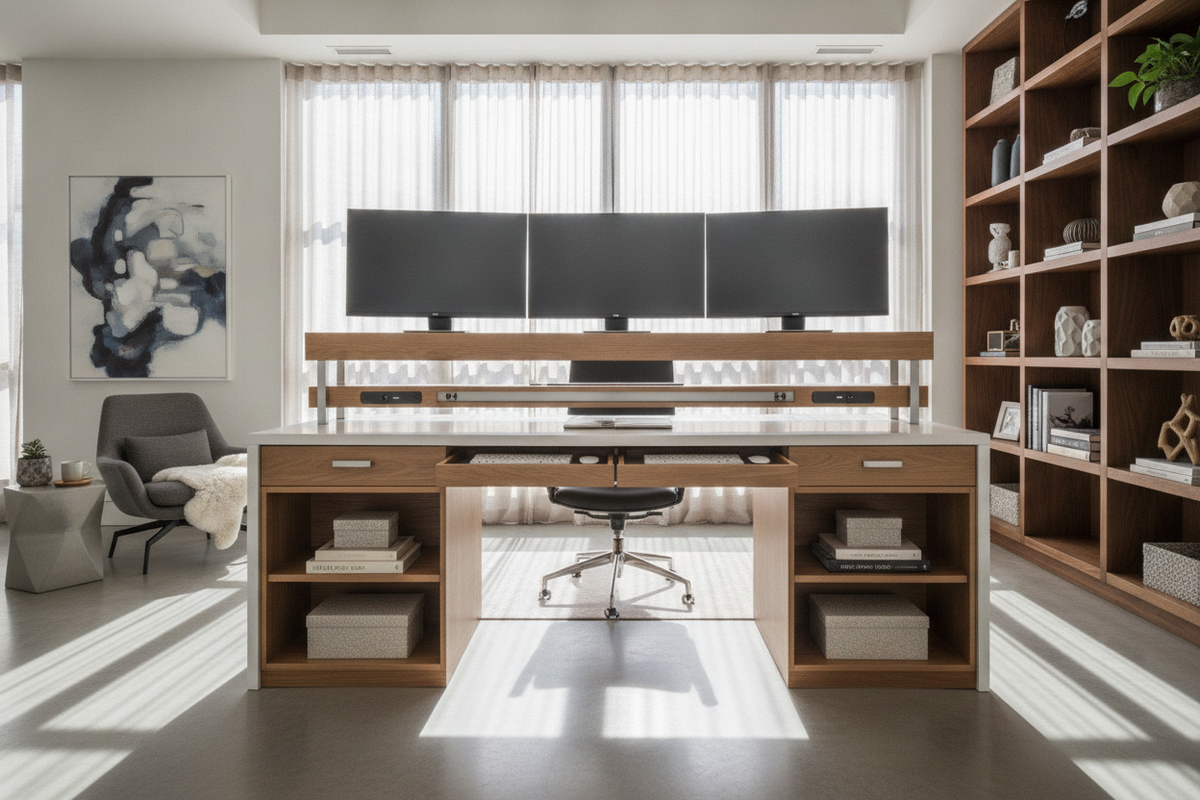
For workspaces where all accessories must rise simultaneously, a full mount it electric standing desk provides a seamless surface solution. Motorized full frames synchronize elevation across dual lifting columns, keeping paperwork, reference materials, and digital peripherals at a unified height. Outfitting your office with a complete electric standing desk product combines expansive corner workspace with integrated side cabinetry, allowing the primary worktop to transition smoothly without separating your primary tools from your active hands.
When evaluating an mi mount it standing desk arrangement, motorized frames also simplify wire management. Because the entire desktop moves as one unified platform, internal cable runs between monitors, computing units, and desk hubs remain static, requiring dynamic flex management only along the main floor-to-frame umbilical line.
Storage Pairing and Desktop Organization Around Active Workstations
Introducing height adjustability alters traditional office storage planning. Conventional office desks often rely on deep under-desk drawers or stationary kneehole pedestals. In an active workstation utilizing an mi mount-it accessory or motorized frame, static items placed directly underneath the work surface present collision risks during downward transitions.
To maintain storage convenience without impeding motion, consider low-profile mobile storage cabinets or low credenzas positioned adjacent to the travel envelope. Mobile drawer units can easily glide out from beneath the desk footprint when you choose to lower the work surface into its lowest seated position. Ensuring that surrounding storage leaves sufficient clearance guarantees that mechanical columns can travel unobstructed across their full height range.
Vertical organization accessories integrated directly onto the moving frame preserve valuable desktop real estate. Selecting a specialized electric standing desk product offers built-in pegboard panels, dedicated keyboard trays, and upper shelving units that travel in unison with your primary display. This configuration eliminates cord tension on desktop accessories and prevents small tools, notebooks, and writing instruments from being left behind when you transition to a standing posture.
Room Layout and Wall Clearances for Dynamic Height Systems
Proper spatial orientation protects your furniture, electronics, and surrounding architecture from unintentional friction. When placing any mount it stand desk configuration against interior walls, maintain a modest perimeter gap. Monitor display brackets, converter rear lips, and desktop edges must never scrape against drywall, window sills, electrical faceplates, or decorative baseboards while moving upward or downward.
Ambient lighting and window orientations also play key roles in dynamic rooms. A screen positioned at seated eye level may avoid direct sun exposure, yet that same display raised to standing height can catch afternoon glare from unshaded windows. Positioning your workstation perpendicular to primary light sources mitigates unwanted reflections regardless of working elevation.
Cable management requires deliberate routing and adequate slack. Flexible braided sleeves, under-mount wire trays, and articulated raceways ensure that cords leading to wall outlets do not bind, kink, or pull free at maximum elevation. In my view, planning wire pathways before loading monitors onto a new frame saves hours of troubleshooting down the road. Similar to verifying structural margins when following an apartment stand mount guide, confirming mechanical clearance zones ensures your dynamic workstation remains reliable, visually cohesive, and seamlessly integrated into your home interior.

Dejar un comentario
Este sitio está protegido por hCaptcha y se aplican la Política de privacidad de hCaptcha y los Términos del servicio.