





A murphy bed is a bed that folds up into a wall cabinet or a chest, so the floor is free during the day and a proper bed is ready at night. To choose one, check five things: the open length (roughly the mattress length plus the cabinet depth) against the room, the closed width, depth and height against the wall and ceiling, the mattress size and thickness the frame accepts, how the unit is secured (to wall studs, to the floor, or as a cabinet that stands on its own), and the mechanism that lifts or unfolds it.
This guide gives the numbers for each step, compares murphy beds with sofa beds and daybeds, and ends with picks from the FUFU&GAGA folding beds and murphy bed collection.
Key takeaways
- Measure the open bed, not the closed one. A full mattress is 54 x 75 inches and a queen is 60 x 80 inches, and you need a walkway around it.
- Leave 24 to 36 inches of clear floor on each side of the open bed that is not against a wall.
- Vertical wall beds need ceiling height; horizontal and chest-style beds need wall width or floor depth instead.
- Secure the unit exactly as the maker says. Wall bed recalls have involved frames that fell or tipped when not anchored.
What is a murphy bed?
A murphy bed, also called a wall bed, pull-down bed or fold-down bed, is a bed hinged at one end so it can be stored vertically against the wall, often inside a closet or cabinet. Modern versions use piston lifts or torsion springs so the bed is easier to raise and lower. Most do not use a box spring: the mattress rests on a wood platform or mesh, and straps hold it in place when the bed is folded up.
The name now covers three common designs. Pick the one that suits the dimension your room is short of.
| Type | How it stores | What it needs most |
|---|---|---|
| Vertical wall bed | Head of the bed hinges up; the mattress stands on end in a tall cabinet | Ceiling height above the mattress length |
| Horizontal wall bed | Long side hinges up; the mattress lies sideways in a wide, lower cabinet | Wall width beyond the mattress length |
| Cabinet or chest bed | A folding frame tucks into a chest-height cabinet and unfolds forward | Floor depth in front of the cabinet |
Murphy bed dimensions: start with the mattress
Every murphy bed is built around a mattress size, so the mattress sets the minimum footprint. Standard US sizes from the Sleep Foundation's mattress size chart:
| Mattress size | Width x length |
|---|---|
| Twin | 38 x 75 in |
| Twin XL | 38 x 80 in |
| Full (double) | 54 x 75 in |
| Queen | 60 x 80 in |
| King | 76 x 80 in |
The stored mattress has to fit inside the cabinet, so a vertical full or queen cabinet is always taller than 75 or 80 inches, and a horizontal one is always wider than that, once the frame, top and base are added. Exact closed sizes vary by model, so measure the wall against the listing's closed dimensions.
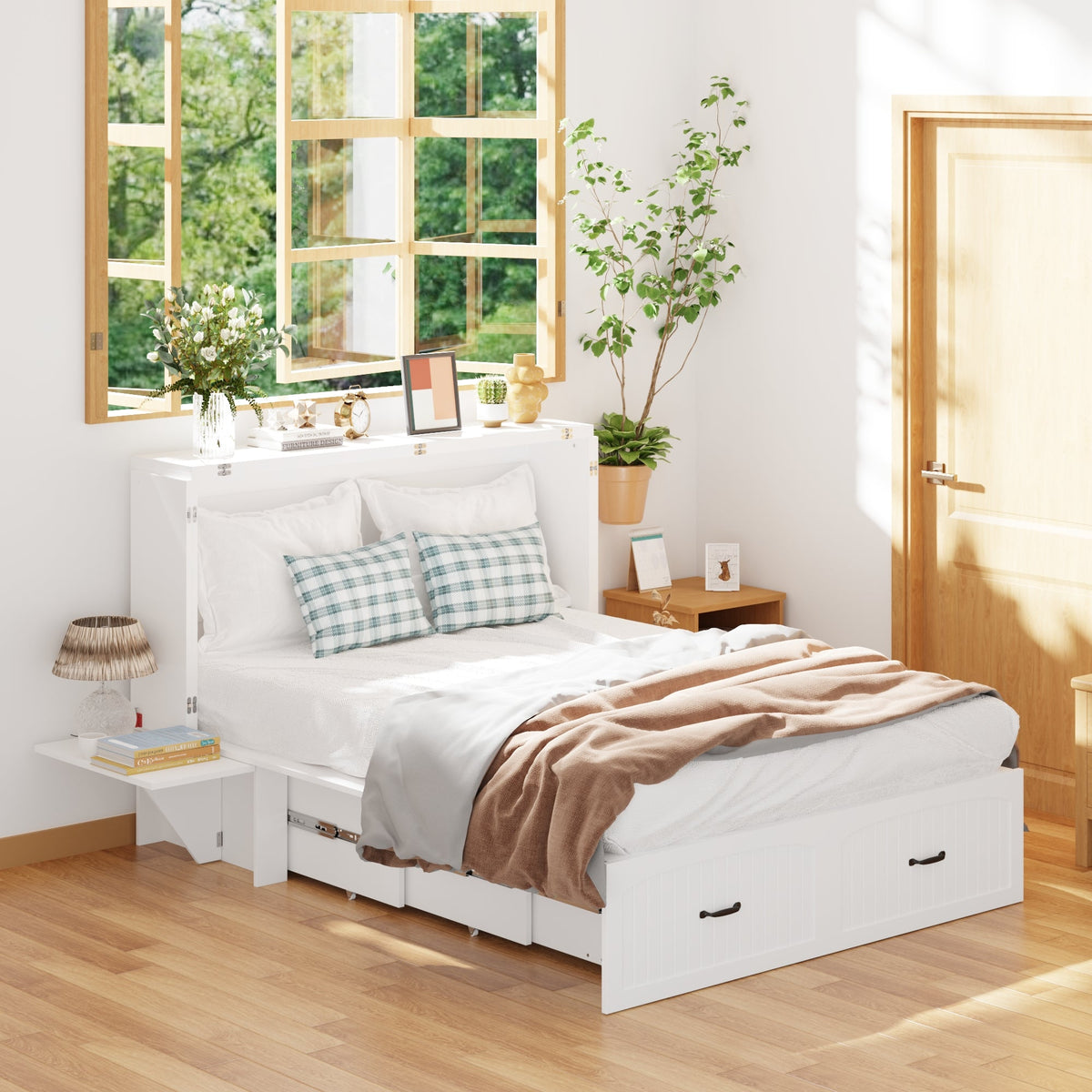
A chest bed is much lower. The FUFU&GAGA full-size cabinet bed in our picks is 41.3 inches high, 55.9 inches wide and 23.6 inches deep when closed, and 55.9 by 75.6 inches when open, just larger than a 54 x 75 inch full mattress.
How much space do you need for a murphy bed?
Plan for the open bed plus a clear walkway. Recommendations vary: the Sleep Foundation suggests about 24 inches around each side of a bed, while Dimensions.com's full bedroom layout guide gives a minimum of 30 inches and a comfortable 36 inches on each side not against a wall. Use 30 inches as a working minimum.
For the cabinet bed above (open 55.9 x 75.6 inches), the arithmetic with 30 inches of clearance is:
| Layout | Width needed | Length needed | Rounded |
|---|---|---|---|
| One long side against a wall | 55.9 + 30 = 85.9 in | 75.6 + 30 = 105.6 in | about 7 ft 2 in x 8 ft 10 in |
| Walkway on both sides | 55.9 + 30 + 30 = 115.9 in | 75.6 + 30 = 105.6 in | about 9 ft 8 in x 8 ft 10 in |
Do the same sum for any model: take the open size from the listing, add clearance to every side not against a wall, then mark the footprint on the floor with painter's tape. If a door, closet or desk chair has to swing into that area, the bed will block it every night it is down. Also clear the path the bed travels as it opens: thick rug edges, floor lamps and furniture legs can stop it.
Ceiling height and wall space
For a vertical wall bed, compare the cabinet height in the listing with your ceiling, then look for fans, light fixtures, crown molding and smoke alarms that reduce the usable height. For a horizontal wall bed, measure the clear wall between corners, door casings and windows. A chest bed can sit below a window or a shelf; its limit is floor depth.
For every type, find the outlets, switches and vents on that wall first. A cabinet that covers an outlet makes it hard to reach, and a vent behind a closed bed blows into the cabinet instead of the room.
Mattress size and thickness
A murphy bed is built around a standard mattress size, which is one of its main advantages over a sofa bed. The frame still limits thickness: the bed has to close with the mattress and bedding inside, so a mattress that is too thick may stop it from closing. Before buying a mattress, check the listing or manual for the size, the maximum thickness, whether a mattress is included, whether a box spring is needed and whether an adjustable base is supported. If no thickness limit is listed, ask or check the manual first.
Mechanisms: springs, pistons and fold-out frames
Wall beds use a counterbalance, piston lifts or torsion springs, so a person can raise and lower a heavy mattress and frame. If a bed drops, springs back or feels uneven, stop using it and contact the maker. Chest beds work differently: the cabinet bed in our picks opens on metal slides with wheels underneath. Whatever the mechanism, open and close the bed as the manual describes and keep children from operating it.
Wall anchoring and safe installation
A murphy bed is a heavy box with a moving load inside, so how it is secured matters more than with most furniture. The Wikipedia entry notes that if not secured or used properly, a murphy bed could collapse on the operator, and recall notices show the same risk:
- A 2026 CPSC murphy bed recall warned that the frame of the wall bed can fall onto consumers, and the injuries it describes happened when the beds were not anchored to the wall during assembly.
- A 2023 Health Canada recall of a mobile murphy bed that looks like a chest of drawers when closed warned that it can tip over if it is not anchored to the wall when closed and stored.
In practice:
- Follow the maker's installation steps in order, including when the cabinet is anchored. Never skip anchoring "for now".
- Anchor into wall studs where the instructions call for it. The CPSC's Anchor It campaign shows how to find the nearest stud and drive the screws into it. Other wall types need the hardware the maker specifies.
- Use two people for assembly, or more if the manual says so, and check the anchors again after a few weeks of use.
- Before buying a used wall bed, search its model number in the CPSC recall database. If you are unsure about your wall, hire a professional installer.
For tips on reading instructions and organizing parts, see our guide on how to assemble flat-pack furniture.
Murphy bed vs sofa bed vs daybed
| Option | Mattress | Daytime role | Floor used by day | Installation |
|---|---|---|---|---|
| Murphy (wall) bed | Standard size on a platform | Wall cabinet, often with shelves | Cabinet depth only | Secured per the maker |
| Cabinet (chest) bed | Sized to the frame; check the listing | Low cabinet with a usable top | Cabinet depth only | Per the listing |
| Sofa bed | Thin mattress inside the sofa, about 4.5 in on average | Seating | Full sofa footprint | None |
| Daybed | Sized to the frame (sizes vary) | Seating with a back and arms | Full bed footprint | None |
The sofa bed figure comes from Wikipedia, which describes a sofa bed as hiding a metal frame and thin mattress and gives an average mattress thickness of 4.5 inches. The Sleep Foundation's overview of bed frame types describes a daybed as resembling a sofa, with a backrest and armrests. The trade-off: a murphy bed gives the better mattress and the most free floor but costs a wall and careful installation, while a sofa bed or daybed keeps seating in the room and uses floor space all day.
Murphy bed with storage for a guest room or home office
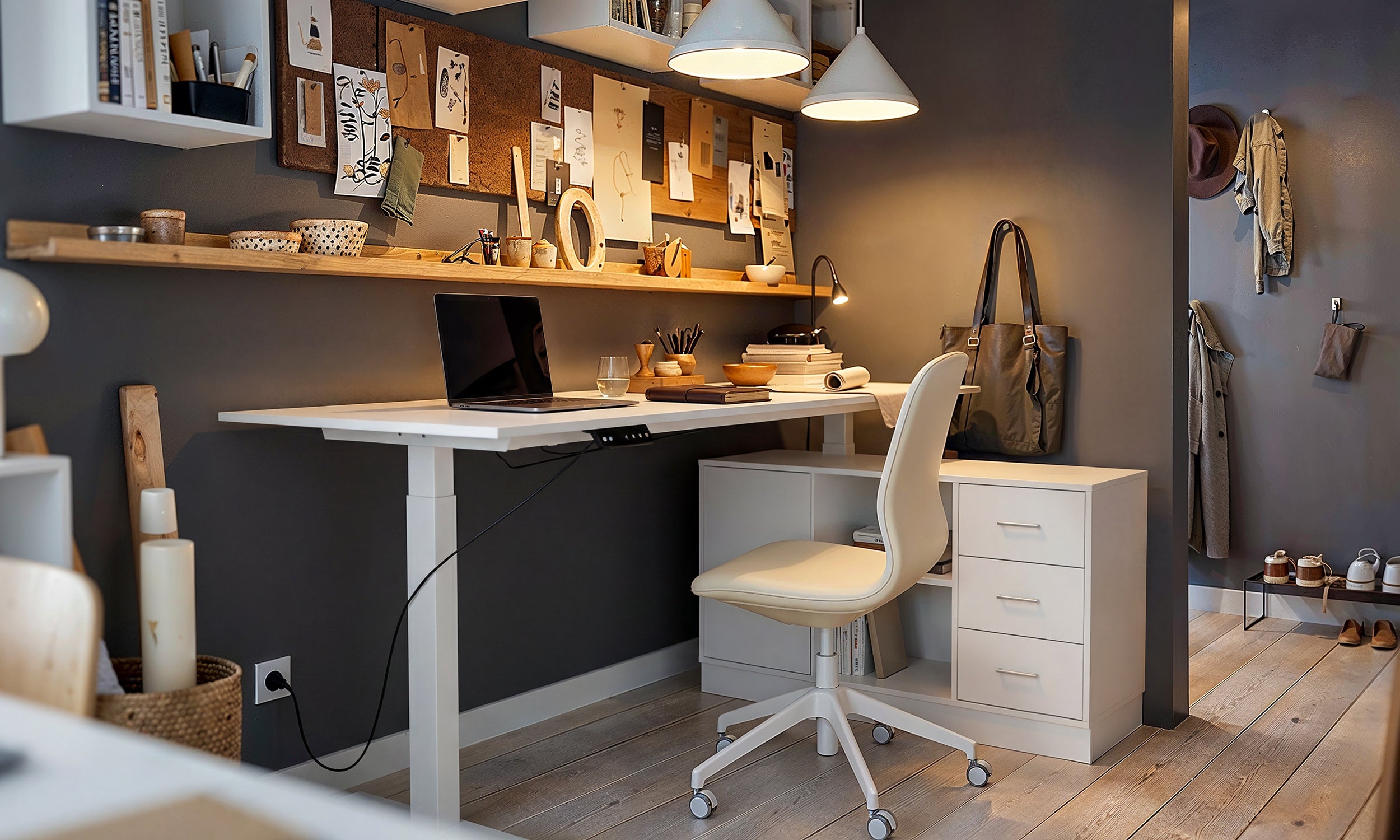
The most common reason to buy a murphy bed is a room that is an office most days and a guest room a few nights a year. Closed, the cabinet bed above gives back about 52 inches of floor along the bed's length (75.6 minus 23.6), enough for a desk and chair. Our guest bed office guide covers zoning and lighting for that kind of dual-purpose room, and our guide to a desk in a small bedroom covers desk sizes when the bed stays down.
Storage on a murphy bed can mean side cabinets or shelves around a wall bed, a drawer in the base of a chest bed, or a top that works as a console. Decide where the bedding lives while the bed is closed. If the bed will be down most nights, a storage bed with drawers and a bookcase headboard may suit the room better, which is why our picks include one.
Murphy bed buying checklist
- Open footprint from the listing, plus 24 to 30 inches or more on every side not against a wall.
- Closed size against the wall, with outlets, vents and switches marked.
- Ceiling height above a vertical bed, including fans and lights.
- Mattress size, maximum thickness, box spring, and whether one is included.
- Weight capacity against the sleepers and mattress you plan for.
- Securing method: wall studs, floor or freestanding, and hardware for your wall.
- Assembly: number of people and tools required.
- Recall check of the model number, especially for a used bed.
Our picks
The picks below are a FUFU&GAGA full-size murphy cabinet bed and, for rooms where the bed stays down every night, a twin storage bed. Every size and feature comes from the product listings.
55.9" Modern White Murphy Bed With Nightstands And Fold-down Panel

A chest-style murphy bed for a full mattress. By day it is a white cabinet whose top holds frames, books, flowers or a lamp. At night you unfasten the front panel and it opens into a full-size bed, with a fold-out bedside table on each side and a bottom drawer for pillows and sheets.
- Closed: 41.3" H x 55.9" W x 23.6" D. Open: 55.9" W x 75.6" L.
- Mattress: full/double, not included; no box spring needed; weight capacity 400 lb.
- Storage: 1 drawer and two fold-out nightstands.
- Build: solid and manufactured wood (MDF), white, finished back, metal slides and wheels, 250.8 lb.
- Installation: the listing marks assembly and mounting or installation as required, with two people (screwdriver, no power tools). The guide is in the User Manual tab.
Best for: a guest room or home office that needs a full-size bed a few nights at a time.
Skip it if: you need a twin or queen, want an adjustable base (the listing says it is not compatible), want a mattress included, or cannot keep the full open length clear. No maximum mattress thickness is listed, so check the manual before buying a mattress.

40.9" Modern Minimalist White Twin Platform Storage Bed with Storage Headboard

Not a murphy bed, but the better choice when a small room needs a bed every night. Drawers run along one side, and the bookcase headboard has an open shelf plus flip-door storage. Solid wood slats support the mattress, so no box spring or foundation is needed.
- Size: twin, 40.9" wide.
- Storage: under-bed drawers on wheels with metal slides and safety stops; bookcase headboard.
- Mattress: twin, not included.
- Setup: headboard optional; instructions included; may arrive in two parcels.
Best for: a kids' room, guest room or small bedroom where the drawers replace a dresser.
Skip it if: you need the floor clear by day or a bed larger than twin. The listing gives only the width, so confirm length and height in the User Manual tab, and leave room on the drawer side.
Picks at a glance
| Pick | Size | Mattress | Storage | Best for |
|---|---|---|---|---|
| 55.9" murphy cabinet bed | Closed 41.3" H x 55.9" W x 23.6" D; open 55.9" x 75.6" | Full, not included | 1 drawer, 2 fold-out nightstands | Floor clear by day |
| 40.9" twin storage bed | 40.9" wide | Twin, not included | Side drawers, bookcase headboard | Bed down every night |
FAQ
How much space do you need for a murphy bed?
Take the open size from the listing and add 24 to 36 inches on every side not against a wall. A full-size cabinet bed that opens to 55.9 x 75.6 inches needs about 85.9 x 105.6 inches with one side against a wall and 30 inches elsewhere.
Can you use a regular mattress on a murphy bed?
Murphy beds are built around standard sizes (twin, full or queen), and most do not use a box spring, but the frame sets a maximum thickness. A mattress that is too thick may stop the bed from closing, so use the thickness in the listing or manual.
Does a murphy bed have to be attached to the wall?
Wall beds are designed to be secured, and recalls describe frames falling when beds were not anchored. At least one mobile cabinet bed was recalled because it could tip over if not anchored. Follow the maker's instructions for your model.
Is a murphy bed better than a sofa bed?
For sleeping, usually yes: a murphy bed is built around a standard mattress size, while sofa bed mattresses average about 4.5 inches thick. A sofa bed keeps seating in the room and needs no installation.
Ready to compare sizes? Browse the murphy beds and folding beds and check each listing's open size against your floor plan.


Dejar un comentario
Este sitio está protegido por hCaptcha y se aplican la Política de privacidad de hCaptcha y los Términos del servicio.