



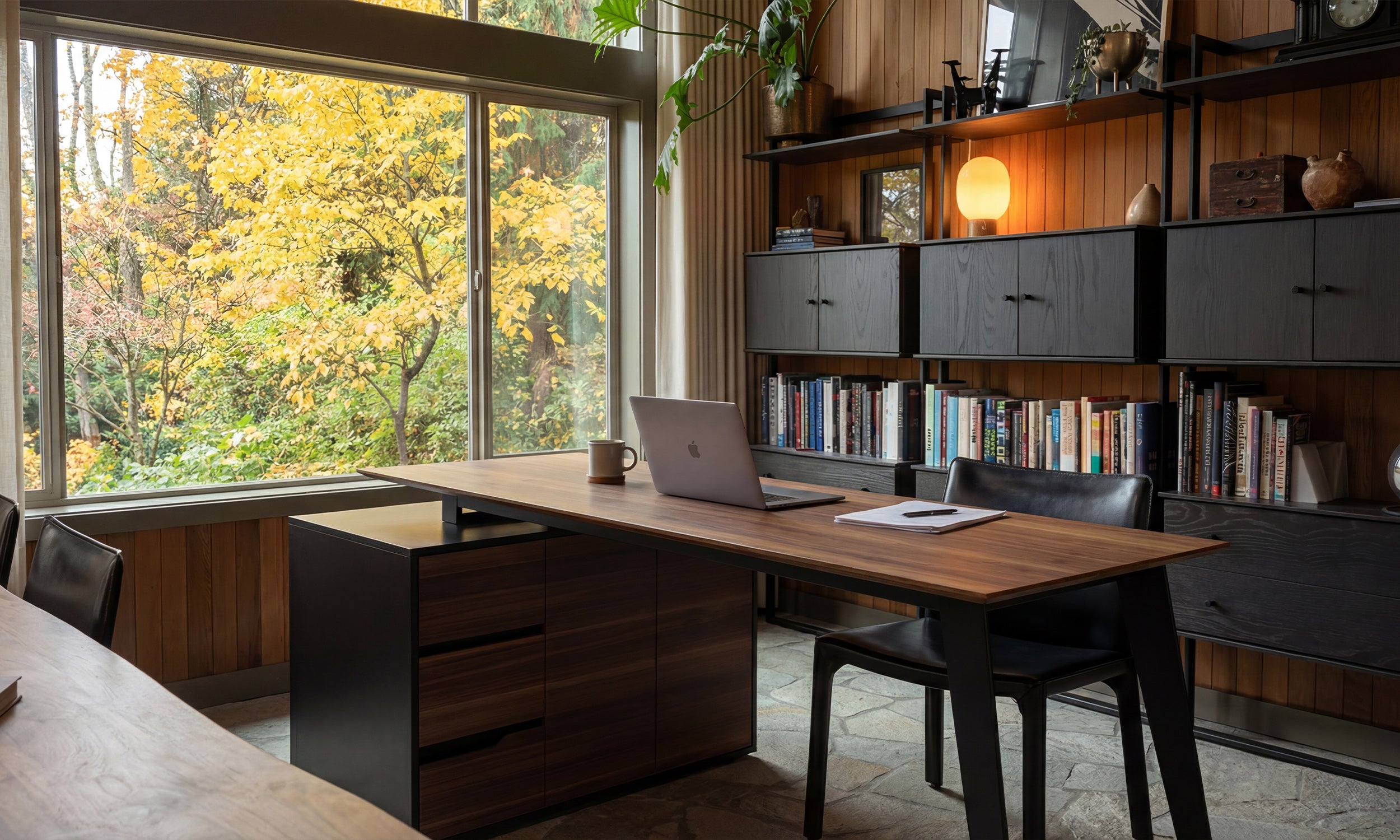



Size an outdoor kitchen island around the grill and the open counter it needs on each side. One trade guide calls for 24 inches of landing space on one side of the grill and 12 inches on the other, so a 30-inch grill needs a run of about 66 inches, at a counter height around 36 inches. Choose materials that handle sun and rain, and keep the grill at least 3 feet from siding, deck rails and eaves, as the U.S. Fire Administration advises.
One rule matters more than size: do not cook under a roof or canopy unless the island's listing, your grill maker's manual and your local fire code all allow it. If any one says no, or says nothing, keep the grill in the open. Below: size, height, layout, safety and care, then four picks from the FUFU&GAGA outdoor kitchen and dining collection.
Key takeaways
- Length: grill width plus 24 inches on one side and 12 on the other (trade guide), or at least 12 and 15 inches under indoor kitchen guidelines.
- Height: about 36 inches, between the 28-36 and 36-45 inch work heights in indoor guidelines.
- Clearance: at least 3 feet from siding, deck rails and eaves, or more if the manual or local code says so.
- Roofs: treat a roofed island as a prep station unless all three allow cooking under it.
How big should an outdoor kitchen island be?
Start with the grill, because it sets the length and needs open counter on both sides. In a Journal of Light Construction article, Russ Faulk advises 24 inches of open counter on one side of a grill and 12 inches on the other, at least 24 inches of counter depth, and never placing a grill or a sink at the end of a counter run.
Indoor guidelines set a lower floor. The National Kitchen and Bath Association's kitchen planning guidelines recommend at least 12 inches of landing area on one side of a cooking surface and 15 inches on the other. The sources differ: treat NKBA as the minimum and the trade figures as the target.
| Setup | Arithmetic | Minimum counter run |
|---|---|---|
| 30-inch grill, tight (NKBA landing) | 30 + 12 + 15 | 57 in |
| 30-inch grill, comfortable (trade landing) | 30 + 24 + 12 | 66 in |
| 36-inch grill, comfortable | 36 + 24 + 12 | 72 in |
| A 49.6-inch grill bay, comfortable | 49.6 + 24 + 12 | 85.6 in |
The same trade guide adds 18 inches of open counter on each side of a sink and 15 inches above an under-counter refrigerator. In front, NKBA recommends a work aisle of at least 42 inches for one cook and 48 inches for more than one, and a walkway of at least 36 inches. A 47.2-inch-deep island plus a 42-inch aisle needs 89.2 inches of clear patio.
What height should an outdoor kitchen island be?
About 36 inches is a sensible middle. NKBA's guidelines recommend offering two work-counter heights where you can, one from 28 to 36 inches and one from 36 to 45 inches above the floor, so a shorter or seated cook has a usable surface.
NKBA also says that when a cooking surface sits at a different height from the rest of the counter, the landing areas beside it should match the cooking surface. Measure your grill's work surface before you choose the island, so you are not lifting hot pans across a step.
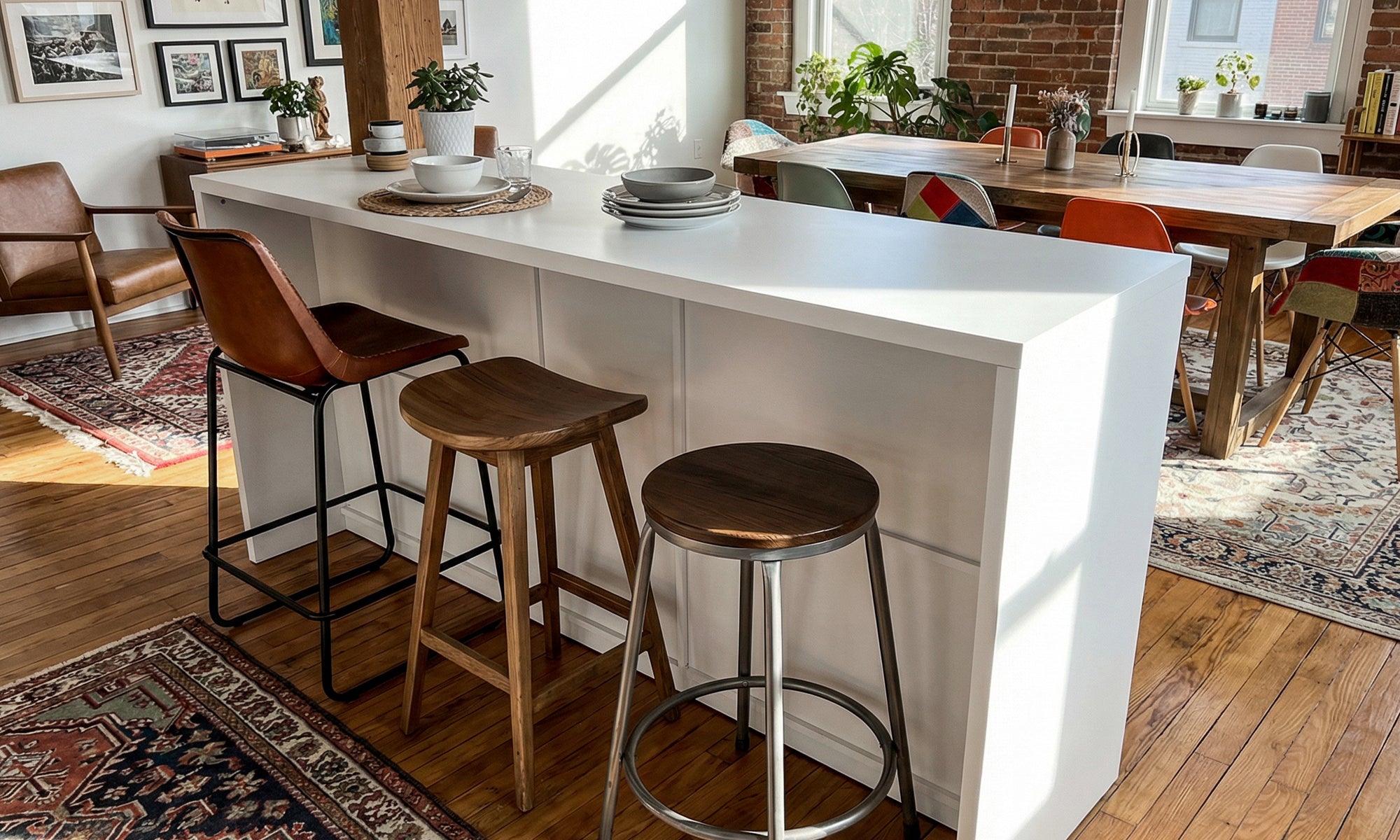
For seating, NKBA gives knee space per diner of 24 inches wide by 15 inches deep at a 36-inch counter, and 24 inches wide by 12 inches deep at a 42-inch counter. Keep seats away from the grill. Our kitchen island dimensions guide covers seating in more detail.
Which outdoor kitchen layout works best?
Think in zones: hot (grill), prep (open counter), cold (drinks), wet (sink) and storage. Put prep between hot and cold, and keep seating out of the cook's path.
| Layout | Best for | Watch for |
|---|---|---|
| Straight run | Small patios, most freestanding islands | Long walks on very long runs |
| L-shape | Patio corners; adds prep space at a right angle | Corner storage is harder to reach |
| Island with seating | Hosting; guests sit opposite the cook | Seats too close to the grill |
| Separate grill plus prep island | Roofed islands and covered patios | The walk between grill and counter |
The last layout, a grill in the open with a prep island a few steps away, solves most clearance problems at once.
How far should an outdoor kitchen island be from the house?
Far enough that the grill meets every clearance that applies. The U.S. Fire Administration's grilling fire safety flyer says to use a grill only outside, keep it at least 3 feet from siding, deck rails and eaves, and keep a 3-foot safe zone around it for kids and pets. The National Fire Protection Association's grilling safety tips say to place the grill well away from the home and deck railings and out from under eaves and overhanging branches.
Some fire departments ask for more. Dallas Fire-Rescue's open flame cooking devices sheet quotes a code section keeping grills 10 feet from combustible construction, with an exception for one- and two-family homes, yet still advises 10 feet from the house, garage and shed and no grilling under eaves or patio coverings. Rules vary by city and HOA, so ask your local fire department.
Your grill's manual has the final word on its clearances to combustible materials, which can be larger than any general rule, so read it before you buy the island. Wood burns, so a cedar island or cabinet beside a grill is part of that question too.
Keep a fire extinguisher within reach, as Dallas Fire-Rescue advises, never leave a lit grill, and clean off grease after each use, as USFA advises.
Can you grill under an outdoor kitchen island roof or canopy?
Only when three things all say yes: the island's listing, your grill maker's manual for that installation and overhead clearance, and your local fire code. If any says no or is silent, use the roofed island for prep, serving and storage, and set the grill in the open. A roof holds heat and smoke over the cook, and a wood roof can burn.
The listing photos for both of our roofed islands show cooking gear under the roof. Treat those photos as styling, not permission. Here is what the listings actually say:
- 103.1" galvanized steel roof island: the listing says its stainless counters give "room for food prep, grilling and the rest of your BBQ setup, including a grill or smoker." It gives no clearance between a grill and the roof.
- 80.5" cedar canopy island: the listing says its countertop can hold "a grill setup" and that the canopy adds shade "while you cook." It gives no clearance either, and the canopy and frame are wood.
Neither listing replaces your grill's manual. If the manual does not explicitly allow cooking under that kind of cover, do not do it. Neither listing gives a wind rating or an anchoring method either, so ask customer service how to secure a roofed island before a windy season. Our patio gazebo guide takes the same line for gazebos.

What materials hold up best outdoors?
| Material | Strengths | Upkeep and limits |
|---|---|---|
| Cedar | Warm, natural wood look | Needs its finish kept up; wood burns, so mind grill clearance |
| Galvanized or powder-coated steel | Strong frames and roofs; does not burn | Touch up chips so the coating keeps protecting the steel |
| Stainless steel counters | Smooth, easy-to-clean work surface | Wash regularly, more often near salt air |
Our outdoor kitchen cabinets guide covers cedar care, galvanizing and stainless grades in depth.
Gas, power and water: what needs a professional?
Fixed gas lines need a licensed gas fitter, new outlets a licensed electrician, and sink water and drainage a plumber; our outdoor sink cabinet guide covers the sink side.
For propane, NFPA advises checking the hose for leaks before the first use each year with a light soap and water solution: bubbles mean a leak. If you smell gas while cooking, get away from the grill, do not move it, and call the fire department. Follow your grill's manual on where the cylinder may sit and how that space must be vented.
For power, the Consumer Product Safety Commission's home electrical safety checklist says outdoor outlets should be protected by a GFCI, and that an outlet used in wet weather needs a "weatherproof while in use" cover, because most covers do not keep water out with a cord plugged in.
What storage does an outdoor kitchen island need?
- A drawer at the grill for tongs, spatula and brush.
- Closed cabinets for plates and anything you want kept clean.
- Open shelves for things you grab often; they collect dust and pollen.
- A trash bin to keep scraps off the patio.
NFPA says to keep charcoal starter fluid out of reach of children and away from heat sources, so store it well away from the grill.
How do you cover and winterize an outdoor kitchen island?
- Let the grill cool fully before you put a cover on it.
- Let charcoal cool, then put it in a metal can with a lid, as USFA advises.
- Before a freeze, drain any water lines and the sink as the faucet maker directs.
- Recoat wood when water soaks in instead of beading.
- Check the bolts on roofed frames each spring.
Buying checklist
- Read your grill's manual first: footprint, clearances to combustibles, and whether it may go under any cover.
- Measure the run: grill width plus 24 and 12 inches of landing, or at least 12 and 15.
- Allow a 42-inch aisle (48 for two cooks) and match the counter height to the grill's work surface.
- Mark a spot at least 3 feet from siding, deck rails and eaves, or 10 feet if your local code asks for it.
- Confirm a GFCI-protected outlet with an in-use cover before you plan a refrigerator.
- Book a licensed gas fitter, electrician or plumber for any fixed line.
- Plan assembly time and helpers; our flat-pack assembly guide has general tips.
Our picks for outdoor kitchen islands and grill stations
Two roofed islands and two cedar pieces to build a grill area around. No grill or appliance is included.
103.1" heavy-duty outdoor kitchen island with galvanized steel roof
The most complete option, with a galvanized steel roof over a black powder-coated steel frame and stainless steel counters on both sides. It measures 103.1 inches wide, 47.2 inches deep and 90.6 inches tall, and weighs 310 lb. The listed cooking surface is 49.6 by 25 inches, and storage is a utensil drawer, a soft-close cabinet with adjustable shelves (22.4 inches high, 28.6 inches wide and 24 inches deep) and a hidden 14.4-inch soft-close trash bin.
On the roof, the listing says the counters give room for grilling, "including a grill or smoker," but gives no overhead clearance. Cook under it only if your grill's manual and your local fire code both allow that; otherwise use it as a covered prep and storage station with the grill in the open.
Best for: a large patio where you want shaded prep space, closed storage and hidden trash in one piece.
Skip it if: your grill's manual does not allow use under a roof, or your patio cannot spare 89.2 inches of depth (47.2 plus a 42-inch aisle).
80.5" solid cedar outdoor kitchen island with canopy
A wood island with a canopy, open shelves and a 3-door cabinet. It is 80.5 inches wide, 42.4 inches deep and 84.3 inches tall to the top of the canopy, and weighs 230 lb. The countertop is 48.4 by 26.8 inches (1,297 square inches). The listing says the cedar is heat-treated and kiln-dried, with a low-VOC, water-based coating, and the back panel is for hanging tools.
The listing says the countertop can hold a grill setup under the canopy. The canopy and frame are cedar, which burns, and the listing gives no clearance. Our advice: use it for prep, serving and storage, and keep the grill in the open, unless your grill's manual explicitly allows that overhead clearance to wood.
Best for: a shaded prep and serving station next to a grill that stands on its own.
Skip it if: you want to cook under the canopy, or you need running water or a refrigerator space.

51.2" solid cedar outdoor grill station
An open-air grill station with no roof: a solid cedar base and a stainless steel countertop with a cutout to hold your own grill. It is listed at 51.2 inches wide, 23.6 inches deep and 27.6 inches tall, weighs 72 lb, and comes in natural or black. Open shelving runs below, with a left-side shelf for tools and a right-side space the listing assigns to the gas tank.
The listing does not give the cutout's size, so check that your grill's manual allows it to sit in or on a wood cabinet, and follow its clearances to combustible material.
Best for: a compact grill area set out in the open, well clear of the house.
Skip it if: you need the cutout size before ordering, or a counter that lines up with other cabinets: its listed 27.6-inch height is far lower than the corner cabinet below, so confirm the height with customer service first.
Cedar outdoor corner storage cabinet
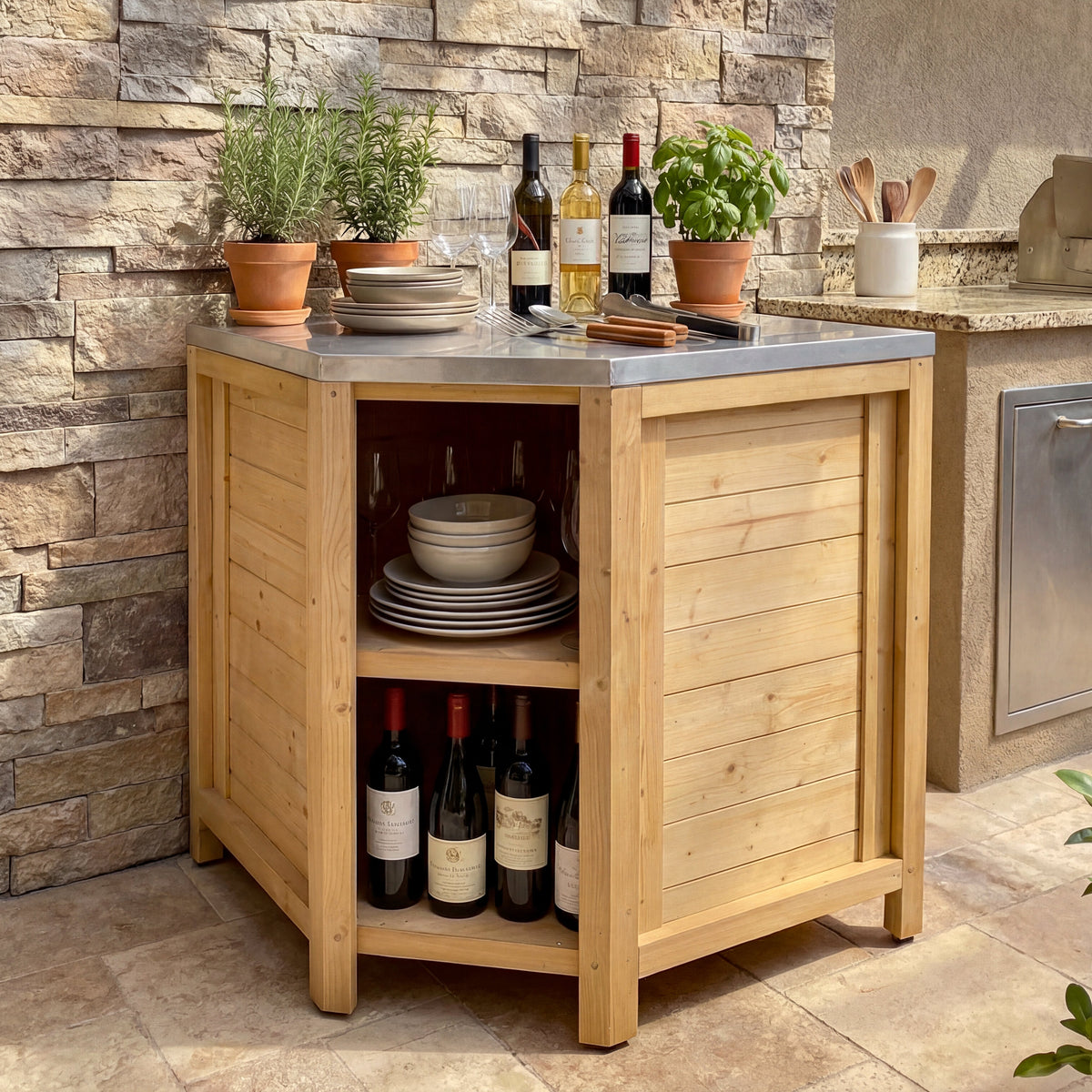
Extra prep space and storage for an L-shaped layout. Despite the 35.4" in its name, it is 51.2 inches wide, 35.4 inches deep and 37.4 inches tall, and weighs 84 lb. It is solid cedar with a stainless steel countertop, in natural or black, with interior storage for cookware and serving pieces.
Best for: turning a patio corner into landing and prep space beside a separate grill.
Skip it if: you need closed storage, since the photos show an open front, or a straight run along one wall.
How the picks compare
| Pick | W x D x H (in) | Roof | Materials | Storage |
|---|---|---|---|---|
| 103.1" roof island | 103.1 x 47.2 x 90.6 | Galvanized steel | Steel frame, stainless counters | Drawer, cabinet, trash bin |
| 80.5" cedar island | 80.5 x 42.4 x 84.3 | Cedar canopy | Solid cedar | Open shelves, 3-door cabinet |
| Cedar grill station | 51.2 x 23.6 x 27.6 (listed) | None | Cedar, stainless top | Open shelves, tank space |
| Cedar corner cabinet | 51.2 x 35.4 x 37.4 | None | Cedar, stainless top | Open interior |
FAQ
How much space do you need for an outdoor kitchen island?
Add 24 inches of landing on one side of the grill and 12 on the other: a 30-inch grill needs about 66 inches of counter. A 24-inch-deep island plus a 42-inch aisle needs about 66 inches of patio front to back.
Can an outdoor kitchen island go against the house?
A prep or storage island can. The grill cannot: USFA says at least 3 feet from siding, deck rails and eaves, and Dallas Fire-Rescue advises 10 feet from the house. Check your grill's manual and local code.
Can you put a grill under a pergola or covered patio?
Not unless your grill's manual explicitly allows that overhead clearance and your local fire code allows it. NFPA says to keep grills out from under eaves and overhanging branches. When in doubt, grill in the open.
With your measurements and your grill's clearances in hand, compare sizes in the FUFU&GAGA outdoor kitchen and dining collection.

Dejar un comentario
Este sitio está protegido por hCaptcha y se aplican la Política de privacidad de hCaptcha y los Términos del servicio.