










Introduction
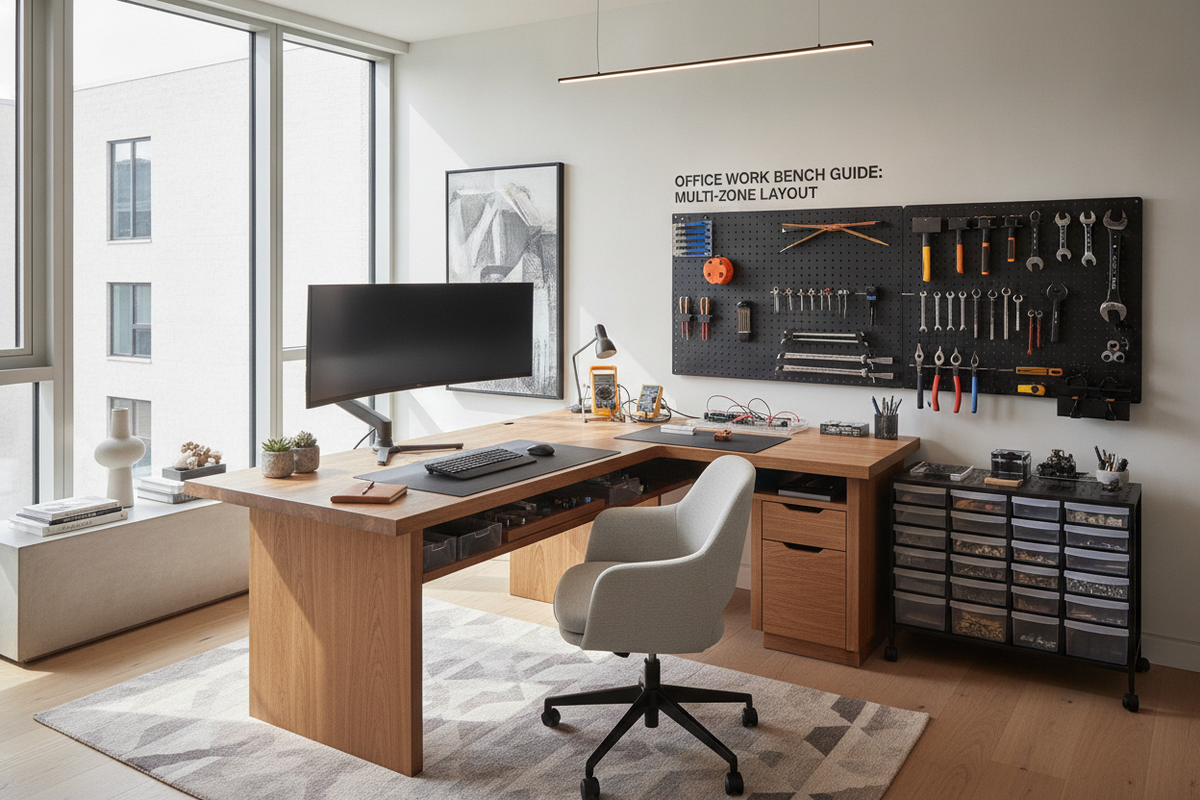
Modern workspaces frequently serve multiple roles beyond standard keyboard entry and video calls. The traditional mechanical workbench, once relegated exclusively to damp basements or detached garages, has evolved into a streamlined indoor fixture. Today, an office work bench often supports delicate tasks such as circuit prototyping, soldering, scale model painting, and hardware diagnostics alongside conventional desk setups.
Successfully integrating maker activities into a home or professional study requires thoughtful planning. You need a stable surface that resists shifting while manipulating miniature fasteners or hot tools, combined with visual order that blends smoothly into a residential setting. Bridging industrial durability with residential interior design prevents your workspace from feeling like an unorganized workshop floor.
Footprint and Dimension Tiers for Mixed-Use Rooms
Selecting the right dimensions for an office workbench begins by evaluating room circulation and your daily reach zones. In tight layouts, such as alcoves or converted flex bedrooms, a compact footprint preserves surrounding floor area while still offering adequate space for a bench vice, a desktop task light, and a primary assembly board. Reviewing small-room office setup strategies can help you calculate traffic clearance around chairs and nearby doors before committing to a wide frame.
For rooms with dedicated wall space, standard-depth benches accommodate two distinct functional layers: a forward assembly deck and a rear tier of shelving for power supplies, multimeters, or reference documents. If you have an open floor plan or a large perimeter wall, an expansive bench layout allows separate dirty assembly zones from clean administrative monitor desks. Regardless of surface area, ensure that moving an office chair does not block nearby doorways or storage drawers.
Surface Durability and Frame Rigidity
Fine detail craft work and electronics troubleshooting demand an exceptionally rigid workstation. Tabletop wobble disrupts delicate soldering tips, magnification lenses, and adhesive applications. Solid wood tops, thick butcher blocks, and dense core composite decks provide substantial weight that dampens micro-vibrations generated by hand tools or desktop 3D printers.
Beneath the top, steel box-beam legs, cross-braces, and reinforced aprons prevent lateral sway when pressure is applied to the front edge. To preserve your furniture investment over time, consider pairing the primary surface with protective, task-specific layers:
- Silicone heat-resistant mats: Shield underlying wood and laminate finishes from accidental contact with warm tools and dripping solder flux.
- Anti-static grounding pads: Provide a static-dissipative platform for handling sensitive microcontrollers and open computer boards.
- Self-healing cutting mats: Protect the finish against rotary blades, craft knives, and scoring chisels during model construction.
Ergonomic Surface Zoning for Electronics and Model Building
Organizing tabletop real estate by ergonomic priority reduces shoulder strain and keeps critical instruments within easy reach. The surface naturally divides into three functional zones:
- Primary reach zone: The immediate central deck directly in front of the chair. Keep this area dedicated strictly to the active workpiece, cutting surface, and current hand tools.
- Secondary perimeter zone: The semi-circular span accessible by extending the arms without leaning forward. This zone comfortably houses articulated task lamps, benchtop fume extractors, and soldering iron stands.
- Tertiary riser zone: Elevated back shelves positioned slightly above eye level. Placing oscilloscopes, bench power supplies, and external monitors up high clears valuable desktop space while keeping readouts clearly visible.
Mapping these operational zones ahead of time keeps your primary deck free from clutter and prevents cords from dragging across delicate projects.
Storage Architecture: Small Parts, Consumables, and Hardware
An office workbench quickly becomes chaotic if microscopic screws, resistors, paint bottles, and hand tools lack dedicated homes. Maintaining a cohesive visual environment requires balancing exposed access with enclosed concealment. In my experience, keeping active tools visible while hiding bulky bottles produces the calmest creative rhythm.
Shallow multi-drawer organizers installed directly below the worktop hold component bins, precision tweezers, wire cutters, and testing leads in labeled compartments. For vertical wall space behind the bench, modular slatwalls or finished pegboards provide accessible hanging perimeters for frequently swapped pliers, tape reels, and rotary tools.
To maintain a clean interior look, use enclosed lower cabinets or rolling pedestals for bulkier supplies such as adhesives, cleaning solvents, and spare spools. For additional tips on balancing practical utility with intentional aesthetics, consult our guide on curating functional office inspiration.
Integrated Power, Cable Routing, and Illumination Planning
Makers and hobbyists rely on a diverse collection of corded devices, from thermal irons and diagnostic meters to computer displays and ambient lights. Without structured utility pathways, tangled power cords clutter the surface and pose snag risks for hot or sharp instruments.
Install wide under-desk raceway trays or rear modesty panels to separate high-voltage equipment cables from sensitive USB, sensor, or audio lines. Mounting an accessible multi-outlet power strip beneath the front apron or along a rear upright permits rapid instrument shutoff without reaching behind heavy hardware. Finally, pair high-output diffuse overhead lighting with an adjustable, balanced-arm task light to eliminate shadows across fine soldering joints and miniature scale surfaces.
Assembly, Leveling, and Long-Term Maintenance
A workbench performs only as well as its foundation. When assembling your workstation, verify all structural hardware is firmly seated before loading heavy tool racks onto the upper shelf. Uneven residential flooring can cause annoying rocking; utilize adjustable leveling glides beneath each leg to establish an entirely plumb, rigid platform.
Establish a periodic maintenance routine every few months to inspect frame bolts, re-tighten mounting brackets, and adjust sagging cable anchors. Keeping the worktop clear of cured adhesives, resin spills, and chemical stains preserves both its functionality and appearance over years of intensive creative projects. Following a comprehensive dream home office planning guide ensures your workbench remains an inspiring, organized centerpiece for both technical focus and everyday productivity.

Dejar un comentario
Este sitio está protegido por hCaptcha y se aplican la Política de privacidad de hCaptcha y los Términos del servicio.