










It usually starts with a laptop on the kitchen island. Then, a stack of mail joins the pile. Before you know it, your dining table has become a permanent administrative dumping ground. If you are trying to figure out how to build a diy home office space because your current setup is driving you crazy, you are certainly not alone. The shift toward remote work has forced North American homeowners and renters alike to rethink their floor plans, often trying to squeeze productivity out of spaces that were never meant for it.
You do not need a dedicated spare room to create a functional workspace. What you do need is a strategic approach to scale, visual weight, and ergonomics. In this guide, we will walk through exactly how to carve out a highly functional, beautifully integrated work zone that actually feels like a cohesive part of your home, rather than a temporary afterthought.
Quick Decision Guide
- Prioritize natural light: Position your desk perpendicular to a window if possible. Facing it directly causes glare, and having it behind you ruins video call lighting.
- Match the room's visual weight: If your living room features heavy, upholstered furniture, a flimsy wire desk will look out of place. Anchor the space with cohesive materials.
- Invest in the chair, DIY the desk: You can build a beautiful desk from a butcher block and hairpin legs, but never DIY your spine support. Buy a proper ergonomic chair.
- Utilize vertical real estate: In tight quarters, build up, not out. Wall-mounted shelving keeps the floor plan open and maintains negative space.
Space Planning: Finding Square Footage Out of Thin Air
When clients tell me they have no room for home office setups, I immediately start looking at transitional spaces. Hallways, awkward architectural niches, and under-utilized corners are prime real estate for a diy small home office.
The Closet Conversion
Often referred to as a 'cloffice,' removing the doors from a standard reach-in closet offers a brilliant footprint for a diy small office space. A standard North American closet is about 24 inches deep, which is the exact minimum depth required for a comfortable work surface. By installing a solid wood slab across the width and running floating shelves up to the ceiling, you create a distinct architectural zone. Paint the interior a moody, contrasting color like deep navy or forest green to give the alcove deliberate design intent.
The Bedroom Corner Strategy
Integrating a diy bedroom office requires careful boundaries. You want the space to feel restful at night, which means your work clutter cannot dominate the room. The trick here is selecting a desk with a slim silhouette and closed storage. A wall-mounted floating desk paired with a ghost chair or a low-profile stool that tucks completely underneath will preserve your bedroom's walkways and keep the room from feeling cramped.
Style & Coordination: Avoiding the Dorm Room Look
One of the biggest pitfalls of homemade offices is that they often look like a collection of leftover furniture. To make your workspace look intentional, you need to tie it into the surrounding decor.
Layering Textures and Finishes
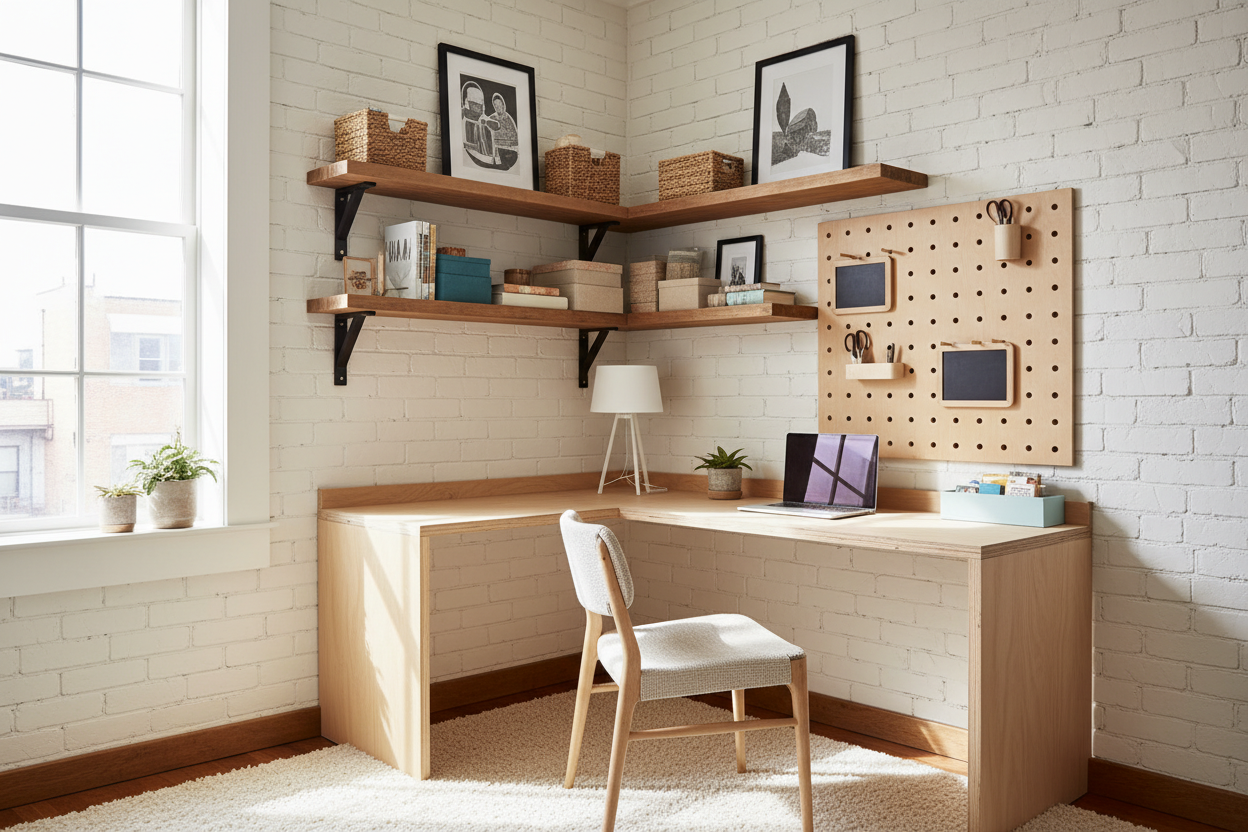
If you are looking for high-end diy home office design ideas, start with your materials. If your living room features mid-century modern walnut tones, do not buy a stark white melamine desktop. Instead, source a piece of oak or walnut veneer plywood, edge-band it, and seal it. Bring in warmth through a textured area rug specifically for the desk zone, and use a structured table lamp instead of a harsh, utilitarian task light. This softens the commercial feel of a workspace and blends it into a residential setting.
Designer's Honest Take: Where DIY Goes Wrong
Early in my career, I designed what I thought was the perfect minimalist diy office room for a client's guest suite. I sourced a stunning piece of solid ash wood to use as a floating desk. It looked incredibly sleek in photos. But to keep the budget down, I used standard heavy-duty L-brackets from a big box hardware store.
Within three months of the client leaning on the desk during daily Zoom calls, the drywall anchors started pulling out. The desk developed a terrifying sag. We had to tear open the wall, install proper structural blocking between the studs, patch the drywall, and remount the desk. I learned the hard way: if you are building a wall-mounted desk, you must hit the studs or install blocking. Drywall anchors, no matter what the box says about weight capacity, will eventually fail under the dynamic, shifting weight of a human working.
Frequently Asked Questions
What if I literally have no room for home office furniture?
Look into drop-down or Murphy-style desks. These wall-mounted cabinets fold out into a temporary work surface and fold away completely flat when not in use. They are one of the best diy small office ideas for studio apartments or highly trafficked living rooms.
How do I build a diy small home office on a budget?
The most cost-effective method is the 'hacksaw' approach using pre-finished kitchen countertops. You can buy an affordable butcher block or laminate kitchen counter from a hardware store, cut it to your exact alcove dimensions, and rest it on two sturdy filing cabinets. It provides massive storage and a custom-fit look for a fraction of the price of retail desks.
What are the best diy small home office ideas for renters?
Renters should avoid heavy wall modifications. Instead, use a pair of leaning ladder desks or a freestanding modular shelving unit. These provide a built-in look and plenty of vertical storage, but they only require a couple of small anti-tip screws in the wall, making them easy to patch and take with you when you move.

Dejar un comentario
Este sitio está protegido por hCaptcha y se aplican la Política de privacidad de hCaptcha y los Términos del servicio.