


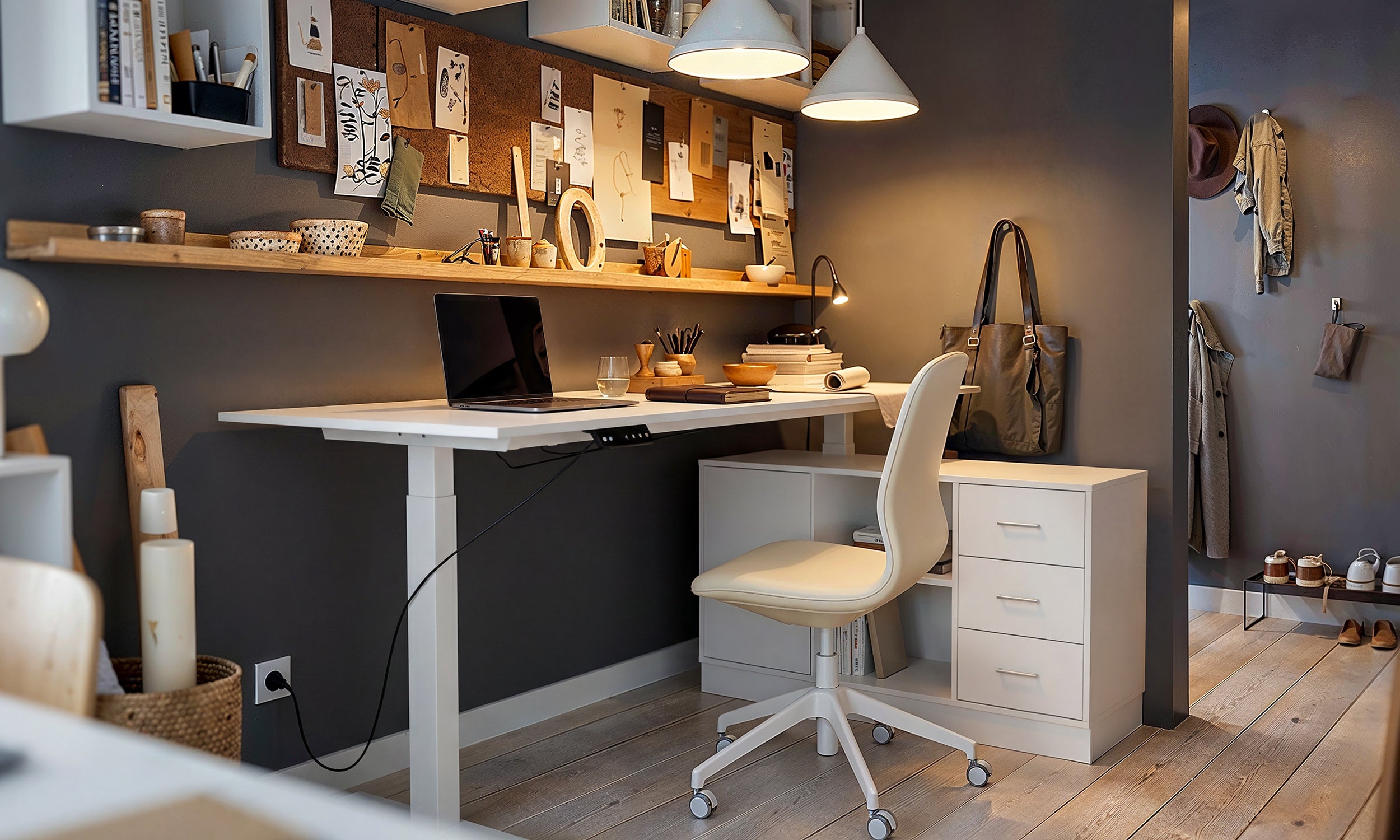
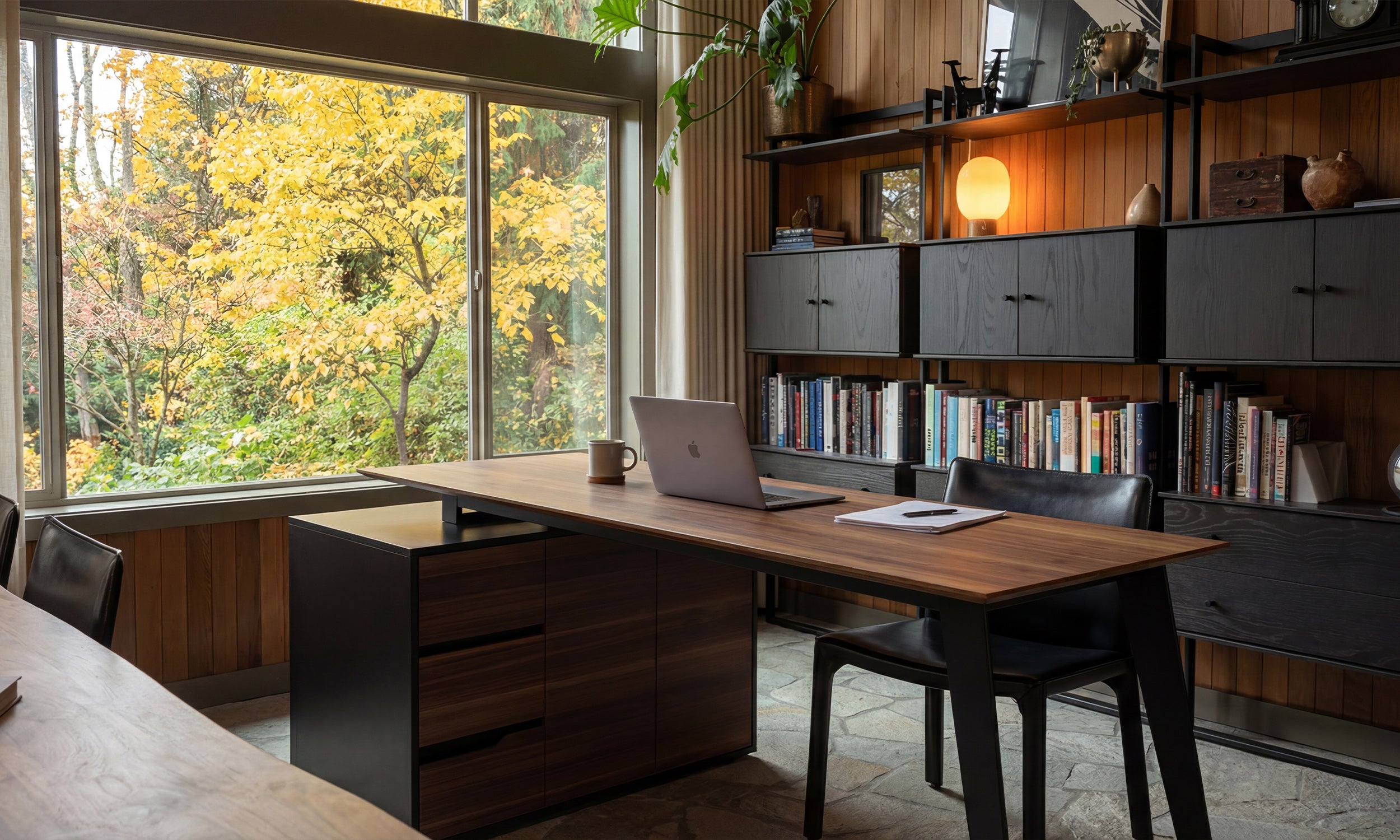


Setting up an efficient workspace in a compact home often feels like a balancing act between surface area and walking room. Standard desks can leave your work surface cramped, while traditional corner units claim a permanent footprint that dominates the room. A pull out l shaped desk provides a flexible solution, giving you the expanded room of a corner configuration during busy working hours and nesting neatly back into a single unit when the day ends.
What Is a Pull Out L Shaped Desk?
Unlike stationary corner furniture, an adjustable or convertible l shaped desk consists of a primary work surface paired with a movable secondary tier. In a pull out arrangement, this secondary surface either slides directly outward on tracks or rotates out from a central pivot point to form a right angle. This gives you an l shaped work zone with dedicated surfaces for laptops, monitors, paperwork, and writing tools.
While many l shaped desks remain permanently fixed in corners, convertible models give homeowners the flexibility to reconfigure their layout at will. When tucked in, the entire setup takes up no more space than a standard writing table or low credenza. When extended, it creates an efficient wrap-around desk surface that keeps everything within arm's reach.
Swivel Wheels vs. Fixed Sliding Tracks
When selecting a convertible shaped desk, the movement mechanism plays a central role in day-to-day functionality and durability. Most models rely on either pivoting casters or straight linear tracks to pull out the extension.
- Rotating Swivel Casters: These designs connect the lower desk surface to a pivot hinge on one corner, with wheels on the opposite end. You can swing the unit outward at various angles, creating a classic perpendicular shape or an extended straight line along a flat wall. If you want creative options for setting up mobile work zones, reviewing a pull out desk guide can help you decide how much rotation your room can accommodate.
- Linear Slide Tracks: These units feature a lower shelf or writing tier that pulls straight forward on heavy-duty metal glides, expanding forward rather than swinging sideways. While they offer slightly less angle flexibility, they require less floor clearance along adjacent walls.
Floor materials also influence which mechanism operates smoothest. Hardwood, laminate, and tile floors allow caster wheels to glide with minimal friction. Thick carpet, however, can create resistance against wheels, making linear metal slides or larger-diameter casters a more dependable choice to prevent snagging.
Room Clearance and Everyday Footprint Planning
Before bringing an adjustable desk home, you must measure your available space in both its compact and fully deployed states. An expanding desk needs clear clearance throughout its entire arc of motion to be truly convenient.
Take time to measure the distance from the pivot point to the outer edge of the room. Ensure the swing path does not collide with baseboards, nearby bookshelves, heating vents, or swinging interior doors. You also need to account for your office chair. Even in a small office, an ergonomic task chair needs room to glide back without bumping into walls or furniture behind you. For rooms with dedicated corner boundaries, choosing a fixed setup like a 55-1 wide l-shaped corner desk white offers stability, whereas a pull-out model remains ideal when that floor space needs to double as walking area during off-hours.
Managing Wires and Storage on Movable Sections
One of the primary challenges of any movable workspace is wire management. When a desk section moves several times a week, tight cords can pull loose or become pinched between wooden frames.
To avoid snagging, mount your primary power strip to the stationary main desk frame rather than the rolling section. Bundle computer cables and monitor cords inside flexible braided wire sleeves, leaving enough slack near the pivot point so the desk can swing smoothly between closed and open angles. Keep the movable tier reserved for wireless peripherals, notebooks, and reference materials.
Storage options also require thoughtful placement. Many convertible workstations include built-in drawers, open cubbies, or file cabinets built beneath the stationery or mobile shelf. If your daily tasks require sorting physical files, placing files and heavy supplies in lower drawers keeps the center of gravity low and prevents the unit from tilting when extended. When evaluating your storage needs, our desk pull out guide outlines how secondary tiers and slide-out surfaces compare for keeping desk clutter out of sight.
Choosing the Best Room Placement for an L Shaped Desk
Finding the perfect spot for an expanding workstation depends on the natural flow of your room. Here are three popular placement strategies:
- Tucked in a Corner: Aligning both sides of the opened desk against two intersecting walls utilizes dead corner space efficiently. This keeps walkways wide and creates an enclosed, focused zone for deep work.
- Flushed Along a Long Wall: If your room lacks open corners, some swivel models allow the lower desk to unfold into a continuous linear run against a single wall. This provides double the surface area during working hours without protruding into the middle of the room.
- As a Room Divider: In an open studio apartment or multi-use guest room, placing the stationary half against a wall and extending the mobile arm into the room creates an intentional divider between your living zone and professional office.
For individuals who split their days between seated typing and active work, combining corner flexibility with adjustable ergonomics—such as choosing a rustic wood l-shaped standing desk—ensures you get full-sized utility, generous drawer space, and tailored comfort without compromising on style.


Dejar un comentario
Este sitio está protegido por hCaptcha y se aplican la Política de privacidad de hCaptcha y los Términos del servicio.