










Introduction: Navigating the Industrial Desk Aesthetic for Modern Homes
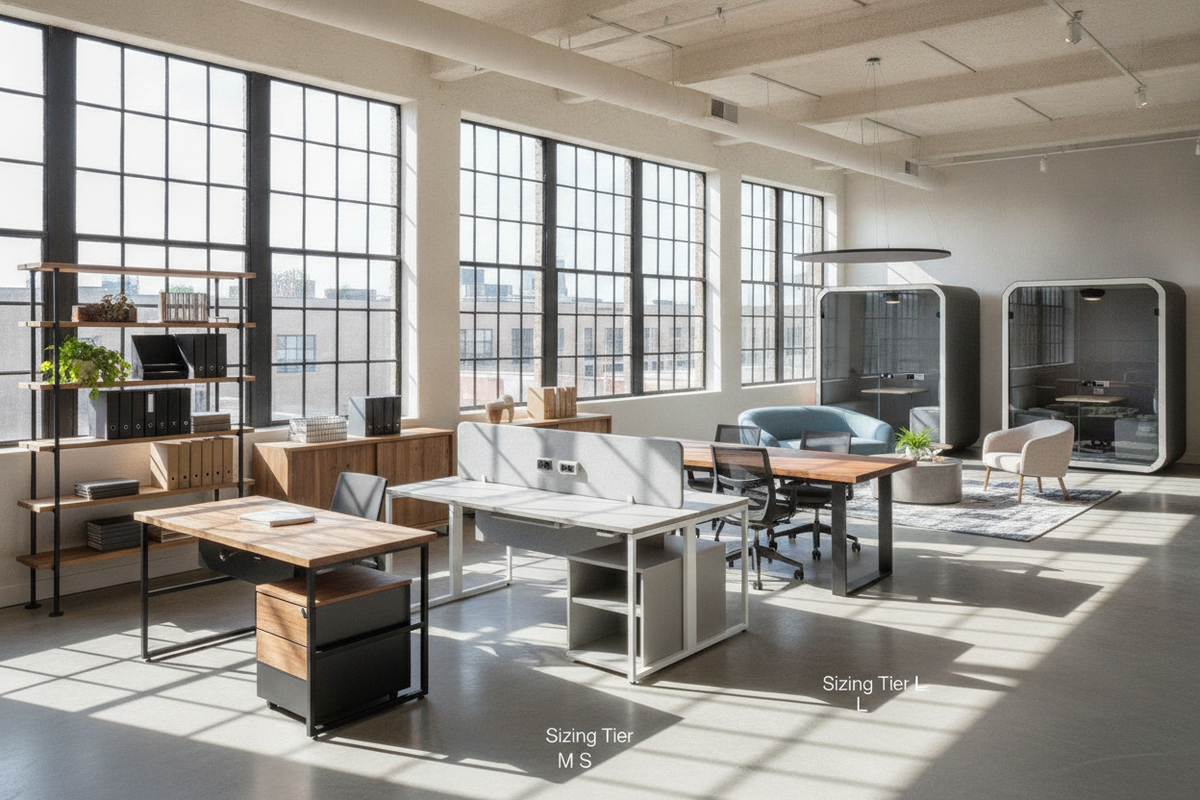
The industrial furniture aesthetic remains a staple for modern remote workspaces and urban residential interiors. Defined by dark metal frameworks, exposed joinery, and warm, weathered wood tones, a target industrial desk provides an appealing balance between structured utility and casual warmth. For home offices, loft apartments, and shared living zones, choosing the right piece requires balancing raw textures with refined architectural proportions.
Bringing an industrial workstation into a contemporary home requires attention to balance. When metal tubing and rustic surfaces are paired carelessly, an office can quickly begin to look like an unfinished workshop. By understanding footprint tiers, storage mechanics, and material finishes, you can curate an inviting, productive environment that enhances your broader interior decor.
Dimensional Tiers and Footprint Decision Frameworks
Industrial desks generally fall into distinct architectural categories based on surface area, leg clearance, and overall footprint:
- Compact Writing Desks: Designed for narrow alcoves, bedroom nooks, and tight apartment corners, these slender work tables provide just enough room for a laptop and a notepad. Their open frame structures help maintain visual flow without blocking natural light.
- Standard Workstations: Featuring deeper work surfaces, these desks comfortably accommodate desktop monitors, peripheral trays, and tabletop lighting while preserving adequate forearm support.
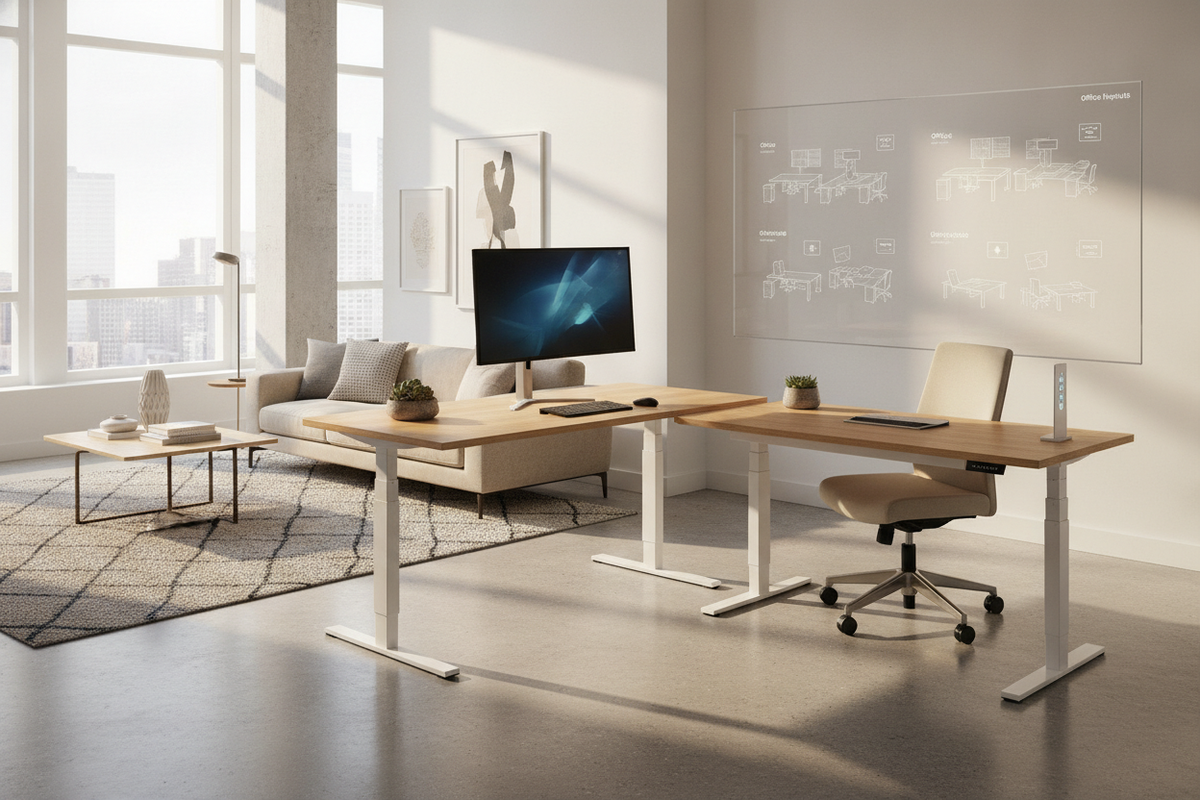
- Corner and L-Shaped Configurations: Suited for dedicated home studies or open-concept room corners, L-shaped industrial desks maximize surface area by separating task zones, such as active computing and physical paperwork.
When selecting a footprint, consider seated knee clearance and depth. Desks equipped with structural crossbars or under-mount shelves must leave sufficient legroom to allow comfortable seating and posture adjustments throughout the day.
Storage Architecture: Open Metal Racks vs. Enclosed Pedestals
Storage configurations dictate both the functionality and the visual weight of an industrial workstation. Most commercial designs offer one of two primary approaches:
Open Ladder-Style and Metal Tier Shelving
Many urban industrial desks incorporate attached side shelving tiers supported by square steel tubing or wire mesh side panels. These open shelves are ideal for housing reference books, decorative planters, and storage bins. However, because contents remain fully visible, maintaining a tidy look requires intentional organization and curated accessories.
Integrated Drawers and Enclosed Pedestals
Workstations with built-in wooden pedestals or slim under-top drawers offer concealed storage for office supplies, stationery, and charging cables. Accented with vintage drop handles, label holders, or matte cup pulls, enclosed storage grounds the metal frame while keeping visual clutter off the main tabletop.
Material Composition: Powder-Coated Steel, Reclaimed Textures, and Engineered Tops
The visual signature of an industrial desk comes from the interplay between metal joinery and wood textures:
- Metal Framing and Bracing: Frames are typically built from square-tube or angle steel finished in matte black, textured gunmetal, or dark oiled bronze. Structural X-back cross braces and corner gussets add structural stability while reinforcing the vintage workshop vibe.
- Engineered Tops and Rustic Finishes: Work surfaces often use durable composite wood finished in textured laminates or warm veneers. These finishes mimic reclaimed barn wood, weathered oak, or rich walnut, delivering everyday resistance to scratches and spills.
Room Zoning and Layout Strategies Across Varied Floor Plans
The open, linear silhouette of industrial furniture makes it adaptable to varied room configurations:
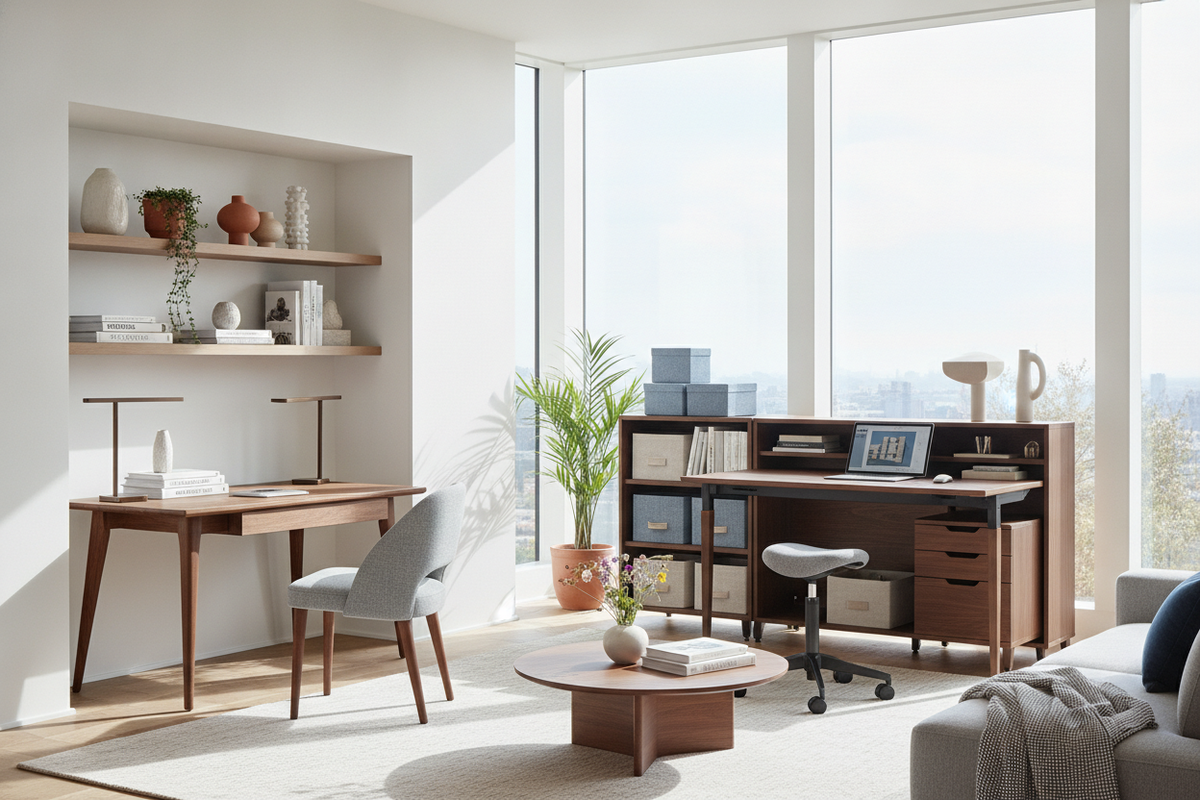
In dedicated private offices, a floating layout positioning the desk in the center of the room creates a commanding focal point. For multi-use spaces, flushing the desk against an accent wall or tucking it into a recessed alcove keeps circulation pathways clear. When blending metal desks into shared living spaces, refer to our industrial guide to living room integration to maintain visual harmony with surrounding upholstered seating and soft furnishings.
Coordinating Storage and Elevating the Industrial Palette
An industrial desk functions best as part of a cohesive design scheme rather than an isolated utility station. Pairing your workstation with complementary storage, such as metal-accented sideboards or low-profile media credenzas, establishes a unified aesthetic across the room. Explore our industrial guide for media and storage coordination for strategies on matching metal sheens and wood grain tones.
To soften the rigid lines of dark iron and distressed wood, layer tactile accessories throughout the space. Incorporating textured rugs, warm ambient task lighting, neutral linen drapery, and lush indoor greenery introduces organic softness, turning a stark setup into a refined space. For additional design ideas, see our industrial guide to elevated styling.
Assembly, Stability, Cable Organization, and Care
Proper setup and ongoing care ensure that an industrial desk remains steady and functional:
- Leveling Glides: Most metal-framed desks feature threaded, adjustable leveling feet. Adjusting these during assembly eliminates wobbling on uneven hardwood or tiled floors.
- Discreet Cable Routing: The open frame of an industrial desk leaves power cords exposed. Using magnetic cable channels or hook-and-loop ties along the backside of metal legs keeps charging cables neatly hidden from view.
- Surface Preservation: Keep engineered wood and laminate tabletops clean by wiping them with a damp microfiber cloth and mild soap, avoiding harsh chemical sprays that could dull the protective finish.

Dejar un comentario
Este sitio está protegido por hCaptcha y se aplican la Política de privacidad de hCaptcha y los Términos del servicio.