










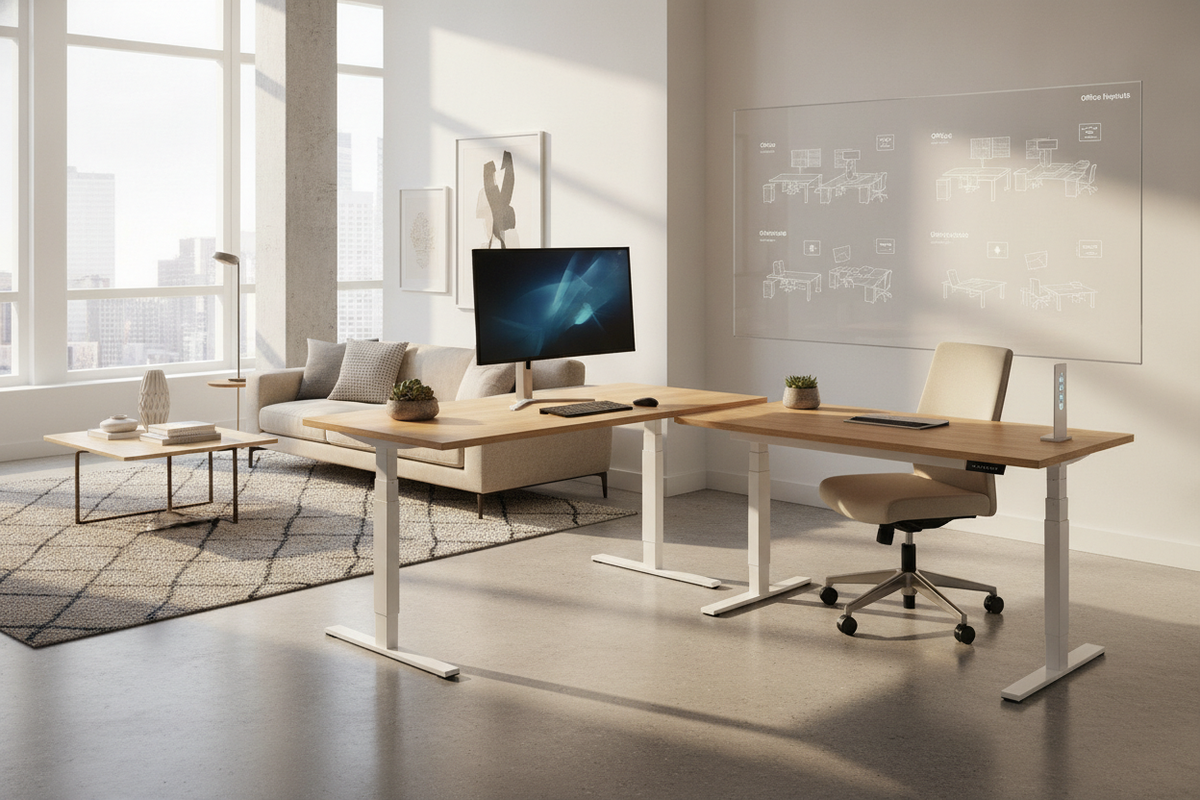
Motorized sit-stand workstations have become a central fixture in contemporary home offices and corporate setups. Among entry-to-mid-range offerings, the best buy insignia standing desk line has gained attention for pairing motorized elevation with functional simplicity. When evaluating an insignia adjustable standing desk review or planning a workspace around these units, understanding structural foundations, control interfaces, and spatial footprints is essential for creating an organized and comfortable work environment.
Understanding the Best Buy Insignia Standing Desk Architecture
The structural anatomy of an adjustable workstation determines its day-to-day stability, surface durability, and load distribution. Motorized standing desks in this category generally feature a two-stage or three-stage steel lifting column configuration paired with an inverted T-frame base. The heavy-gauge steel frame serves to lower the center of gravity, which helps minimize side-to-side wobble during key entry or monitor adjustment at elevated positions.
Desktop surfaces are typically manufactured from engineered wood finished with laminate coatings designed to resist daily scuffs, moisture, and wear. When planning a workstation setup, evaluating how the desktop material interfaces with peripheral clamps—such as monitor arms, desk lamps, and microphone booms—is an important consideration. For a broader look at curating an aesthetically pleasing workspace, our standing desk guide offers foundational design principles.
Electronic Controls and Everyday Adjustability
A primary draw of the insignia adjustable standing desk with electronic controls is the ability to adjust work height smoothly at the press of a button. Electronic control modules range from basic two-button up-and-down rockers to digital control pads featuring programmable memory presets.
- Two-Button Interfaces: Provide simple continuous adjustment, allowing users to fine-tune desk height visually without storing specific parameters.
- Digital Keypads with Presets: Display numeric height readouts and allow one-touch transitions between predefined sitting and standing levels, supporting regular posture changes throughout the workday.
- Collision Detection Sensors: Many electronic control boxes incorporate current-sensing or gyroscopic safety mechanisms designed to pause or reverse motor travel if an obstruction is encountered.
For shoppers seeking comparable motorized features with integrated presets, an alternative such as this adjustable standing desk product provides a versatile frame architecture suitable for standard productivity tasks.
Sizing Tiers and Workspace Footprints
Choosing the correct surface footprint requires balancing equipment requirements against the physical dimensions of your room. An insignia standing desk review often highlights how different surface sizes cater to distinct user profiles:
- Compact Footprints: Ideal for secondary rooms, bedroom alcoves, or dedicated laptop setups where floor space is limited.
- Mid-Sized Worksurfaces: Provide balanced proportions for a full-sized monitor, laptop dock, and writing space without crowding standard home offices.
- Expanded Spans: Designed for power users running dual monitors, studio speakers, or extensive physical reference materials. When substantial surface area is needed, choosing an expanded unit like this 71-inch adjustable standing desk product ensures plenty of room for heavy peripheral arrays.
Cable Management and Dynamic Clearance Planning
Because sit-stand desks move vertically, cable routing requires more forethought than stationary desks. Without proper slack management, cords can pull on computer ports, stretch power supplies, or snag against adjacent furniture during height transitions.
To maintain a clean and reliable setup, mount a central surge protector beneath the desktop. By plugging all desktop electronics into this single under-desk power source, only a single master power cable needs to travel from the desk to the wall outlet. Using flexible cable snakes, split loom tubing, and adhesive ties ensures that wiring flexes smoothly as the motorized legs extend and retract.
Integrating Modular Storage and Organization
One structural characteristic of minimalist motorized desks is the absence of built-in drawers or pedestals. To keep your work surface uncluttered, integrating external storage solutions is vital.
Mobile filing pedestals on casters fit conveniently underneath the desk when positioned at sitting height, and they can roll freely to the side when you prefer open legroom. Additionally, pairing your desk with perimeter shelving—such as versatile units from an adjustable collection—allows you to keep printers, reference books, and office supplies within easy reach without burdening the motorized lift frame.
Room Layout Blueprints for Sit-Stand Desks
Placement within the room influences both ergonomic comfort and daily functionality. When positioning an adjustable desk, consider the following layout strategies:
- Perpendicular Window Placement: Positioning the desk at a right angle to windows provides natural ambient light while avoiding direct screen glare or strong backlighting during video calls.
- Wall Clearance Buffers: Always maintain a slight gap between the back edge of the desktop and the wall. This prevents monitor mounts, desk pads, or cord tracks from rubbing against the wall surface as the frame raises and lowers.
- Floating Center Layouts: For larger executive offices, floating the desk in the center of the room creates an expansive feel. Ensure that floor-level cord covers protect the main power run from creating a tripping hazard.
When selecting accompanying chairs and coordinating decorative furniture, reviewing a comprehensive desk buy guide can help you establish a cohesive aesthetic across the room.
Assembly Considerations and Ongoing Maintenance
Assembling a motorized desk requires methodical alignment to ensure long-term smooth operation. During initial assembly, keep frame bolts finger-tight until the desktop is fully aligned, then tighten them securely to prevent structural skewing.
Once assembled, use the adjustable leveling glides under the footings to eliminate rocking on uneven flooring or carpet seams. Periodically check fasteners every few months to ensure that motor vibration has not loosened bolts, and wipe down the laminate surface with a mild microfiber cloth to maintain a clean workspace finish.



Dejar un comentario
Este sitio está protegido por hCaptcha y se aplican la Política de privacidad de hCaptcha y los Términos del servicio.