










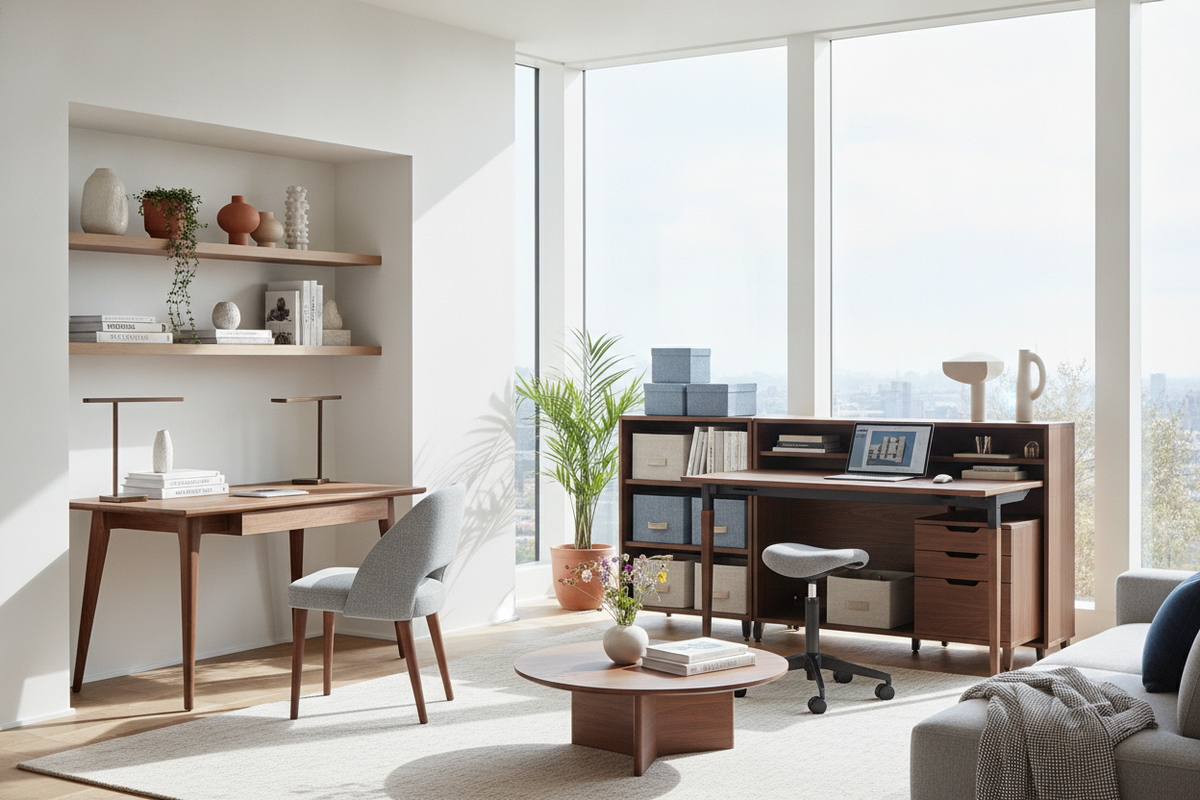
Designing a modern home office requires balancing visual refinement with functional ergonomics. When evaluating contemporary workspace options like a burrow desk, homeowners often weigh the sculptural simplicity of fixed-height writing surfaces against the dynamic flexibility of active sit-stand workstations. Creating an inspiring environment involves understanding desk proportions, routing cables neatly, and selecting coordinating storage to keep work surfaces uncluttered.
Contemporary Workstation Architectures: Evaluating Modern Desk Profiles
Modern desk typologies emphasize clean lines, durable surfaces, and subtle functional details. Choosing between a traditional static surface and a motorized lift system shapes the aesthetic rhythm and daily workflow of your room. For comprehensive styling principles, reviewing a standing desk guide provides practical inspiration on pairing work surfaces with surrounding decor.
Fixed-Height Modernism: The Burrow Index Desk Profile
The burrow index desk embodies a refined, architectural approach to everyday productivity. Built around a minimalist silhouette, fixed-height writing desks prioritize tactile finishes, slender leg structures, and a lightweight footprint. These desks integrate effortlessly into formal studies or bedroom corners where visual simplicity takes precedence over mechanical adjustability.
Active Sit-Stand Ergonomics: The Burrow Copilot Standing Desk Framework
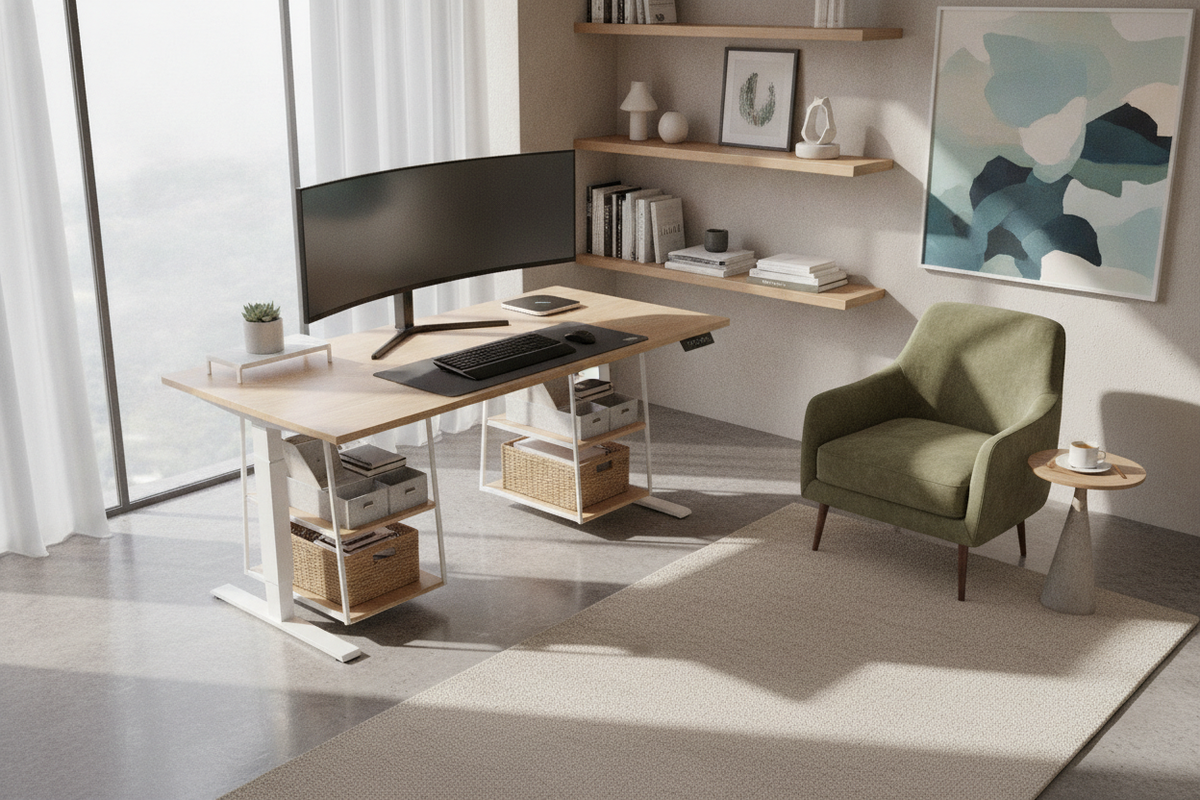
For daily multi-hour computing, an active workstation such as the burrow standing desk or burrow copilot standing desk introduces fluid vertical movement. Motorized lift legs allow seamless transitions between sitting and standing postures, helping to maintain physical comfort and focus throughout extended projects. The dual-purpose engineering supports heavy peripheral setups while retaining the warm, modern proportions expected of residential furniture.
Dimensional Planning and Workspace Footprint Sizing
Achieving a balanced room layout requires selecting a tabletop proportion that accommodates technology without crowding traffic lanes or blocking natural light.
Compact Workstations for Urban Nooks and Multi-Use Rooms
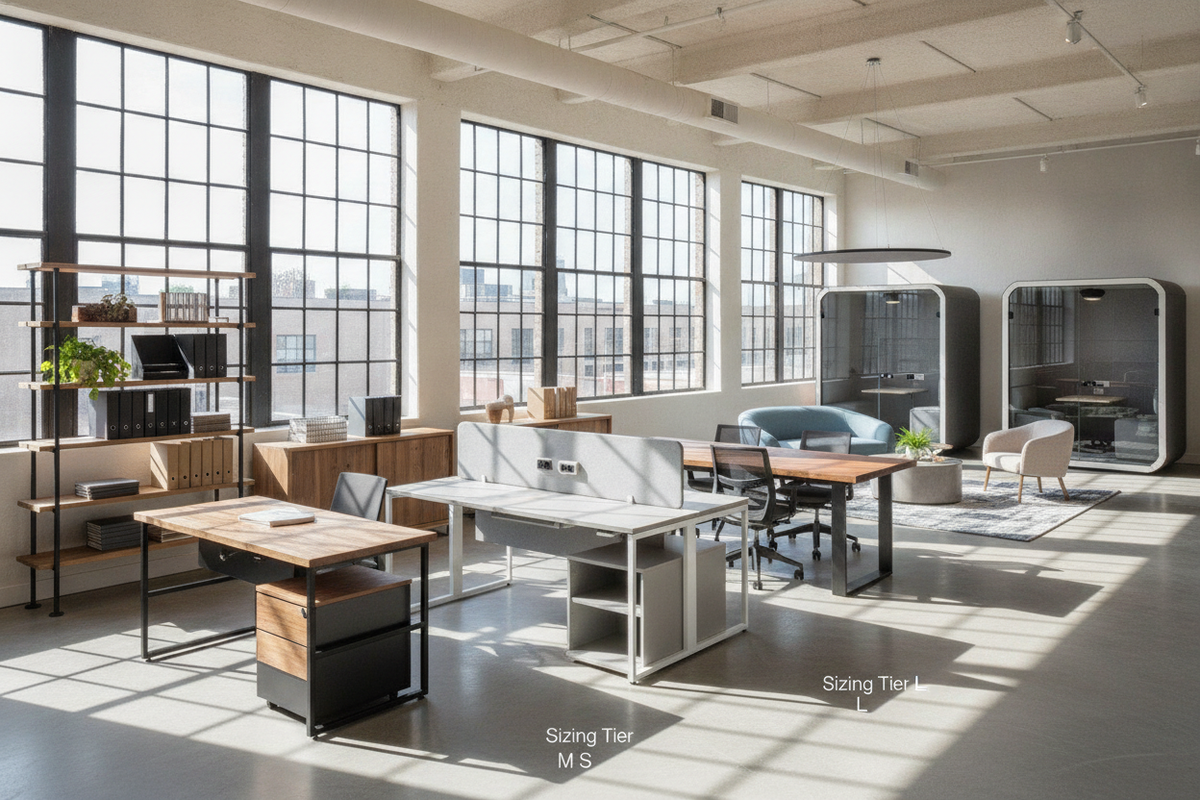
In apartments and mixed-use living spaces, a mid-sized surface preserves open floor space while providing ample depth for a laptop, external keyboard, and task light. Incorporating an adjustable height standing desk with electric lift system offers a practical footprint that fits neatly into alcoves without dominating the room.
Wide-Span Desktops for Dual-Display and Creative Workflows
Creative professionals and power users managing multiple monitors, audio interfaces, or drafting tools benefit from expanded horizontal spans. Utilizing a generous 71 w height adjustable standing desk provides dedicated zones for both digital computing and analog note-taking, ensuring that display arms and reference documents remain comfortably accessible.
Ergonomic Lift Mechanics and Cable Management Strategies
Height-adjustable desks require thoughtful spatial clearances and wire management to preserve clean architectural lines at every elevation. For detailed spatial recommendations, consult our standing desk guide to map out safe clearances.
Vertical Clearance and Wall Spacing for Standing Desks
When positioning a motorized desk against a wall, account for the full range of vertical travel. Ensure wall art, floating shelves, and window ledges sit clear of the desktop perimeter. Maintaining a modest gap between the rear desktop edge and the wall prevents monitor arms or trailing cables from rubbing against drywall during height adjustments.
Concealed Wire Pathways and Undermount Power Trays
Exposed cords can disrupt the visual harmony of a sleek desk. Implementing undermount power bars, flexible cable snakes, and adhesive conduit channels gathers power bricks and display cables into a single streamlined bundle. This keeps wires taut and orderly whether the desk is seated or fully elevated.
Modular Storage Integration and Organization Systems
Minimalist workstations thrive when paired with intentional storage solutions that keep everyday administrative clutter out of sight.
Freestanding Mobile Pedestals and Credenzas
Because modern open-leg desks often feature slim or absent built-in drawers, pairing them with auxiliary furniture is essential. Rolling file pedestals, low-profile credenzas, and modular shelving units provide ample space for paperwork, backup hardware, and stationery without anchoring the desk to a single bulky configuration.
Desktop Accessories, Trays, and Subtle Concealment
Organize desktop essentials using shallow wooden trays, felt desk pads, and low-profile monitor risers. In my experience, dedicating a single shallow tray for daily pens and notebooks preserves the serene look of a minimalist desk while maintaining rapid access to everyday tools.
Room Zoning and Home Office Layout Blueprints
Strategic furniture placement establishes clear boundaries between work tasks and residential relaxation.
Dedicated Office Command Center Layout
In a private home office, consider floating the desk centrally in the room or orienting it perpendicular to a window to maximize natural daylight without causing screen glare. A spacious workstation like a super sized standing desk with electric lift anchors the room as a commanding focal point, complemented by perimeter bookshelves and an acoustic area rug.
Open-Concept Living and Bedroom Workspace Blending
When placing a workstation in a shared living room or bedroom, select wood tones and metal accents that mirror surrounding credenzas, nightstands, or entertainment units. Positioning the desk against an accent wall or within a structural recess integrates productivity into the home without overwhelming the room's restful ambiance.

Dejar un comentario
Este sitio está protegido por hCaptcha y se aplican la Política de privacidad de hCaptcha y los Términos del servicio.