










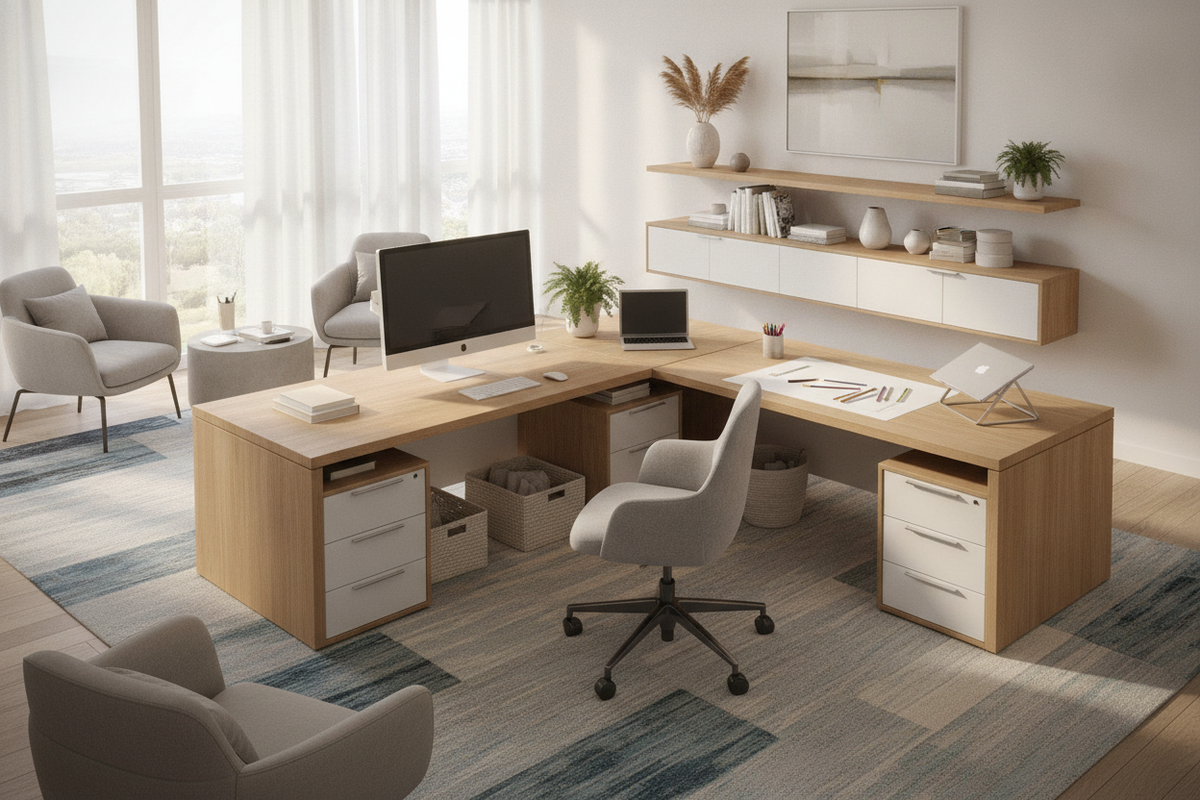
Selecting the right desk is the foundational step in establishing a comfortable and productive residential workspace. With remote and hybrid work patterns firmly embedded in modern routines, a dedicated work surface must satisfy both practical hardware demands and domestic interior aesthetics. Identifying the best desks for home office environments requires evaluating how surface dimensions, built-in storage, and structural materials interact within your available floor plan.
Evaluating the Best Desks for Home Office Workspaces: Core Decision Criteria
A successful workspace balances physical footprint against daily functional demands. When reviewing options for the best home office desk, start by mapping your core activities. A daily routine dominated by laptop browsing and light paperwork requires a distinctly different surface profile than a setup supporting multiple external displays, document reference stands, and peripheral audio equipment.
Visual proportion within the room also matters. In dedicated study rooms, a substantial executive or return desk anchors the interior architecture. In multi-purpose bedrooms or living areas, a streamlined profile preserves open walkways and prevents visual clutter. For a broader overview of initial planning considerations, consulting a comprehensive home office desk buying guide can help clarify fundamental dimensions before committing to specific furniture designs.
Surface Sizing Tiers: Matching Desk Footprints to Hardware and Workflow Needs
Desk dimensions broadly divide into distinct functional tiers. Selecting the correct category prevents surface overcrowding and keeps everyday tasks organized:
- Compact Minimalist Desks: Designed for tight alcoves, bedrooms, or secondary study spaces. These desks prioritize a small physical footprint, offering just enough depth for a single laptop, notebook, and task lamp. They serve as an ideal best simple desk option where space conservation is the primary objective.
- Standard Balanced Workstations: Offering moderate width and generous depth, these desks accommodate an external monitor alongside a laptop and keyboard tray or desk pad. They represent the sweet spot for general administrative duties and hybrid office tasks.
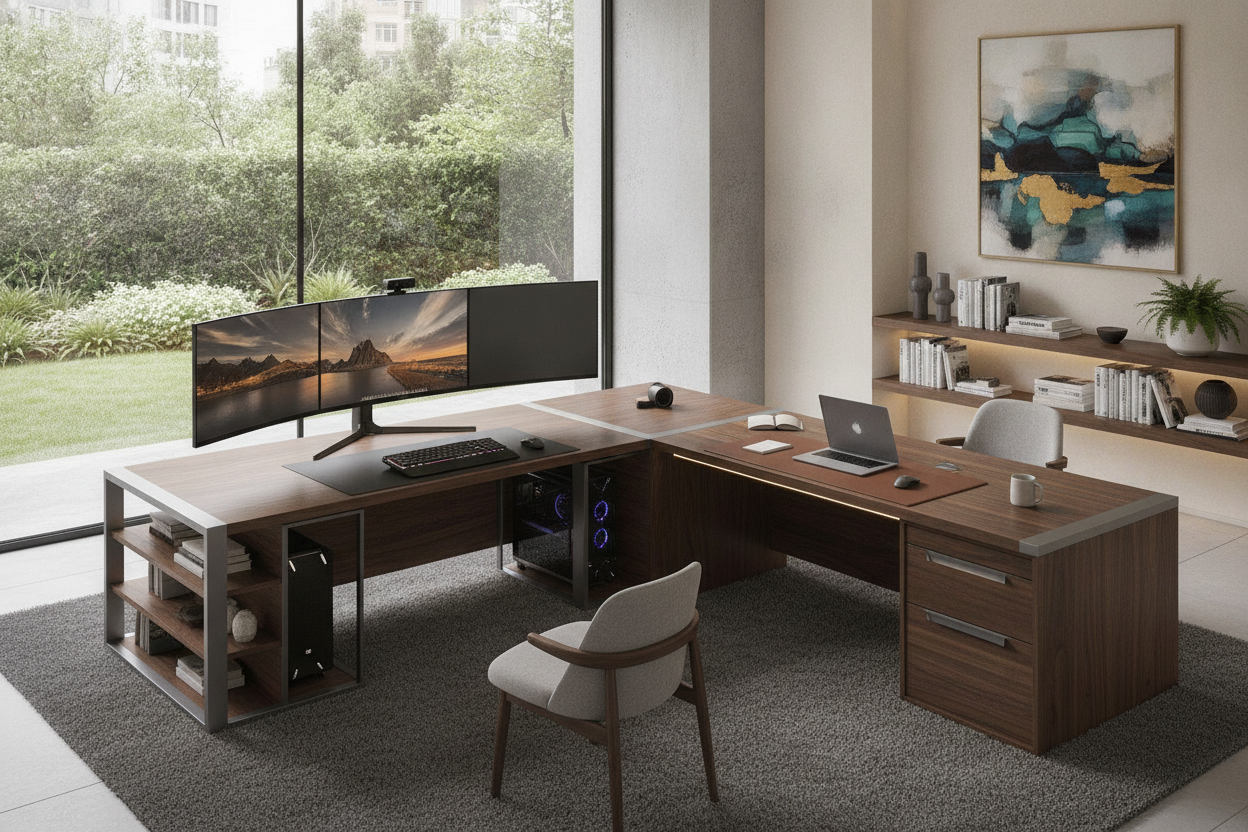
- Expansive Command Workstations: Built for users running dual monitors, studio hardware, or large physical drafting layouts. These surfaces provide extensive lateral span, allowing you to establish designated primary and secondary task zones across the desktop.
When selecting the best computer desk for home office use, measuring the combined depth of your monitor base and keyboard ensures adequate forearm support without forcing screens uncomfortably close to your field of vision.
Desk Archetypes: Comparing Writing Desks, Corner Workstations, and Tech Hubs
Different desk shapes serve unique spatial roles and workflow styles. Evaluating common archetypes helps you identify the best work desks for home spatial configurations:
- Straight Writing Desks: Featuring a classic rectangular silhouette, writing desks provide versatile placement against flat walls or floating in open rooms. Their open-frame structures maintain an airy aesthetic, though they typically offer minimal integrated storage.
- L-Shaped and Corner Desks: Corner units maximize unused perimeter space by wrapping around room angles. A modern corner computer desk with storage establishes an efficient cockpit arrangement, letting you pivot smoothly between computer tasks and writing or physical filing without shifting seating positions.
- Concealed and Foldaway Units: In shared living zones where a visible office setup might disrupt residential ambiance, exploring concealed armoire computer desk ideas allows you to close doors on screens, cables, and paperwork at the end of the workday.
Integrated Storage vs. Open Leg Clearance: Balancing Cabinets, Drawers, and Ergonomics
Deciding between built-in desk cabinetry and open-frame construction represents one of the most critical structural choices in office design. Integrated pedestals, utility drawers, and lateral filing compartments keep work surfaces clear of clutter by providing immediate access to stationery, charging cables, and active records.
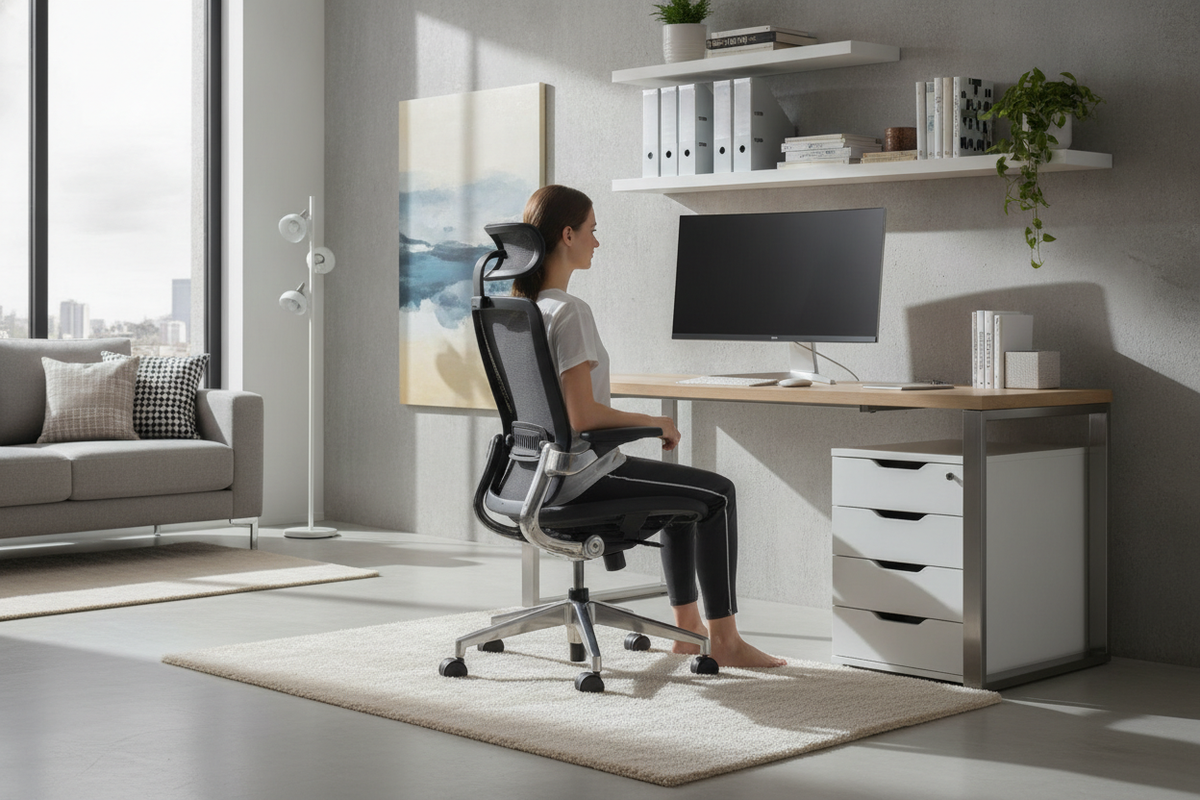
Choosing a corner desk with large storage capacity consolidates filing and surface needs into a single footprint. However, integrated drawers also reduce usable knee well width and lower-body mobility. If you frequently shift positions, cross your legs, or use an ergonomic task chair with wide armrests, verify that the central clearance allows unhindered movement.
For rooms where open legroom is preferred, pairing a minimalist open-frame desk with dedicated home office and study storage furniture—such as matching credenzas, mobile pedestals, or vertical bookcases—provides the necessary organizational capacity without compromising lower-body comfort.
Material Selection, Frame Stability, and Long-Term Structural Longevity
The best at home office desks rely on durable materials engineered to withstand daily wear, monitor weight, and regular cleaning. Common materials offer distinct performance characteristics:
- Laminate and Melamine Finishes: Highly resistant to surface scratches, liquid spills, and pen marks, laminate tops provide an easy-to-clean solution well-suited for high-traffic work areas and daily family study zones.
- Engineered Wood with Textured Veneers: Combining structural stability with the natural grain appearance of real timber, engineered surfaces resist warping caused by ambient humidity shifts in residential environments.
- Heavy-Gauge Steel Framing: Metal leg frames, reinforcing crossbeams, and integrated modesty panels deliver dependable lateral rigidity, preventing desk wobble during intensive typing or monitor arm adjustment.
Room Placement and Layout Architecture for Daily Focus
Positioning your desk relative to room features directly influences comfort, lighting quality, and day-to-day focus. Avoid placing display screens directly opposite unshaded windows to minimize screen reflections and contrast strain. Instead, arrange your workstation perpendicular to natural light sources, allowing soft ambient illumination across the main working surface.
Ensure your chosen location provides straightforward access to wall power outlets without stretching cables across walking pathways. Leaving sufficient clearance behind the desk chair allows smooth entry and exit, completing a functional and welcoming home work environment.

Dejar un comentario
Este sitio está protegido por hCaptcha y se aplican la Política de privacidad de hCaptcha y los Términos del servicio.